Friday, October 2, 2020

Common Earth

Among the vineyards of Kenwood, California, there are mustard flowers growing in the spring, even ahead of the bud-break on the vines. Ancient watchtowers, made of wood, clamber over head. And in the fall the wine presses are at work. The whole valley richly smells of the crush of grapes. Wine is being made. Hoppers full of blue heavy juiced grapes fill and empty into vats. Trucks bring more. And that is how it is, at this time in a normal year. Not so anymore. Three years ago the valley was threatened by fire, that came quickly over the ridges from the valley to the east, blown along by dry hot winds through brush, trees, grass, and houses. Vineyards smoked. And the grapes were tainted. That was then, that is now. For the same areas are once again threatened, or consumed, by wildfire. Spreading quickly. Homes are lost. And the people suffer. And the grapes are tainted, and once again fall to the ground, unharvested.

This brings home to me the Biblical images of the vineyard, the press, the tower, and the owner and the tenants. We are the tenants. In those stories, we have an image of our common earth, our common task, and hence our common prayer. 

We believers, in more than face value, in knowing there is more to the story than what we read in the news or hear through the air, know that God is good, creation is valuable, and we have to do something about this. It is our heritage and our stewardship. 

You may have notice the prayer for the original stewards of this land that we say at the beginning of our gatherings. We remember those who came before us and their continuing traditions of care for the earth, and we join them in its care. We are planted in the garden, alongside other creatures, but we have a call to care for the earth. Knowingly, not just instinctively, we can act together for the common good of earth.

Today is the 18th Sunday after Pentecost; it is also the feast day of Saint Francis of Assisi. The birdbath saint. The one who seems to know and care for all creatures, and to talk to them more unselfconsciously than Doctor Doolittle. Among the creatures he cared about and looked after the most were his fellow human beings. His vocation as steward and teacher took early expression in his embrace of a beggar on the road with skin disease. Then young and impetuous and rich, he leapt down from his steed and gave the man a kiss. Breaking the taboos, breaking the rules, making his home then on with the poor. With us. 

For we are the poor and we are the wealthy. We live under glorious skies, and transcendent gloom. We have and we have not. We share and we do not. We care and we do not. It is our choice; and it is not.

We can do what is within our power, collectively, as the people of God, and individually as people of prayer, of power through our intentional stewardship of what has been given us.

Or we can be like those guys in Jesus' story.

Pretty much the whole thing had been handed to them. The vineyard they rented had already been developed, fenced and provided with watchtower and winepress. All they had to do was take care of it. And the harvest would come. And when it did, the landlord would be back. Were they ready? No. 

Are we?

That is the challenge before us, to be good stewards of what has been provided for us. And to 'bear fruit' as Jesus puts it, the fruit of the kingdom, the fruit that is more than produce but is the fruit of the spirit. And that means justice. For climate change is racial injustice. And to bend the arc of natural and human history back toward justice is going to take the work of all of us, each of us, in our individual and common work.

Most high, omnipotent good Lord, grant your people grace to renounce gladly the vanities of this world; that, following the way of blessed Francis, we may for love of you delight in your whole creation with perfectness of joy. O God, you have made us and all living things. You are even more wonderful than what you have made. We thank you for giving us joy in your creation and the creatures with whom we share it. As you take care of us, so also we ask your help that we might take care of what you have entrusted to us. By doing this, we share in your own love for all creation. We ask this in Jesus' name. Amen.


Common Prayer


This past spring nature was bursting forth in all its glory, and we were shut down. In the middle of a pandemic the natural world continued on its way. And so in a sense the coronavirus was contained within our heads, within human motivations, concerns, and movements. Nature soared on alone. Until, in my neighborhood in Tucson, the evening of June 5th. Even as we gathered to toast the sunset with a rooftop glass of champagne, we could see lightning strike neighboring hills to the west. That was the beginning of the Bighorn Fire, which lasted for five weeks, consuming much of the dry brush, grass, trees, and even saguaro in a wide swath of Mount Lemmon in the Catalina Foothills to our north. For us it was close and so close in our attention for those days and weeks. On occasion the winds would change and smoke would drift down to us. At night we could see the flames on the mountain and during the day the aircraft dowsing them.

Nature began to take a turn. Of course this was months after the coronavirus pandemic came to us. March 15th was the last day this past spring when I preached and celebrated in person with a congregation. By Saint Patrick’s Day everyone had gotten the message: mask, distance, hand-wash, test, trace, treat, repeat. Eventually con permiso we could gather outdoors in small numbers at a safe distance.

It was depressing! And unnerving. We have had several smoldering crises on top of each other this year. Climate change, which is a force multiplier for every other catastrophe, layered on top of the wildfire season - which had just really gotten going when the Bighorn Fire ended - as well as the coronavirus pandemic with its public health and economic and political effects.

Even the President now is in isolation as he announced Thursday night just after midnight that he and his wife had tested positive for coronavirus. Fourteen days at home, if all goes well.

So the world is not what it was, or what we thought it would be, and what it will become is in a limbo status of nascency, as ‘ordinary life’ seems suspended for the duration. But what if for now this is ordinary life? It is an extraordinary Ordinary Time in the church - as Ordinary Time is another name for the season after Pentecost. We call this the long green season - dysfunctionally in Tucson as it gets hotter and drier longer over the trending years.

I was home for the one great monsoon storm of this season - wasn’t that an hour? And now we wait. For the summer heat to abate - it will get cooler, as the seasons turn; for the pandemic precautions and professional efforts to abate the pandemic; and then for the politicians to wake up and do something about the longterm causes and responses to the crises of our time.

All of this, and yet we celebrate. For the works of the Lord are good: in the Canticle we read this morning in response to the first lesson we are reminded - and the cosmic order, the Earth and its creatures, the people of God, are all exhorted to bless the Lord, to praise God and highly exalt him forever.

Why do we do this? For all around us despite our concerns, and some of them very close to home, the work of God and of the people of God who are his hands upon the Earth, continues.

The hungry are fed, the sick are tended, the dead are mourned, the bereft are comforted, the homeless are sheltered, and the unemployed find new dignity in work. All this is going on.

Not at the rate we would want. Very slowly. But if we are part of bending the arc of history toward justice, if we are among those who work and pray for the good things of earth to be cherished, sustained, and shared, then we are moving forward into a future with hope.

For the Lord has assured us, “I have a plan for you, for your good and not for harm, a future with hope."

Climate Justice


Let me sing for my beloved
 my love-song
 concerning his vineyard:
My beloved had a vineyard
 on a very fertile hill.
 He dug it and cleared it of stones,
   and planted it with choice vines;
   he built a watchtower
   in the midst of it,
 and hewed out a wine vat in it...

        -Isaiah 5:1-2a


 In the name of God, Source of all Being, eternal Word, and holy Spirit: Amen.

What do justice and righteousness look like to us? How are we to let justice roll down like waters and righteousness flow like a mighty stream? 

We are inheritors of the original inhabitants of the land, caretakers, stewards, and, when the time comes, harvest helpers and celebrators of its providence. Among us are those descended from the earliest days, and those who have come from the four directions, from north, east, south, and west, to this place inhabited for countless millenia and cultivated for now over four thousand years. But change is coming.

Change we have ourselves instigated, and inherited, from the well-meaning and the obtuse, the greedy and the generous, as they in their best lights (and worst) built the city we know today as Tucson.

And in it, even as the power company tears down its coal barn, are the effects being felt of all those generations, over the past 250 years particularly, that have led us to a point near the point of no return.

There is a pretty silly movie called the river of no return. A small group of people shoot the rapids in a cumbersome raft. Not something you want to do twice. And in our case not something you can repeat.

Because the climate is at a tipping point. In 50 years we might not recognized the landscape, for the changes in weather pattern, vegetation, growth or decay of civilization. There are some things we can do, non-exclusive responses.

Here are three we will be discussing at this year's convention, one you can watch if you have internet access.

1 : We can sharply reduce carbon emissions. We can reduce carbon emissions that cause the Greenhouse Effect and combat climate change. We can employ efficiency and conservation and move toward a low-carbon economy (and yes burning less coal and oil helps).

We can tackle climate change at its source by taking coordinated, aggressive action to reduce the CO2 we put into the atmosphere.

2 : We can prepare and protect our communities, assessing the risks ad taking care of the most vulnerable. 

We can work together now to secure our communities and strengthen our resilience in the face of climate-related impacts.

3 : We can accelerate innovation, promoting clean energy and creating new technologies.

While climate change represents a serious long-term challenge, it also presents unique opportunities for ingenuity and innovation.

How shall we meet the challenges of a warming planet?

The challenge of climate change is daunting. 

But this is the challenge we face, us and our generation, and we are called to face it. 
 
Remember then that a loving God is behind us, a God who is sovereign over all Creation, and that in his Spirit we find guidance and strength. As we have been promised, in the words of the prophets, he has a plan for us, a plan for good and not for harm, a future with hope.
 
To all earth's creatures God has given the broad earth, the springs, the rivers and the forests, giving the air to the birds, and the waters to those who live in water, giving abundantly to all the basic needs of life, not as a private possession, not restricted by law, not divided by boundaries, but as common to all, amply and in rich measure.
- Gregory of Nazianzus c.329-c.389 (quoted in http://edgeofenclosure.org/proper22a.html)


Options and suggestions from  

Climate Choices: How Should We Meet the Challenges of a Warming Planet?  National Issues Forums Institute. 2016. ISBN: 978-1-943028-03-0 (www.nifi.org)


Tuesday, September 22, 2020

The Magic Airplane


When he awoke we heard the sound of the plane arriving. He emerged from the back in the usual amount of time, coiffed, buffed, dressed, ready for the day: and it was a special day. It was January 20th. He had given his inaugural speech, welcomed the anticipated applause, and then, unexpectedly, gone to bed. 

We had been traveling since the pandemic turned to panic. We, his trusted advisers, had thought it best for his safety and health and the health of the nation that he turn to the most secure environment available. And so three weeks before Election Day, we boarded the airplane, and flew. 


Out the windows we could see the clouds passing, as we flew through the stratosphere, high above the earthbound menace.


The rumble of the jet engines and the occasional bump noise of in-flight refueling assured all aboard that we were on course and safe. 


The cheering crowds he saw on the ever-present video screens, and constant reports from his advisers on the ground, together with [video conferences with his cabinet and court, and] the prompt response to his electronic comments on his favorite television shows, kept him in good spirits, ready to command the nation he overflew.


But then the day arrived. He had been asleep for awhile. 


When he awoke we heard the sound of the plane arriving. He emerged from the back in the usual amount of time, coiffed, buffed, dressed, ready for the day. 


As we gathered in the aisle we were instructed to proceed directly into the secure tunnel. And so we deplaned at last, and he got into his secure limousine and was taken to his destination.


JRL +

Sunday, August 9, 2020

no sign


As Confederate Generals descend from their pedestals, and our nation rethinks what it has held up as worthy of secular reverence, I've been thinking. About symbols, but not just of civil religion.


The church I frequently attend has a big crucifix above the altar at the front of the church. What if instead we had something else? A Good Shepherd window perhaps, or an icon of the Trinity.


To me the crucified Christ depicted above the altar was the one who lived and died and rose again on our behalf, whose life was filled with unwavering integrity and absolute obedience to the point of accepting even betrayal at the hand of a friend and execution by the authorities.


To someone else it was a dead Jew, a man pursued and tortured and executed, not a redeeming work at all.


What if something else were at the front of the room? If another symbol focused our worship?


On a break during a conference on the 21st century church some years ago at Washington National Cathedral, I sauntered into the gift shop, where the author of the article cited below told me she was looking for a Trinity symbol, one she could wear. There were plenty of crosses. Helpfully I suggested where she might find some: Irish import stores. Maybe so;  a friend wears a Newgrange Trinity symbol ball cap. But her purpose was not to affirm Ireland, as you can read for yourself. What she was looking for was similar to my inquiry above: what if we went with a different symbol, or no sign at all?


Jesus said, according to the gospel of Matthew (12:39), no sign will be given this generation except the sign of Jonas. Thomas Merton wrote about ‘traveling in the belly of a paradox’, that is, to be in a place of not-seeing, not-knowing, but still moving forward in that divine darkness.


The Sign of Jonah

Then some of the scribes and Pharisees said to him, ‘Teacher, we wish to see a sign from you.’ But he answered them, ‘An evil and adulterous generation asks for a sign, but no sign will be given to it except the sign of the prophet Jonah. For just as Jonah was for three days and three nights in the belly of the sea monster, so for three days and three nights the Son of Man will be in the heart of the earth.  


What if that is the sign we need?  


To set aside our ideas of what is what and to look again and be open, and let ourselves see what is not there. And what is.


And what, out of that darkness, is being borne into the light.


Barbara Brown Taylor, "How my mind has changed: Finding God outside the church walls", The Christian Century, July 9th 2020. https://www.christiancentury.org/article/how-my-mind-has-changed/finding-god-outside-church-walls


retrocessional


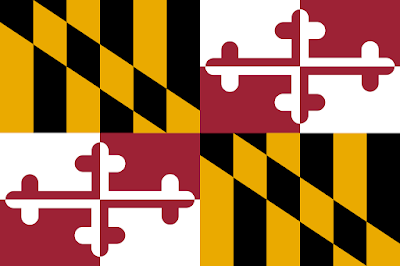
Give it back. That was the caption of my drawing showing my suggestion for a new flag for D.C. - the 17th-century heraldic banner of arms of Cecil Calvert, 2nd Baron Baltimore. Look familiar?


The Washington Star ran a contest back in the 1970s: it was time, they said, for a new flag for the District of Columbia. 


I thought of representation, of ‘taxation without representation’, and of “DC : The Last Colony”, and wondered, if it were not time to make sure that residents of the federal city had a vote.


Hence my suggestion.


From the first days of our republic, the U.S. Constitution (Article I, Section 8, Clause 17) provided for a district set aside for the federal government, to comprise a territory not exceeding ten miles square. So the founders picked a place, straddling the Potomac River, with some land ceded by the states on either side, Virginia to the south and west and Maryland to the north and east.


But from 1801 the residents of that district no longer had a vote in federal elections, as The Economist points out (“DC history: Without representation”, August 8th 2020, 23). And by 1846 the people on the Virginia side had had enough, and by an act of retrocession recovered the franchise, and the Old Dominion its territory. 


So the orphaned voters were only on the northern side. But they need be orphans no longer. 


It is time for the residents of the Capital city to have a voting representative in Congress. The question is how.


Before the Senate languishes a House resolution to grant the District statehood. They could pass it, and send it to the Resolute desk for signature. That would do it. 


But perhaps ticklish Senators will seek a compromise. And that could come another way: by retrocession of territory to Maryland, reserving for the seat of government a federal district comprising the Capitol, the National Mall and Memorial Parks, and the President’s Park (White House), all now national park land and with no permanent residents.


Washingtonians would gain voting representation in both houses of Congress; but they would become residents of Maryland, perhaps of a new county, called Potomac or Columbia.


It may not fly. But hey, why not run it up the flagpole and see if anyone salutes?


https://www.heritage.org/report/the-constitution-and-the-district-columbia

https://en.wikipedia.org/wiki/Flag_of_Maryland

https://www.economist.com/united-states/2020/08/08/residents-of-washington-dc-could-once-vote-for-congress

Saturday, August 8, 2020

yesterday


Yesterday for the first time since June 5th we put the dogs in the car and drove up to the top of Mount Lemmon. The last time we drove up Mount Lemmon was the day before we watched lightning strike the western slopes of Pusch Ridge. That was the beginning of the Bighorn Fire, which burned 120,000 acres before the first big monsoon rain finally put it completely out. As the fire began to ebb into embers and ashes, and the many crews of firefighters, weather service, deputy sheriffs, and game and fish officers, could pack up, the conversation began around how to recover, or what is next. The forest service has something in place: a Burned Area Emergency Response plan. 

What we saw yesterday was much the same, for awhile, until we got up to where we had picknicked two months before and saw from the edge of the road the whole mountainside to the north down to the next valley scorched and covered with ashes. As we descended from the ski area above Summerhaven we could see how close the fires had come to the mountaintop telescopes and the edge of the road. And we could see the first small green sprouts as new growth began on the ashen slopes of the mountain faces.

And so this local disaster, which occupied our minds and feelings for over a month, as the smoke, the helicopters and airplanes, and on many days the flames, occupied our senses, began to release its hold on us. In the middle of the fire month of June I had listed our common anxieties in order of longevity - and perhaps in reverse order of attention. 

1. The Bighorn Fire

2. The Coronavirus Pandemic

3. The Presidency

4. Climate Change

The Bighorn Fire began June 5th in the Catalina Mountains and ended a little over a month later. (Fire season is far from over in the Southwest, but see below under #4.) 

The Coronavirus Pandemic began sometime last December in southern China and has far from peaked, though there is hope that with proper precautions at the individual, social, national, and global levels, and the efforts to develop and distribute a vaccine, it can become another endemic disease, like the flu or the common cold, rather than the fourth scourge alongside tuberculosis, malaria, and HIV/AIDS. 

I'm skipping one. 

Climate Change began 250 years ago and will have its effects for the next millenia. It causes things like our wretched summer of excessive heat as well as the more extreme weather events and the more frequent droughts, fires, rainstorms, floods, and mudslides that are piling on top of each other.

The Presidency will, according to The Economist, nine chances out of ten be handed over to the opposite party in January. 

After the Bighorn Fire the Burn Area Emergency Response plan goes into effect. Shall we re-seed as we did after the Aspen Fire? After the fire in the Big Bear area some years ago, Giant Sequoia were planted. Will we see planting of indigenous species? After the Oakland Hills fire of 1989 people built back, better one hopes. After the second Great Earthquake and Fire of San Francisco, the one in 1909, the City came back, different but greater.

We talk about the new normal. We talk about before, during, and after. We talk about building back better. 

But I can tell you, since the first Tuesday after the first Monday in November four years ago, an obsession has gripped many minds. And so we when we begin to talk about what is next what we talk about is the disaster continuing. But nine chances out of ten less than ninety days from now there will be an election that begins to overturn the current situation, political but not climate or health, and people have NO IDEA what that will look like. I hope the prospective next president has some people on board who do see a future with hope. Too many are too obsessed with the present to look ahead.

And yet the future is where we will live. At least the next generation, and many of us, will live in it.

We will not see again what we had before. But we can begin to build what we can become, indeed what we are called to become, as individuals, as citizens of this nation, and as creatures on this planet. 

We have to. For we will survive, and it is our duty.