Showing posts with label reconciliation. Show all posts

Saturday, September 3, 2022

reconciliation of peoples

 ​​Bigotry, Racism, Sexism: Reconciliation between Creeds, Colors, Sexes and Genders.


As my teachers noted, the Churches have faced and begun to address three implications of the Gospel embodied in Christ and preached by Paul at his best in the letter to Galatians. Just to note: the Galatians were themselves objects of prejudice as they were Celts not Jews - therefore the argument about having to be circumcised to be a good Christian - and so they were troubled by a potential second-class status in the Church.


But this reveals the larger problem: they versus us. “He can’t be a man ‘cause he doesn’t smoke the same cigarettes that I do.” Rabbi Jonathan Sacks, in “The Dignity of Difference”, and many other teachers have reminded us that really there is no “them and us” : there is only us. Bigotry, anti-Semitism, anti-Islamic, anti- you name it, is an expression of anxiety and not of faith. 


Identity if it is in Christ is not threatened by the identity of others. It is not threatened by the status or class of others. If we love Christ the most - and that is what it means to love others (even ourselves) less - then all loves fall into right relationship. 


Racism - black/white, but also indigenous/immigrant, and many other distinctions - is another challenge to the Church, in itself and in its role in larger society. Martin Luther King, Jr., called eleven o’clock Sunday morning the most segregated hour in America. We are still working on this, so that we break bread together, so all of us do indeed share in one loaf, one cup. 


And offer our voices in praise: our diverse voices in praise. For we are all one in the Spirit but we are not the same: and that is a blessing. Each of us and each community offers different gifts, in praise to God, as we offer different prayers and practices. 


Sexism, and now increasingly an undertaking to make progress in understanding gender identity, is a continuing area of growth for churches.


And this is far from the end of the list. Different abilities, incarcerated versus free, political polarization, … the challenges continue.


But we hold this to be true: In Christ all are one, there is no Jew or Greek, slave or free, male and female; we are all one in the same Spirit. And blessed by our diversity.


And reconciliation of peoples begins with the hard work of the Gospel, the freedom that costs no less than everything, as - reconciled in Christ - we choose to follow Christ in building the beloved community, the kingdom of God.


Thursday, September 1, 2022

The Potter and the Clay


Pete Skoro, Eckels Pottery, Bayfield, Wisconsin, on August 25th 2022. 

At the potter’s house the other day I watched him select a lump of clay, start his wheel, and shape the clay, changing and molding it, with a vision that belied its original outward appearance as it was gradually transformed. He shaped it and scraped it, with his hands, a knife, and an improvised tool.

(Yes, he said, he would smoosh it down if needed and start anew.) But then after ten minutes something new had appeared, and he set it aside to dry.


Later he would fire it in the kiln, and then glaze it. 


Many centuries ago potters in the old world and the new made pots, fired them and glazed them. I have held in my hand potsherds from cliff dwellings and Anasazi villages, and also a piece of the Berlin Wall. The legacy of a pot may be good, or it may reflect evil - but note, not an evil that ultimately lasts. For God shapes our ends for peace and not harm.


For surely I know the plans I have for you, says the Lord, plans for your welfare and not for harm, to give you a future with hope. Jeremiah 29:11 (NRSV)


And those plans involve something we call reconciliation. For we are made and redeemed, and empowered, and reconciled, by one and the same Spirit.


Reconciled in Christ: Becoming Beloved Community is the theme of this year‘s diocesan convention and it is my theme therefore this day. To be reconciled in Christ is first of all to be reconciled with God in Christ and with each other and with ourselves: just as we are commanded to love God with all our heart, soul, mind, and strength and our neighbors as ourselves.  


It is in Christ that we come into right relationship with God, each other, and ourselves; it is in Christ that we are reconciled.


Reconciliation is with God and thanks be to God through Christ with others and with ourselves. 


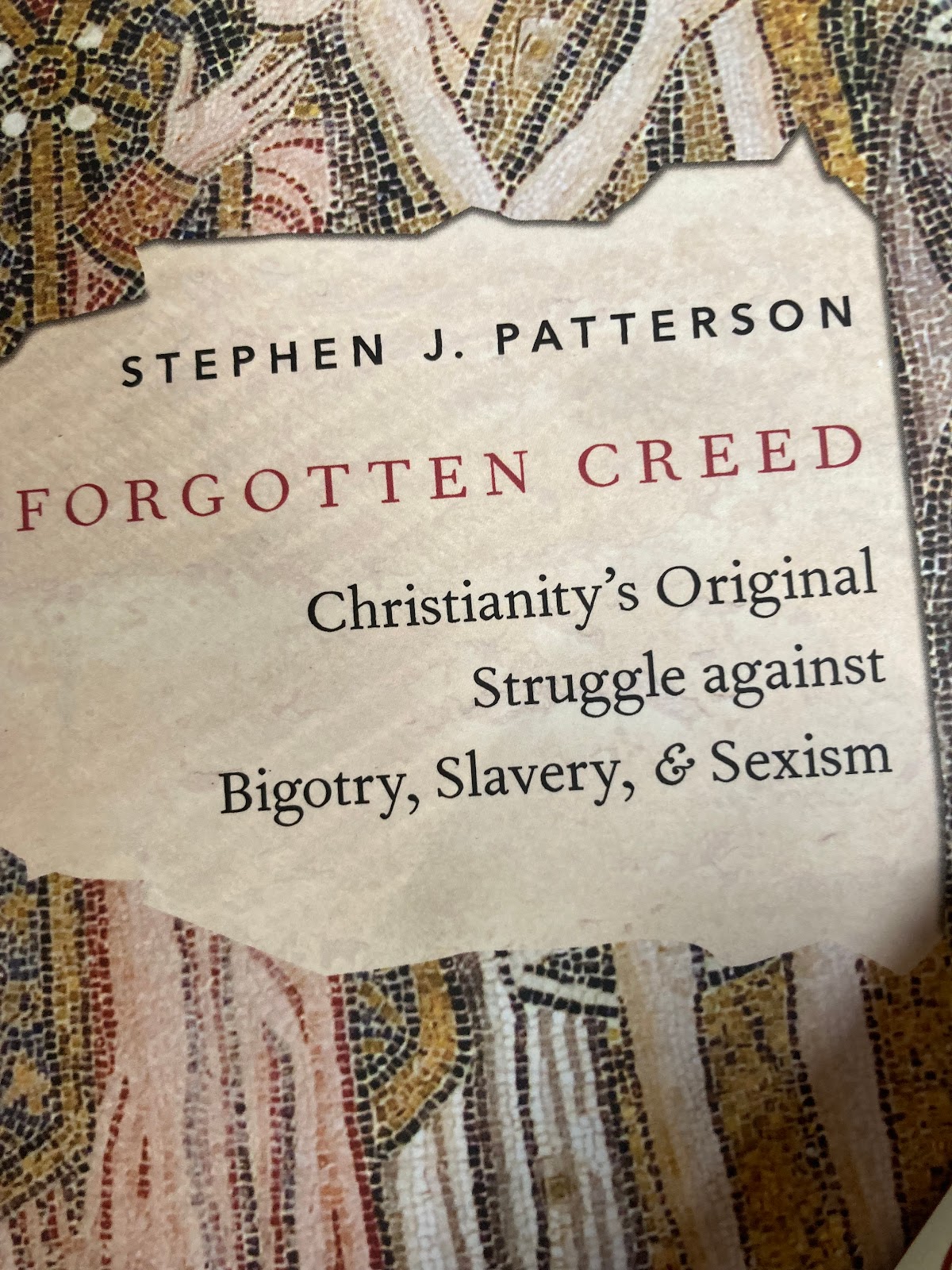
Stephen J. Patterson, in “The Forgotten Creed: Christianity's Original Struggle against Bigotry, Slavery, and Sexism” (Oxford University Press, 2018) argues that the most primitive creed is this: there is no Jew or Greek, there is no slave or free, there is no male and female. 


And that means… We are all children of God, we are all one in the Spirit. 


So of all the readings guess what Paul says to Philemon in his brief letter Onesimus – his name means “useful” – was useless to you as a slave but I am returning him to you useful as a brother, more than a slave a brother: and Paul makes the somewhat veiled request of Philemon that he set Onesimus free and even somewhat hints that it would be best to send him back again to Paul but now as a freedman. 


So how does Onesimus go from being useless to useful: is it through the transforming power of God through the Spirit?


In the letter to Philemon, as in many passages in the Hebrew and Greek scriptures, slavery is taken as a fact of society of the time: that doesn’t mean it is condoned so much as recognized as part of how life and society were, so that in the Old Testament (Hebrew Bible) readings there is slavery even of Jews and sometimes of Jews by others … but elsewhere in the New Testament we encounter Paul at his best: this passage in Galatians (3:26-29) :


“In Christ Jesus you are all children of God through faith. As many of you as were baptized into Christ have clothed yourselves with Christ. There is no longer Jew or Greek, there is no longer slave or free, there is no longer male and female; for all of you are one in Christ Jesus. And if you belong to Christ, then you are Abraham’s offspring, heirs according to the promise.”


Today our challenge is to come to an understanding in our full maturity in our current social context of what it means to be free, what it means to be freed, and what it means to have been enslaved in the first place.  


Over the centuries, as my teacher Neal Flanagan OFM has pointed out, the church has dealt with these three bondages: 


  • the ethnic and racial conflicts that “no longer Jew or Greek” represents, especially in the ancient world but on up through our own peril-fraught times; 
  • the justice conflict of “slave or free” including historic chattel slavery on up through the mid-19th century; and lastly 
  • the inequity of male-female relations, which the church began to address afresh only in the middle years of the 19th century and the various feminist movements to follow.  


The reconciliation of peoples means that there is no Jew or Greek, no slave or free, no male and female, in terms of precedence or power or right.


And, to return to our original theme, overcoming those conflicts is part of what it means to be reconciled in Christ: first to God, and then to others and ourselves … and we are learning that ‘others’ includes all of creation, including all created beings and certainly one another. 


And this helps us move forward in one challenge of our age: reconciling with other people not like ourselves. 


It is in Christ, in his work, in his life as well as his death, from incarnation on through crucifixion to resurrection, that we find our hope and the new possibility and even power to come to a right relationship with each other, ourselves, and God. That is the Christian hope.


Jeremiah 29:11-13 (CEB)

I know the plans I have in mind for you, declares the Lord; they are plans for peace, not disaster, to give you a future filled with hope. 


When you call me and come and pray to me, I will listen to you. When you search for me, yes, search for me with all your heart, you will find me. 


So what does it mean to be reconciled in Christ? What does it mean to be in right relationship with God, each other, and ourselves, and to come into right relationship with God, each other, and ourselves? 


It means to be reshaped as the potter reshapes the pot. It means to be reshaped, to submit ourselves to be reshaped, but also to undertake conversion - that is, to take responsibility for our own growth, development, and indeed, transformation.


We take active part in our own reshaping to God’s hand, to firing and glazing, to becoming solid in our place in creation, after testing it may be, becoming useful - as Onesimus became useful - in bringing into shape the reign of God, and becoming a legacy, lasting and good.


https://www.commonenglishbible.com/ 


Thirteenth Sunday after Pentecost

Proper 18

Jeremiah 18:1-11
Psalm 139:1-5, 12-17
Philemon 1-21
Luke 14:25-33


https://www.eckelspottery.com/


Pete Skoro, Eckels Pottery, Bayfield, Wisconsin, on August 25th 2022. At the wheel; the drying pot.


Stephen J. Patterson, The Forgotten Creed. Oxford, 2018.


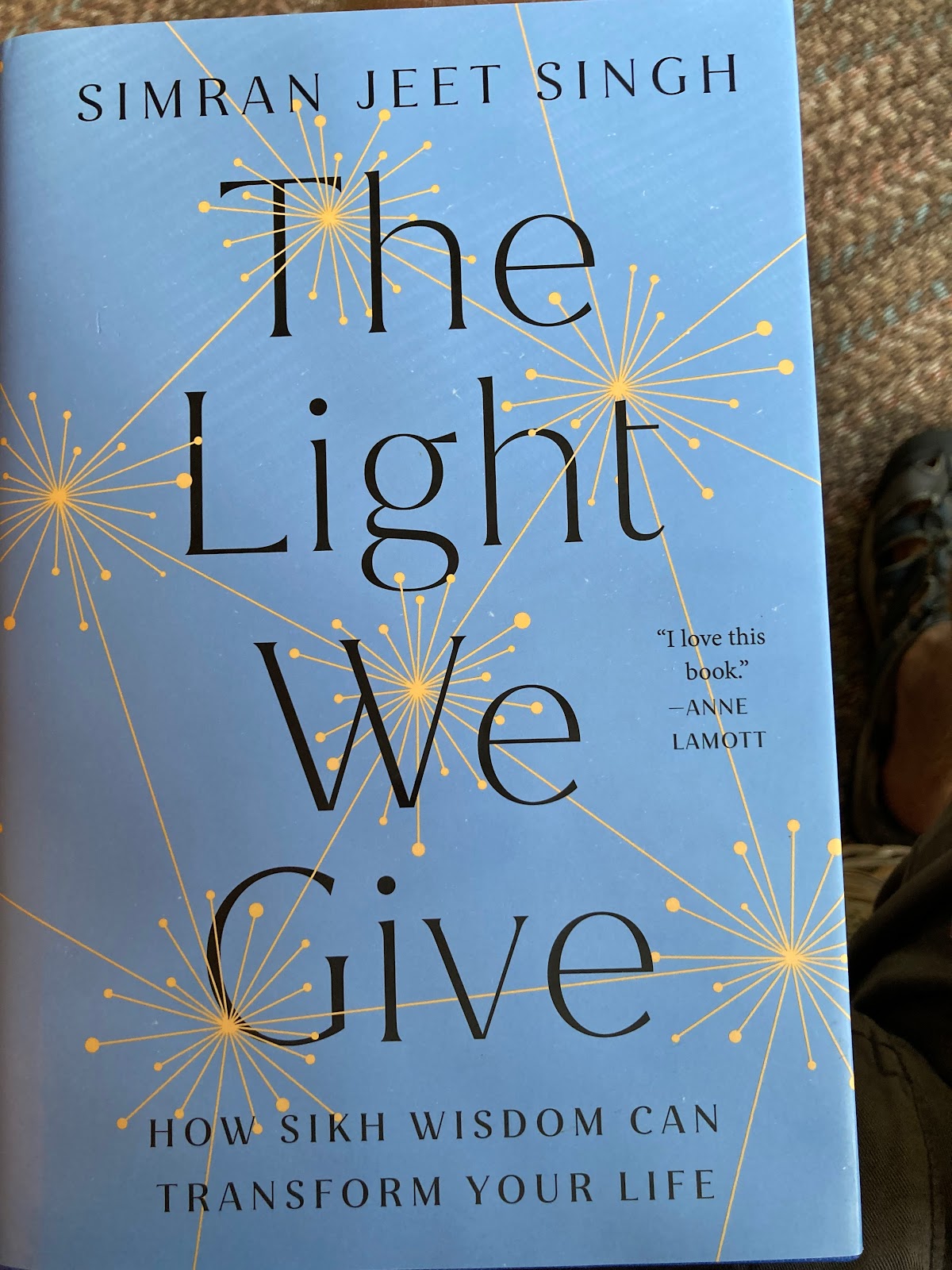
Simran Jeet Singh, The Light We Give. Riverhead, 2022.


Sunday, August 21, 2022

Reconciled in Christ

 In Christian thinking, Christ works in the world reconciling all things. To be reconciled in Christ is first of all to be reconciled with God in Christ and then with each other and with ourselves. It is in Christ that we are reconciled, that we come into right relationship with God, each other, and ourselves; just as we are commanded to love God with all our heart, soul, mind, and strength and our neighbors as ourselves.  

Reconciliation is with God and thanks be to God through Christ with others and with ourselves. And that plays out in how we differ and how we are united. Stephen J. Patterson, in “The Forgotten Creed: Christianity's Original Struggle against Bigotry, Slavery, and Sexism” (Oxford University Press, 2018) argues that the most primitive creed is this: there is no Jew or Greek, there is no slave or free, there is no male and female. 


And that means… We are all children of God, we are all one in the Spirit. 


So guess what Paul says to Philemon in his brief letter: Onesimus – his name means “useful” – was useless to you as a slave but I am returning him to you useful as a brother, more than a slave a brother: and Paul makes the somewhat veiled request of Philemon that he set Onesimus free and even somewhat hints that it would be best to send him back again to Paul but now as a freedman. 


In many passages in the Hebrew and Greek scriptures slavery is taken as a fact of society of the time: that doesn’t mean it’s condoned so much as accepted as part of how life and society were, so that in the Old Testament (Hebrew Bible) readings there is slavery even of Jews and sometimes of Jews by others and in the New Testament we encounter Paul at his best:  this passage in Galatians (3:26-29):


“In Christ Jesus you are all children of God through faith. As many of you as were baptized into Christ have clothed yourselves with Christ. There is no longer Jew or Greek, there is no longer slave or free, there is no longer male and female; for all of you are one in Christ Jesus. And if you belong to Christ, then you are Abraham’s offspring, heirs according to the promise.”


Today our challenge is to come to an understanding in our full maturity in our current social context of what it means to be free, what it means to be freed, and what it means to have been enslaved in the first place.  Over the centuries, as my teacher Neal Flanagan OFM has pointed out, the church has dealt with these three bondages: the ethnic and racial conflicts that “no longer Jew or Greek” represents, especially in the ancient world but on up through our own peril-fraught times; the justice conflict of “slave or free” including historic chattel slavery on up through the mid-19th century, and its aftermath on into our own century; and lastly the inequity of male-female relations, which the church began to address afresh only in the middle years of the 19th century and the various feminist movements to follow. The reconciliation of peoples means that “there is no male and female” in terms of precedence or power or right.


And, to return to our original theme, what it means to be reconciled in Christ: first to God, and then to others and ourselves … and we are learning that ‘others’ includes all of creation, including all created beings and certainly one another. And this helps us move forward in one challenge of our age: reconciling with other people not like ourselves. It is in Christ, in his work, in his life as well as his death, from incarnation on through crucifixion to resurrection, that we find our hope and the new possibility and even power to come to a right relationship with each other, ourselves, and God. That is the Christian hope.


The Rev. Dr. John Leech is priest associate at the Episcopal Church of Saint Matthew in Tucson.

Thursday, October 29, 2020

Sonic Unity

Last night el Patronato San Xavier sponsored a conversation about the restoration of the bells at the mission, an ongoing effort that Miles Green leads, and including help from Nancy Odegaard at the Arizona State Museum. The bells at the mission, three bronze and three iron, are from the 18th century, I believe, and have long hung in their places, slowly weathering, but often calling out lamentation or praise.

The big bell on its wheel marks both death and fiesta, and the bells call people to prayer.

Donald Nicholl observed, asked what elements he would include in a college of religious studies, that he would include a bell, to tie the people together in hearing it. (He also proposed a garden, so that we would get our hands into the earth.) The bell would provide sonic unity: as it does for the mission congregation of the Wa:k O'odum and their friends, as it does for the monastery of New Camaldoli. And as Jen Harris pointed out, as the bells on Old Main bring together (ring together?) the university community in Tucson.

What is our unity? How are we brought together? What calls to us? What resonates? What reverberates?

In a time when reconciliation, the restoration of peace, is devoutly sought, what better than to be called together into unity, by a bell sounding or by a call to prayer?


http://waknet.org/

https://patronatosanxavier.org/

Sunday, May 31, 2020

making room for one another, making room for love

But who's counting? Seven weeks since Passover, fifty days if you count from Easter to Pentecost. A long time to wait. What have we been doing while we wait? And what are we waiting for? Easter Day and Evening the disciples, beginning with Mary at the tomb, began to see Jesus, as he appeared to them after his crucifixion and entombment. And they learned from him; what he had taught them before began to make new sense, new and deeper meanings arose as they experienced the risen Christ. And then they waited, as they experienced his final leaving, the taking from them into heaven that is the Ascension - with its promise of Another, a Counselor, an Advocate, a Comforter, a Spirit: the very Breath of God. And so they began to learn, to be taught, what life means now, now that death has been conquered, for all. They began to wonder, and to proclaim: this is what life means now, this is what it has always meant. That in Christ - in his persecution and death at human hands, the hands of the lawful authorities - all are reconciled, to God and therefore to each other. We are to live that. We are to live that, now. It is no easier today than it was two thousand years ago. We are still on the Way. God help us. God be with us, now as we face - as Michael Curry has reminded us in his sermon this morning, that we face two pandemics now, in this country: the virus, and the utter selfishness and complete self-centeredness, the putting oneself at the center of the universe and all else at the margin, that informs and creates and fuels hate and racism and war, the act of one human brother against another, of one tribe or race or nation against another, and of one individual against another person.

Again as Michael Curry reminds us, we can find another way, the way of love. We can proclaim that love. For what it means is that in making room for one another we are exercising the power of love. And that fits: for God to make the world God made room for Creation.

(An old teaching which I learned from Donald Nicholl in a class at UCSC.)

By making room God allowed us the possibility of failure, of free will, of - to use a word Dr Curry avoided - sin, that is the egregious separating of our self from God, and from common humanity.

We do not have to live that way - in sin, as it were: we can follow the way of love. Today, any day. And every day it becomes more manifestly vital that we do.


https://episcopalchurch.org/posts/publicaffairs/presiding-bishop-michael-currys-pentecost-sermon-live-streamed-service

https://episcopalchurch.org/responding-to-racist-violence

https://www.washingtonpost.com/opinions/2020/05/31/black-man-i-understand-anger-our-streets-we-must-still-choose-love/


31 May 2020
Day of Pentecost
Whitsunday

Daily Office Lessons for Today:
The Day of Pentecost118      v      145
Deut. 16:9-12      Acts 4:18-21, 23-33      John 4:19-26