Showing posts with label restoration. Show all posts

Sunday, March 26, 2023

Recalled to Live


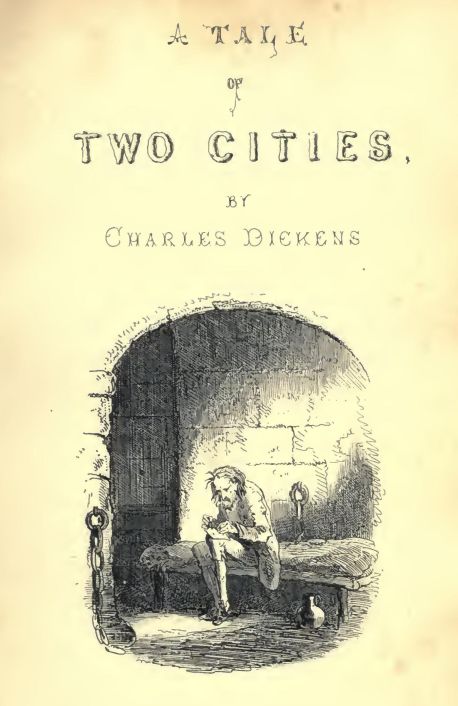
Recalled to Life. Chapter One of "A Tale of Two Cities" by Charles Dickens. 


“Recalled to Life” is the title of the first section of Charles Dickens’s classic novel, “A Tale of Two Cities.” In that story - spoiler alert - the person ‘recalled to life’ was a prisoner held incommunicado, indefinitely, in a prison of the old French regime before the Revolution of 1789. He is ‘recalled to life’ from his imprisonment, and is reunited with a daughter he last saw as a toddler.

This is an example, drawn from classic literature, of a transformation of a life from a living death to a life lived in the sunlight of freedom. Another example, from another novel of Charles Dickens, is that of Ebenezer Scrooge, in “A Christmas Carol”, who lived in a dungeon of his own making until he was brought into a fuller life by, yes, loving relatives, but more by the spirits of the holiday, and by the examination they provoke, confronting him with his past disappointments and failures, and his own choices that had led him into the cramped cold corner he had been making of his life. 

Scrooge, unlike the prisoner in the first tale, was not imprisoned by others. But he is freed, nevertheless, and restored to a fullness of life. He is still an old man, but a happy one.

Of course what recital of near-death resuscitations in popular culture would be complete without the words of Miracle Max from the now-old movie, “The Princess Bride”. Confronted with the challenge of reviving The Man in Black, he makes a key observation. His friends think The Man in Black is dead. But Max says, “Your friend here is only mostly dead.There is a big difference between mostly dead and all dead… Mostly dead is slightly alive.” And begins his bogus but effective curative efforts. 

But few Bible commentators would agree with the proposition that Lazarus, whom Jesus raised, was only mostly dead. In fact the evangelist makes the point clear when “Martha, the sister of the dead man, said, ‘Lord, the smell will be awful! He’s been dead four days.’” (John 11:38b) The tradition was that after four days a person was surely all dead. 

Lazarus is dead. Now Jesus begins to work, when all earthly hope is gone. And he has said to the grieving family and their friends that the delay in reaching the deathbed until too late for Lazarus to recover would provide an opportunity for them to believe, to have faith, and to see God’s glory. 

This is a partial answer to the vexing question, why doesn’t God save everybody? Why does anybody have to die? In the case of the man born blind, Jesus said that affliction was not due to anyone’s sin, not a punishment, but an occasion in which God’s glory could be shown.

And here he goes again, healing somebody, and he says this too is an occasion to see God’s glory, and to receive the gift of faith. It is not a fix-it situation. 

That is hard to say. Causes a wrench in the gut. Why not heal the poor guy? He does, of course, this time…

Jesus’ ministry of walking around Palestine, Galilee, Samaria, Judea, and beyond those borders, was one of proclamation of life, and of a fullness of life, that became possible as people began to accept the limits and truth of their own folly and hardness of heart, as with Scrooge, with the call of love, as with that cast of clowns in the old movie, with the injustice and redemption again of the people in “A Tale of Two Cities”, and with us, as we begin to receive the words of life in the midst of death, mostly dead or even all dead.

One well-worn Bible study technique is to listen to a passage being read, then call out key words or phrases that have struck each person in the group. When I listened in on a Zoom Bible Study about the Raising of Lazarus the words that called out to me were “dead, dead” and “life, life”. 

Jesus calls us to turn from death to life. From the death-bringing patterns of our past to the freedom he brings to us in his own gift and sacrifice. We are to be “recalled to life” and enter into the fullness, however painful, of that restoration, to the people whom we are called truly to be.

Almighty God, your Son came into the world to free us all from sin and death. Breathe upon us the power of your Spirit, that we may be raised to new life in Christ and serve you in righteousness all our days, through Jesus Christ, our Savior and Lord, who lives and reigns with you and the Holy Spirit, one God, now and forever. Amen. (Lutheran prayer for the Fifth Sunday in Lent)


The Rev. John R. Leech, D.Min., is a priest associate at the Episcopal Church of Saint Matthew, Tucson, and a frequent guest preacher in southern Arizona churches.

Saturday, July 16, 2022

Gomer


Gomer marries Hosea and bears him three children. This along with the usual cooking, cleaning, and housekeeping he probably expects. This despite his considering her an unfaithful wife, and naming her children, morosely, Jezreel, Lo-ruhamah, and Lo-ammi. This despite his considering their marriage a fitting prophetic allegory for the relationship of Israel and Judah to their God. The God, of course, who won a bet on the patience of Job, after he endured, and his family and household suffered, numerous trials. 


What is this story doing in the Bible? Surely we are not meant to take it literally or as a model of how to behave. Is it a model of how God behaves? 


Apparently we are to take it as that, only so far as it portrays God as vengeful (Jezreel), pitiless and unforgiving (Lo-ruhamah), and abandoning (Lo-ammi), toward his “unfaithful spouse”, and yet as then forgiven and made numberless and named again "Children of the living God." This restoration - or replacement - is supposed to make everything alright, I guess.


Does retribution, revenge, or reparation, make up for punishment and abandonment? Is this God’s justice?


Go marry a wife of whoredom and have children of whoredom, the Lord commands Hosea when he first speaks through him, and then says why: the Land commits whoredom by forsaking the Lord. Then the offspring, first the defeat and destruction of Israel (the northern kingdom) in the valley of Jezreel, then the forsaking of that kingdom but the salvation of the southern kingdom (Judah), and third the divorce of God and the people followed by the restitution of their union.


Browsing in the public library I picked up Evelyn Waugh’s Second World War trilogy, Sword of Honour, and found in it a typically serio-comic English hero, a guy named Guy, who married then lost, to a series of lovers, a heroically promiscuous wife, Virginia, whom he (spoiler alert) finally takes back in her extremity of need. Furthermore, God through the Church takes her in as one of her own. 


Crazy story. But then, so is prayer, in its entreaty and in its hope. Listen to the Psalmist (85):


1 You have been gracious to your land, O Lord, * you have restored the good fortune of Jacob.

2 You have forgiven the iniquity of your people * and blotted out all their sins.

3 You have withdrawn all your fury * and turned yourself from your wrathful indignation.

4 Restore us then, O God our Savior; * let your anger depart from us.


9 Truly, his salvation is very near to those who fear him, * that his glory may dwell in our land.

10 Mercy and truth have met together; * righteousness and peace have kissed each other.

11 Truth shall spring up from the earth, * and righteousness shall look down from heaven.


JRL+


https://www.christiancentury.org/article/living-word/july-24-ordinary-17c-hosea-12-10


Friday, March 20, 2020

Never since the world began

"For ye were sometimes darkness..."
The Man Born Blind - Duccio 1308-11
http://edgeofenclosure.org/lent4a.html


There is a pretty bad movie, starring Robert Downey Jr and Meg Ryan, called "Restoration", that despite its awful contrivances still intrigues me. Not because of its picturesque frivolities but because of its actually serious topic. "Restoration" is set during the period of the restoration of the English monarchy after the Interregnum under Parliament and Oliver Cromwell the Protector. (The time is the 1660s of our era.)

So there is a reaction against the constraints of a Puritan dictatorship not only in politics but in morals. (For a more balanced and thorough personal account of these changes, read the diaries of Samuel Pepys - or listen, as I did, to Kenneth Brannagh reading portions.)

The hero, if we can call him that, of the film, is the King's new Physician, a fool, as we meet him, who quickly gets himself into trouble as he trivializes himself and the already frivolous life of court.

But then plague strikes. And all becomes more serious than he can handle......

And in some sense he finds redemption - a restoration to himself, if you will - as he begins to serve people who need him: a physician after all.

He finds his calling in horrendous times.

No one wants them.

Cue Gandalf talking to Frodo: 
Frodo: ... I wish none of this had happened. 
Gandalf: So do all who live to see such times but that is not for them to decide. All you have to decide is what to do with the time that is given to you.

Did God ever choose such times? Well, yes, in a sense. Look at the times into which he sent his Son.

If ever the world needed a Shepherd, a light-bearer, it was then (and always now). Imperial occupation, corrupt quislings leading the people, abject poverty, ongoing contagion, - it was time.

Perhaps it is always time. Time for a Shepherd. Time to bear light into the world.

And so the light comes into the world. It does not only come once, but for all. All people, all times.


So often when we visit somebody in hospital, there are some old words that hold comfort and meaning. The 23rd Psalm, and the Lord's Prayer. This is not hiding. This is facing the light.

Here they are as they appear in the "new" Prayer Book of 1662, the time of the Restoration.

PSAL. 23. Dominus regit me. The Lord is my ſhepherd: therefore can I lack nothing. 2 He ſhall feed me in a green paſture: and lead me forth beſide the waters of comfort. 3 He ſhall convert my ſoul: and bring me forth in the paths of righteouſneſs, for his Name’s ſake. 4 Yea, thou I walk through the valley of the ſhadow of death, I will fear no evil: for thou art with me; thy rod and thy ſtaff comfort me. 5 Thou ſhalt prepare a table before me againſt them that trouble me: thou haſt anointed my head with oil, and my cup ſhall be full. 6 But thy loving-kindneſs and mercy ſhall follow me all the days of my life: and I will dwell in the houſe of the Lord for ever.


Our Father which art in heaven, Hallowed be thy Name; Thy kingdom come; Thy will be done in earth, as it is in heaven: Give us this day our daily bread; And forgive us our treſpaſſes, as we forgive them that treſpaſs againſt us; And lead us not into temptation, But deliver us from evil. Amen. 

We too might long for a 'restoration' of times before. What we face instead are new times. What we carry forward from the past is - not nostalgia - but resources that last: Word, sacrament, prayer, fellowship; with these to sustain us, we carry forward the light that is always with us.


What we carry forward is also vision - a vision, a longing, for how things can be - and indeed what the blind man saw, and what disturbed the universe, was something new: not since the world began had a man born blind received his sight. This is not restoration; this is new.


Light has entered the world, as it has since the first dawning, as it did this morning. And as it always does it is old and it is new. We have not chosen our times; we choose how to live them.