Showing posts with label Acts 2:14. Show all posts

Sunday, April 19, 2026

AEaster3 a friend and not a stranger

 Walking through San Francisco from my office in the Financial District up into Chinatown and North Beach was a favorite lunch break for me. One day returning from Caffe Trieste or Molinari’s Deli, as I waited at the stop light at Columbus and Broadway, I heard someone quietly walk up next to me. 


First I saw the tennis shoes. A little oversized. Then, looking up, I found myself looking into twinkling blue eyes of– what at first appeared to be a middle-aged woman– but it was a man! 


Not a man in drag, like my old neighbors on Lily Street, but a man impeccably made to look like a woman. A man in drag I could’ve understood, but this was something else. It freaked me out.


Years later I found out: an actor, during a break from filming, had left the film set, and gone on his own lunchtime walk, still in full makeup and costume. He was playing a middle-aged woman. 


Mrs. Doubtfire.


And so he had a little fun seeing people’s reactions, like mine, to see if the illusion would hold up. 


[Apparently Tony Curtis and Jack Lemmon did the same thing, when they tried out their wigs and dresses (and heels) for “Some Like it Hot”.]


So I did not recognize him. 


Have you had that experience? Of not recognizing someone, of not seeing?


I feel a little sympathy for Cleopas and the other disciple. Who would be the last person they would expect to see, on the road to Emmaus? – besides Robin Williams. 


The master. 


The one crucified just three days ago. Sure there were rumors, crazy stories. But now?


It was all too real. You could excuse them for freaking out. But they did not. At first they did not see Jesus, they saw a stranger. Then a companion on the way. And by time they invited him to dinner, he had walked them through what had happened, what had to happen, according to all the Scriptures.


Only these truths were not so strange, and he was no stranger. He was their teacher.


***


***


Kitchen Scene with Supper at Emmaus, Rijck, 1605

http://edgeofenclosure.org/emmausrijck.html


AEaster3 bread and strangers


Velazquez’ “Kitchen Maid With Supper at Emmaus”

https://www.nationalgallery.ie/sites/default/files/2017-04/w1500-Vel%C3%A1zquez-Kitchen-Maid.jpg


Then the two disciples described what had happened along the road and how Jesus was made known to them as he broke the bread. (Luke 24:35)


We were walking along the road talking about everything that had happened in the last few days. We spoke about how Jesus had come to Jerusalem. 


We welcomed him with branches strewn in the road and cloaks spread across the path where he passed. Hosannas were in the air. 


Then he went into the temple and taught. Even as he left for the day he had healed people. His words and his deeds were powerful. Everyone could tell that he was a mighty prophet.


But then our chief priests and the elders themselves handed him over to be sentenced to death, and they crucified him. 


Here we had hoped and had hoped. All our hopes were in him that he would be the one: the savior, the Messiah, the one to redeem Israel. 


All these things had happened just three days before.


But then, we recalled what had happened earlier that day. Some of the women had gone to the tomb in the morning and found an empty tomb, and angels who said that Jesus had risen. and when Peter went to check, he found no one there at all.


It was strange and disturbing to hear these things and we had left town. We were on our way away from all this when a stranger came alongside us and became our companion on the way and we told him what was in our minds and on our hearts.


Somehow, he was someone you could trust. So we told him.


He surprised us, though, by rebuking us, saying we were foolish and had not understood.


We were going the wrong way in what we were thinking and what we were feeling.


We thought it was all over, but he said, this is something that had to happen. 


I wish we had taken notes. He told us from the beginning of the scriptures all that the prophets had to say about the Messiah.


The miles passed more quickly and we found ourselves at the village as evening was drawing in.


We did not want the conversation to end. We wanted to hear more. He seemed to be ready to walk on alone, but we pressed an invitation on him to stay with us. It was after all drawing on to night and it was not a time for travelers to walk alone.


So he came in with us to the Inn and at the table he took the bread, gave thanks, broke it, and gave it to us.  


And that is when we recognized him.


It had only been three days after all since we had last broken bread with him.


And here he was breaking the bread again and sharing it. Alive, as always alive. More than always. He shared the bread with us, and then as our eyes were opened he – disappeared.


On the way as he had told us what was happening, our hearts were warmed. Our minds were opened so that we understood 

that 

what had happened and 

what was happening 

was not the end, 

was not cause for despair, 

but that in it, 

even in the worst of it, 

was hope 

and that now a new hope was beginning: 

for he has risen. 


So we could not help but turn around and run back up the hill to Jerusalem to tell our friends.


***


They were there, they told the story. But did they understand it? Weren’t they headed the wrong way, thinking that all was over, when in fact all was only beginning?


When they are most despondent or at least baffled, the holy one appears…but he is transformed and unfamiliar.  


He meets them where they are. He joins them on their journey. 


They admit to this stranger, this unexpected companion on the way, that they are discouraged and uncertain how to proceed… except, apparently, to head away from the center of action. 


He invites them to reveal their thoughts, wonderings – to tell their own story of what had happened these last days.


He encourages them to share their perceptions, hopes, questions, disappointments. 


They take him for a foreign visitor, and a particularly clueless one, as even those seem to have been aware… but he is not offended.


Jesus never takes his interlocutors for granted. He gives them the dignity of supplying their own answers, as he did when he asked the blind beggar Bartimaeus “what do you want me to do for you?” 


(Of course this enhances the storytelling quality of the narrative, drawing us further in, as the dialogue continues.) 


The other disciple is unnamed - could it be us?


There was a common understanding of Jesus as a prophet. 


Everybody, it seems, knows what to expect and what it meant – except this stranger.


Then: It looks like it’s all over….. but he is risen.


How could this possibly be?


As if they were blind and needed their eyes, and their hearts, to be opened, just as the blind and the lame and the deaf needed healing, beyond the physical, to the spiritual, so these need the ‘opening’ of their minds, the healing of hearts.  


From the beginning until now, he taught them, Christ was coming.


(heightened tension) He explained what the Christ is, on the road, but they wanted to know, who is he? “Where can I find this living water?”


In the great Middle Eastern tradition, they show hospitality … and find themselves entertaining more than an angel, unawares. 


They fully recognized him in the breaking and sharing of the bread, rather than only in the exposition of Scripture. Now he is real. 


This is the one who only three days before had last broken bread with his disciples. Now he is transfigured in the resurrection.


It was in the ‘opening’ to them of the scriptures that they first became inspired, and left behind their ‘folly’ and disconsolate past. 


But: this is their moment of illumination. They recall, only now, after his glory is revealed, all that he had taught them – on the road to Emmaus that day, and on all those roads they had travelled before his death.


He has turned them around –  from despair to hope.


They encountered him on the road; he opened their minds through his teaching. In the action of communion, he opened their hearts. 


In the bread, in the wine,  of Eucharist, when we are in the presence of each other in communion, we may truly perceive his presence, in the Spirit, in our midst.


Open our eyes, that we may see… beyond our own preconceptions and preferences. Perhaps the Christ we need to see comes to us similarly veiled.


Do our eyes need to be opened? Our hearts? Our understanding? Do we need to be healed, as the blind were healed, but in our souls?


Who or what has prevented us from recognizing Jesus? Our fear? Anxiety? Preconceptions of the Messiah? Preoccupations?


I wonder: Do we truly know him in the breaking of the bread? In the communion we share? Do we see the stamp of Christ in each other?  


When do we fully see Jesus for who he is? When do we see each other in fullness? And then, as we go out into the world to spread the word and serve the world in its breathless need, do we see its goodness, the love of Christ reflected in his care? 


Lord Jesus, be our companion in the way, kindle our hearts, and awaken hope, that we may know you as you are revealed in Scripture and the breaking of bread. Grant this for the sake of your love. Amen. (from A Collect for the Presence of Christ)

https://www.lectionarypage.net/YearA_RCL/Easter/AEaster3_RCL.html

http://edgeofenclosure.org/easter3a.html


Kitchen Scene with Supper at Emmaus, Rijck, 1605
http://edgeofenclosure.org/emmausrijck.html


Velazquez’ “Kitchen Maid With Supper at Emmaus”
https://www.nationalgallery.ie/sites/default/files/2017-04/w1500-Vel%C3%A1zquez-Kitchen-Maid.jpg

Sunday, April 19, 2020

all of us are witnesses


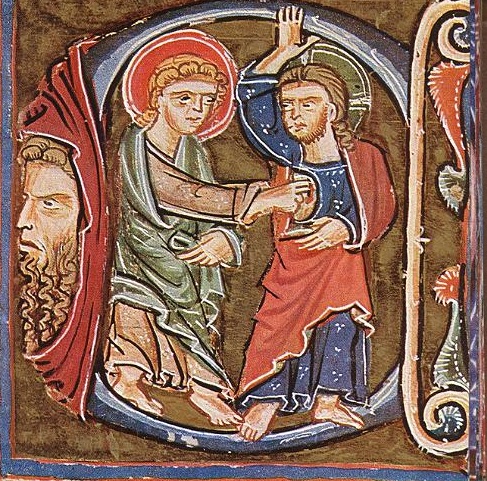
Incredulity of Thomas  
A week later his disciples were again in the house, and Thomas was with them. Although the doors were shut, Jesus came and stood among them and said, "Peace be with you." Then he said to Thomas, "Put your finger here and see my hands. Reach out your hand and put it in my side. Do not doubt but believe." Thomas answered him, "My Lord and my God!"                                                                                                          -John 20:26-28


detail, The Incredulity Of St Thomas, Frankish Miniaturist, Psalter, 1279


Almighty and everlasting God, who in the Paschal mystery established the new covenant of reconciliation: Grant that all who have been reborn into the fellowship of Christ's Body may show forth in their lives what they profess by their faith; through Jesus Christ our Lord, who lives and reigns with you and the Holy Spirit, one God, for ever and ever. Amen.

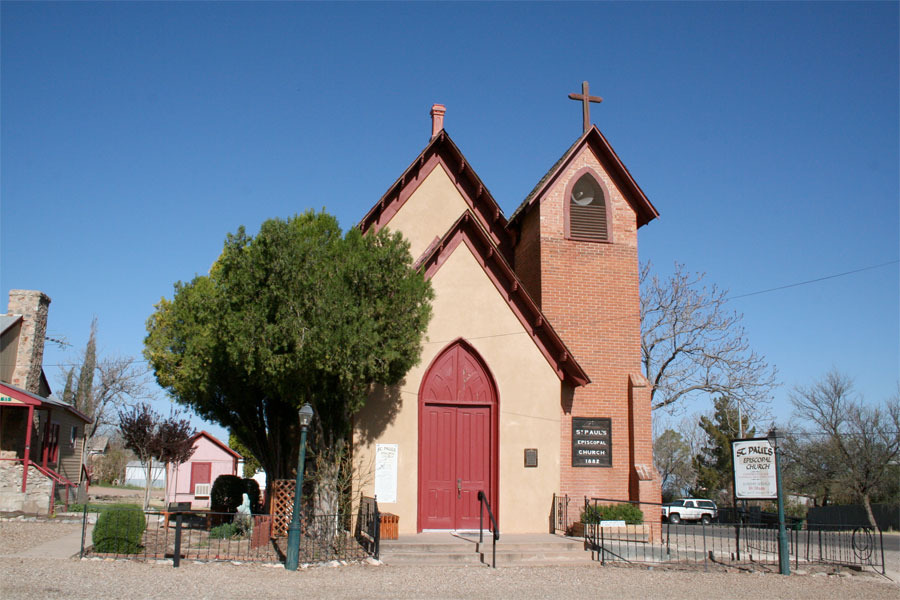
This morning participating in morning prayer with the good people of St Paul's Tombstone lead by Deacon Heather Rose, as we recited the Apostles Creed, I thought of its unfamiliarity to Sunday morning worship in the days of weekly common Eucharist. (Other days and daily offices, sure.) And I thought of the affirmation of faith it contains that echoes Simon Peter's brave announcement to the assembled powers-that-be in Jerusalem, the very ones he feared so much during the trial of Jesus. 

He is not afraid and we should not be either. We are more likely now to face people who think it is all just a story, that Jesus did not live, that at best he is a good example of a moral teacher. But those powers that be - including Pontius Pilate, prefect of Judea, who name and rank are chiseled into a stone stele found recently in Lebanon - did not crucify Jesus because of his resurrection. That is not what they feared, at least not yet. 

Jesus was crucified under Pontius Pilate because of how he lived: his faithful adamant witness to the truth, as the Gospel of John puts it so clearly. He confronts everyone with reality. It is not convenient. Just like his cousin John the child of Zechariah and Elizabeth before him, Jesus is quite willing to speak truth to power. And he is willing to tell truth to ordinary people too.

"What do you want me to do?" he asks a blind beggar. The response to the respect Jesus shows is immediate. Bartimaeus does not ask for something comfy. No, not at all. "That I might see!"

And see he does.

It is not always pretty.

And his fate, as a witness to the power of Jesus alive, is subject to the threat of the we-don't-want-to-hear-it people of his time.*

This courage Peter shows as well as he stands before the assembled authorities and bravely loudly proclaims the power of God manifest in the death, resurrection, and life of Jesus of Nazareth.

And now it is our turn. All of us are witnesses, now, to the power of God, the triumph of life, made manifest in Jesus. "Receive holy Spirit" Jesus said, as he breathed upon the disciples: it is this empowerment, this equipment, with the presence of the Spirit of God in us, that makes us able to stand up and testify, to be witnesses to the resurrection and power of God, in our own time.


Collect for the Second Sunday of Easter
Almighty and everlasting God, who in the Paschal mystery
established the new covenant of reconciliation: Grant that all
who have been reborn into the fellowship of Christ's Body
may show forth in their lives what they profess by their faith;
through Jesus Christ our Lord, who lives and reigns with you
and the Holy Spirit, one God, for ever and ever. Amen.


*Authorities in our own time did not want to hear it, and certainly did not want the news to spread and undermine their self-conscious authority, that there was a virus in town...

Thanks to Deacon Heather Rose for her sermon this morning for the people of St. Paul's Tombstone.


Monday, April 13, 2020

Monday in Easter Week


 https://www.magdala.org/

Suddenly Jesus met them and said, "Greetings!" And they came to him, took hold of his feet, and worshiped him. Then Jesus said to them, "Do not be afraid; go and tell my brothers to go to Galilee; there they will see me." (Mathew 28:9-10)


GO AND TELL: that is what the Risen Jesus says to the women, Mary of Magdala and the other Mary.  They are the first to hear and see and tell, in Matthew's Gospel.

GO AND TELL: and they do. The disciples go, as they are told by the women, to await him in Galilee.

"There they will see me" -- this is the refrain, come Easter Week,  of a chant at New Camaldoli, for all the Octave of Easter. He has risen as he promised - and he goes ahead of us.

He goes ahead of us. Before anyone else, he is there. 

He is there, in Galilee, cooking fish over an open fire on a stone by a lake, with birds and animals swimming by. 

He is there in the Resurrection.

He is there in the future. 

He is there for us.


http://www.dormitio.net/english/en.places/en.tabgha/t-church/index.html


The Book of Common Prayer, 1662:
Monday in Easter Week. The Collect.

ALMIGHTY God, who through thy only-begotten Son Jesus Chriſt haſt overcome death, and opened unto us the gate of everlaſting life; We humbly beseech thee, that as by thy special grace preventing us, thou doſt put into our minds good desires; so by thy continual help we may bring the same to good effect, through Jesus Chriſt our Lord, who liveth and reigneth with thee and the Holy Ghoſt, ever one God, world without end. Amen.

For the Epistle. ACTS 10. 34-43.
The Gospel. S. LUKE 24. 13-35.


The Book of Common Prayer, 1979.
Monday in Easter Week. The Collect.
Grant, we pray, Almighty God, that we who celebrate with awe the Paschal feast may be found worthy to attain to everlasting joys; through Jesus Christ our Lord, who lives and reigns with you and the Holy Spirit, one God, now and for ever. Amen.