Showing posts with label Philemon. Show all posts

Thursday, September 1, 2022

The Potter and the Clay


Pete Skoro, Eckels Pottery, Bayfield, Wisconsin, on August 25th 2022. 

At the potter’s house the other day I watched him select a lump of clay, start his wheel, and shape the clay, changing and molding it, with a vision that belied its original outward appearance as it was gradually transformed. He shaped it and scraped it, with his hands, a knife, and an improvised tool.

(Yes, he said, he would smoosh it down if needed and start anew.) But then after ten minutes something new had appeared, and he set it aside to dry.


Later he would fire it in the kiln, and then glaze it. 


Many centuries ago potters in the old world and the new made pots, fired them and glazed them. I have held in my hand potsherds from cliff dwellings and Anasazi villages, and also a piece of the Berlin Wall. The legacy of a pot may be good, or it may reflect evil - but note, not an evil that ultimately lasts. For God shapes our ends for peace and not harm.


For surely I know the plans I have for you, says the Lord, plans for your welfare and not for harm, to give you a future with hope. Jeremiah 29:11 (NRSV)


And those plans involve something we call reconciliation. For we are made and redeemed, and empowered, and reconciled, by one and the same Spirit.


Reconciled in Christ: Becoming Beloved Community is the theme of this year‘s diocesan convention and it is my theme therefore this day. To be reconciled in Christ is first of all to be reconciled with God in Christ and with each other and with ourselves: just as we are commanded to love God with all our heart, soul, mind, and strength and our neighbors as ourselves.  


It is in Christ that we come into right relationship with God, each other, and ourselves; it is in Christ that we are reconciled.


Reconciliation is with God and thanks be to God through Christ with others and with ourselves. 


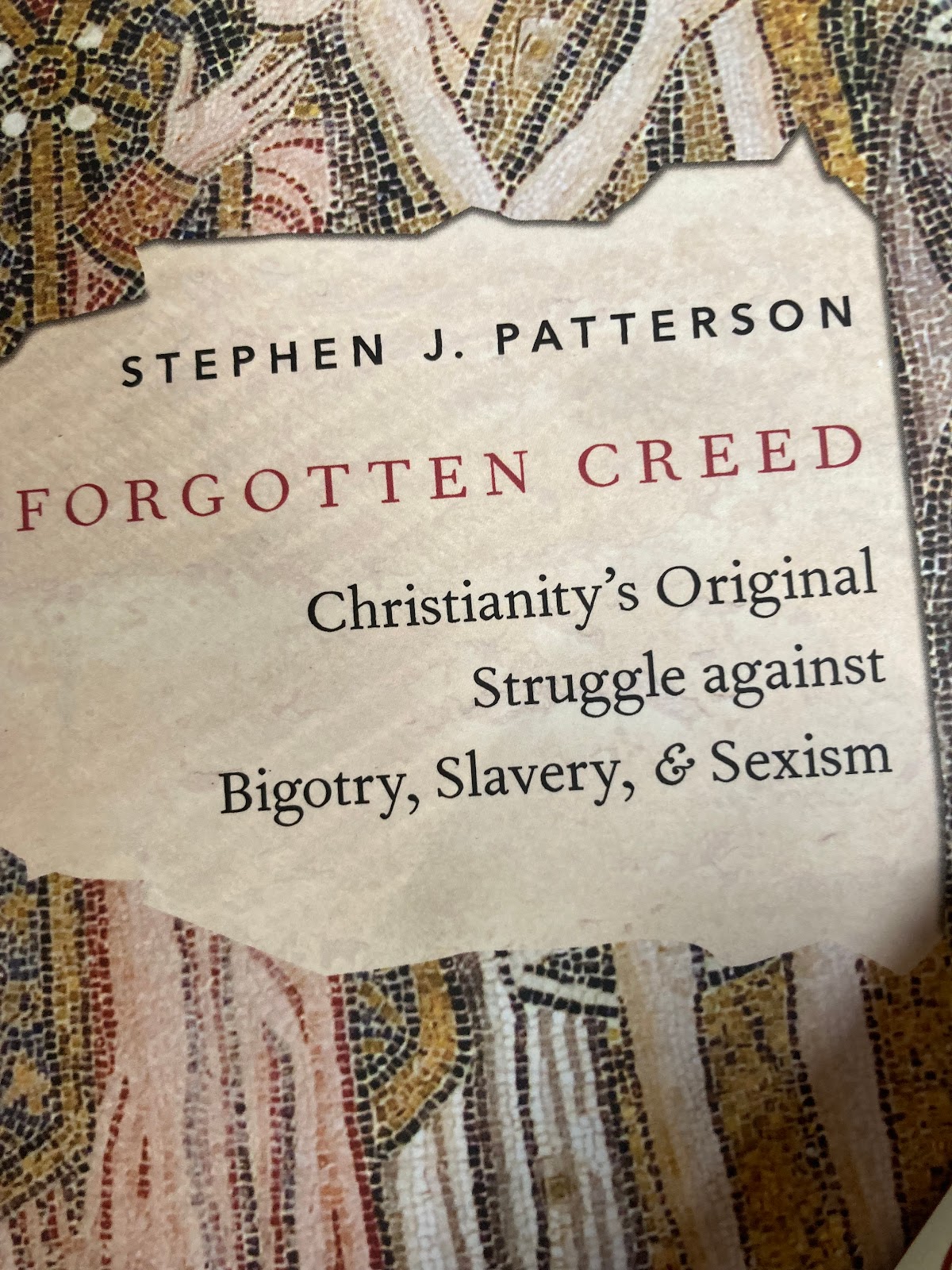
Stephen J. Patterson, in “The Forgotten Creed: Christianity's Original Struggle against Bigotry, Slavery, and Sexism” (Oxford University Press, 2018) argues that the most primitive creed is this: there is no Jew or Greek, there is no slave or free, there is no male and female. 


And that means… We are all children of God, we are all one in the Spirit. 


So of all the readings guess what Paul says to Philemon in his brief letter Onesimus – his name means “useful” – was useless to you as a slave but I am returning him to you useful as a brother, more than a slave a brother: and Paul makes the somewhat veiled request of Philemon that he set Onesimus free and even somewhat hints that it would be best to send him back again to Paul but now as a freedman. 


So how does Onesimus go from being useless to useful: is it through the transforming power of God through the Spirit?


In the letter to Philemon, as in many passages in the Hebrew and Greek scriptures, slavery is taken as a fact of society of the time: that doesn’t mean it is condoned so much as recognized as part of how life and society were, so that in the Old Testament (Hebrew Bible) readings there is slavery even of Jews and sometimes of Jews by others … but elsewhere in the New Testament we encounter Paul at his best: this passage in Galatians (3:26-29) :


“In Christ Jesus you are all children of God through faith. As many of you as were baptized into Christ have clothed yourselves with Christ. There is no longer Jew or Greek, there is no longer slave or free, there is no longer male and female; for all of you are one in Christ Jesus. And if you belong to Christ, then you are Abraham’s offspring, heirs according to the promise.”


Today our challenge is to come to an understanding in our full maturity in our current social context of what it means to be free, what it means to be freed, and what it means to have been enslaved in the first place.  


Over the centuries, as my teacher Neal Flanagan OFM has pointed out, the church has dealt with these three bondages: 


  • the ethnic and racial conflicts that “no longer Jew or Greek” represents, especially in the ancient world but on up through our own peril-fraught times; 
  • the justice conflict of “slave or free” including historic chattel slavery on up through the mid-19th century; and lastly 
  • the inequity of male-female relations, which the church began to address afresh only in the middle years of the 19th century and the various feminist movements to follow.  


The reconciliation of peoples means that there is no Jew or Greek, no slave or free, no male and female, in terms of precedence or power or right.


And, to return to our original theme, overcoming those conflicts is part of what it means to be reconciled in Christ: first to God, and then to others and ourselves … and we are learning that ‘others’ includes all of creation, including all created beings and certainly one another. 


And this helps us move forward in one challenge of our age: reconciling with other people not like ourselves. 


It is in Christ, in his work, in his life as well as his death, from incarnation on through crucifixion to resurrection, that we find our hope and the new possibility and even power to come to a right relationship with each other, ourselves, and God. That is the Christian hope.


Jeremiah 29:11-13 (CEB)

I know the plans I have in mind for you, declares the Lord; they are plans for peace, not disaster, to give you a future filled with hope. 


When you call me and come and pray to me, I will listen to you. When you search for me, yes, search for me with all your heart, you will find me. 


So what does it mean to be reconciled in Christ? What does it mean to be in right relationship with God, each other, and ourselves, and to come into right relationship with God, each other, and ourselves? 


It means to be reshaped as the potter reshapes the pot. It means to be reshaped, to submit ourselves to be reshaped, but also to undertake conversion - that is, to take responsibility for our own growth, development, and indeed, transformation.


We take active part in our own reshaping to God’s hand, to firing and glazing, to becoming solid in our place in creation, after testing it may be, becoming useful - as Onesimus became useful - in bringing into shape the reign of God, and becoming a legacy, lasting and good.


https://www.commonenglishbible.com/ 


Thirteenth Sunday after Pentecost

Proper 18

Jeremiah 18:1-11
Psalm 139:1-5, 12-17
Philemon 1-21
Luke 14:25-33


https://www.eckelspottery.com/


Pete Skoro, Eckels Pottery, Bayfield, Wisconsin, on August 25th 2022. At the wheel; the drying pot.


Stephen J. Patterson, The Forgotten Creed. Oxford, 2018.


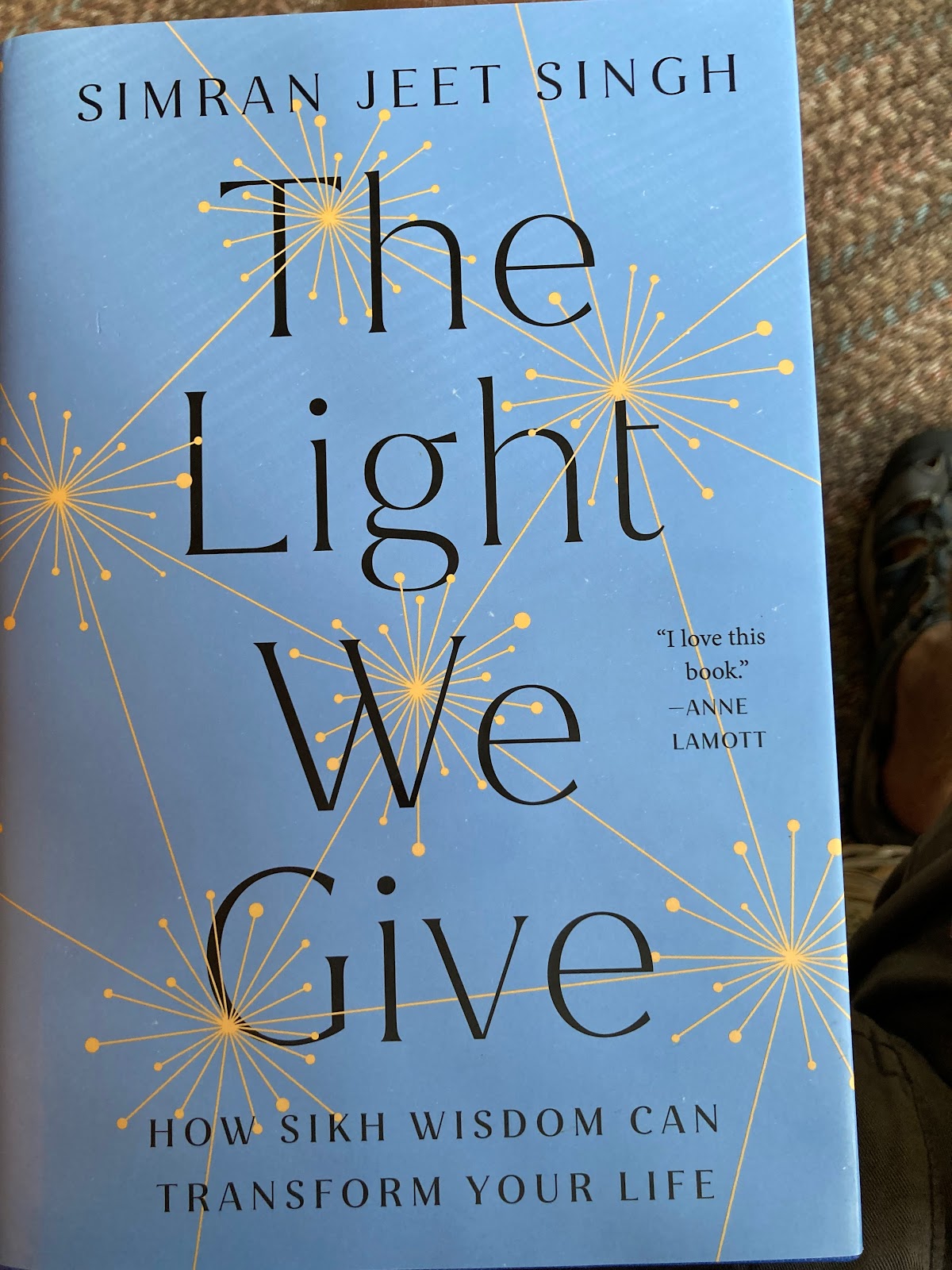
Simran Jeet Singh, The Light We Give. Riverhead, 2022.


Sunday, September 4, 2016

Onesimus

Preparing for Sunday...

God grant me the words and wisdom to hear your Word and preach it to your people. That they may be free, and know they are beloved by God, and to share that freedom with others. Liberate us Lord to teach and hear and live your message. May we all be free. In Christ. Amen.

Paul asks Philemon to look on Onesimus in a new way: as a brother in Christ; not as a subject of a dominant “power over” social order, with its economic and political dependence on unequal relationships.

In the kingdom of God we are all sinners. Philemon and and we are all including Onesimus beloved children of one Father.

Welcome him as a brother (and send him back to me) rather than reclaiming a runaway, or judging him as a renegade. [...or if you sent him freely, simply keeping him for your own purposes]

It seems to me that part of what the Gospel is about, part of what Paul seeks to achieve with Philemon, is to create [is the realization of] a new context in which the new relationship can emerge.

Once Philemon looks without blinders - looks with different eyes, Gospel eyes - he will begin to perceive in Onesimus his brother, not a run slave found out and fetched back.

In such a way such agencies as World Concern seek to alleviate poverty and to eradicate human trafficking, one of the slaveries (and slave trades) of our own day, by transforming a village (in this case in Laos) from a sink of poverty, lack of education, excess of disease, dearth of employment, without hope or prospects locally for the young to work to benefit their families, to a place where there is work, health, schooling, and the possibility of freedom from the entrapment by the up-and-down dominance system of relationships that Jesus so long ago and through his followers right now seeks to overcome.


Where else in the world today do we see need to release others - our brothers - from bondage?

In our personal relationships, are we carrying resentment into holding something over someone?

In our work, do we treat employees, customers, co-workers, bosses, as seeing them first as the beloved brothers and sisters they are?

In our social and political relationships, do we work for freedom, not just freedom from, but freedom to - freedom that includes a developing confidence in a hopeful future for one's self, one's family, and all the children of God?

Sunday, September 9, 2007

Whose service is perfect freedom: (Costing not less than everything)

Grant us, O Lord, to trust in you with all our hearts; for, as you always resist the proud who confide in their own strength, so you never forsake those who make their boast of your mercy; through Jesus Christ our Lord, who lives and reigns with you and the Holy Spirit, one God, now and for ever. Amen.


When it came time to sign the marriage license for two of my college friends, the minister gave as his title, “Slave of Jesus Christ”. In his letter to the Christians at Rome, Paul introduced himself as “doulon christou iesu” – a servant of Jesus Christ, not distinguishing between bondservant and freedman.

In his letter to Philemon, a brother in Christ and a slave owner, Paul makes distinct the difference between enslavement in the world’s system and free service offered to the Lord. He greets Philemon as a “dear friend and co-worker”, telling him he remembers him in his prayers always thankful because of Philemon’s love for all the saints – all the saints – and his faith toward the Lord Jesus. This love Philemon shows is a source of encouragement and joy. “The hearts of the saints have been refreshed through you, my brother,” Paul writes.

Therefore, Paul continues, I appeal to you – rather than making a command. “Refresh my heart in Christ”, he asks. Back to you I am sending Onesimus, whom you held as a slave. He has become a Christian, and hence my brother – and yours. Meanwhile I myself am held as a prisoner, for the love of Christ. Do something extraordinary, Philemon: receive him back but do not punish him; embrace him as a brother, and further than that, do not hold him accountable for anything you might hold against him. Charge it to my account.

It was not unusual, scholars like Richard Horsley tell us, in those days for one person to own another. Even for Christians, to be a slave or a slave owner was a simple matter of economics. But not to Paul: he is challenging Philemon to break free from the economic system the world has enthralled him in, and to do something that will strike its own blow against the empire.

Set him free. Furthermore, flying in the face of the practice of the time — slaves could buy their freedom for a price but would always owe their former master a share of their income — do not charge him for his freedom, or require him to pay you royalties on his future earnings. And you shall be made free yourself.

Slaves are compelled; to serve in Christ is an act of freedom. Paul asks, implicitly, for Philemon to free Onesimus, and so to free himself.

Paul does happen to mention a little debt, and a small requirement for obedience. Not to himself, not really, not to anyone on earth: but to God in Christ Jesus. You owe him everything, Onesimus: even your life.

And here we are back at the cross, with Jesus, who reminds the crowds who were following him – up to this point anyway – that to follow him means giving up all you have. Family, possessions, even life itself, all are to be counted as loss, compared to the one thing left to them, the service of Christ.

Philemon is not being asked to give up a little. Paul reminds him he owes everything in obedience. It is being asked of him now. To give up – “I know my rights!” – he might protest – to give up what he has in the world’s terms in order to take his place in the kingdom of God. Like the rich young ruler who went away sorrowing, Philemon might have thought of what he had to lose – but perhaps, since after all he did save the letter, he thought of what he had to gain.

All this may sound symbolic, to modern ears… until we think of the cost of discipleship we might be asked to pay.

Imagine a world in which one person might presume to own another, a world in which people are bought and sold like possessions. Imagine, indeed, millions trafficked this way across the globe today. And then imagine someone taking some small step to redeem, or set free, someone who is being held hostage to wage slavery or debt, or through physical or other coercion.

That is a world we live in, even now. Organizations of Christians across the world – World Concern among them – are working to help people out of this system, and to challenge the system that enslaves. We might or might not be called to take direct action on this front, but we all will be called at some point to estimate the cost, of carrying the cross, of discipleship.

"Whoever comes to me and does not hate father and mother, wife and children, brothers and sisters, yes, and even life itself, cannot be my disciple. Whoever does not carry the cross and follow me cannot be my disciple.… So therefore, none of you can become my disciple if you do not give up all your possessions."

Our God, whose service is perfect freedom (costing not less than everything) – how are we to serve? Whom would we consider a saint?

If a man were give up a good job in a prestigious institution, leave his fiancée behind, and join a conspiracy to assassinate the duly elected leader of his country, would we consider him a good Christian? If, then, caught, convicted, and imprisoned, he wrote that girl, telling her we now live in a world without God, would we praise his faith? We might acknowledge his contribution to Death of God theology, but would we call him a saint?

And yet there he is, on the calendar in Lesser Feasts and Fasts, for April 9th: Dietrich Bonhoeffer, Pastor & Theologian, 1945. Bonhoeffer left Union Theological Seminary to return to Germany at the beginning of the Second World War, and who subsequently was involved in the plot to assassinate Adolf Hitler that failed on 20 July 1944, is widely held as an exemplar of faith in the 20th Century.

If a nun were to talk her way out of her vow of stability, and go live on the streets of a big city, would we consider her a model of obedience? If then, and from then on, she felt – and wrote in her letters – that she too felt the absence of God, would we consider her a model of faith? If she carried on like that for fifty years, would we call her a saint?

And yet Mother Teresa of Calcutta, who confessed that she had experienced the dark night of the soul over a period of fifty years of serving the “poorest of the poor”, is widely acclaimed as a model, an extreme model, of faith.

To give up family, friends, possessions, life itself – even to experience existence bereft of a sense of God’s presence – indeed our Lord cried out from the cross, “My God, my God, why have you forsaken me?” – and yet somehow from this total loss, to experience the life of Resurrection, this is the cost, and the glory, of discipleship.


Sources:

Readings for Year C, Proper 18 [RCL]: Philemon 1-21. Psalm 139:1-5, 13-18. Luke 14:25-33.

T. S. Eliot, ‘Little Gidding’ (1942); Four Quartets (1943) [http://www.tristan.icom43.net/quartets/gidding.html]

Richard A. Horsley and Neil Asher Silberman, The Message and the Kingdom: How Jesus and Paul Ignited a Revolution and Transformed the Ancient World (Grosset/Putnam, 1997), p. 182-183.

http://www.worldconcern.org/NETCOMMUNITY/Page.aspx?&pid=527&srcid=429

http://www.utm.edu/research/iep/b/bonhoeff.htm

http://www.cofe.anglican.org/worship/liturgy/commonworship/texts/calendar/holydays.html

http://www.vatican.va/news_services/liturgy/saints/ns_lit_doc_20031019_index_madre-teresa_en.html

Lesser Feasts and Fasts (Church Publishing, 2006) [http://www.io.com/~kellywp/CalndrsIndexes/TxtIndexLFF.html]

My Life with the Saints by James Martin, S.J. (Loyola Press Chicago, 2006)
http://www.nimblespirit.com/html/my_life_with_the_saints_review.html

September 9, 2007, Trinity Cathedral, Sacramento.