Showing posts with label reconciled. Show all posts

Saturday, September 3, 2022

reconciliation of peoples

 ​​Bigotry, Racism, Sexism: Reconciliation between Creeds, Colors, Sexes and Genders.


As my teachers noted, the Churches have faced and begun to address three implications of the Gospel embodied in Christ and preached by Paul at his best in the letter to Galatians. Just to note: the Galatians were themselves objects of prejudice as they were Celts not Jews - therefore the argument about having to be circumcised to be a good Christian - and so they were troubled by a potential second-class status in the Church.


But this reveals the larger problem: they versus us. “He can’t be a man ‘cause he doesn’t smoke the same cigarettes that I do.” Rabbi Jonathan Sacks, in “The Dignity of Difference”, and many other teachers have reminded us that really there is no “them and us” : there is only us. Bigotry, anti-Semitism, anti-Islamic, anti- you name it, is an expression of anxiety and not of faith. 


Identity if it is in Christ is not threatened by the identity of others. It is not threatened by the status or class of others. If we love Christ the most - and that is what it means to love others (even ourselves) less - then all loves fall into right relationship. 


Racism - black/white, but also indigenous/immigrant, and many other distinctions - is another challenge to the Church, in itself and in its role in larger society. Martin Luther King, Jr., called eleven o’clock Sunday morning the most segregated hour in America. We are still working on this, so that we break bread together, so all of us do indeed share in one loaf, one cup. 


And offer our voices in praise: our diverse voices in praise. For we are all one in the Spirit but we are not the same: and that is a blessing. Each of us and each community offers different gifts, in praise to God, as we offer different prayers and practices. 


Sexism, and now increasingly an undertaking to make progress in understanding gender identity, is a continuing area of growth for churches.


And this is far from the end of the list. Different abilities, incarcerated versus free, political polarization, … the challenges continue.


But we hold this to be true: In Christ all are one, there is no Jew or Greek, slave or free, male and female; we are all one in the same Spirit. And blessed by our diversity.


And reconciliation of peoples begins with the hard work of the Gospel, the freedom that costs no less than everything, as - reconciled in Christ - we choose to follow Christ in building the beloved community, the kingdom of God.


Thursday, September 1, 2022

The Potter and the Clay


Pete Skoro, Eckels Pottery, Bayfield, Wisconsin, on August 25th 2022. 

At the potter’s house the other day I watched him select a lump of clay, start his wheel, and shape the clay, changing and molding it, with a vision that belied its original outward appearance as it was gradually transformed. He shaped it and scraped it, with his hands, a knife, and an improvised tool.

(Yes, he said, he would smoosh it down if needed and start anew.) But then after ten minutes something new had appeared, and he set it aside to dry.


Later he would fire it in the kiln, and then glaze it. 


Many centuries ago potters in the old world and the new made pots, fired them and glazed them. I have held in my hand potsherds from cliff dwellings and Anasazi villages, and also a piece of the Berlin Wall. The legacy of a pot may be good, or it may reflect evil - but note, not an evil that ultimately lasts. For God shapes our ends for peace and not harm.


For surely I know the plans I have for you, says the Lord, plans for your welfare and not for harm, to give you a future with hope. Jeremiah 29:11 (NRSV)


And those plans involve something we call reconciliation. For we are made and redeemed, and empowered, and reconciled, by one and the same Spirit.


Reconciled in Christ: Becoming Beloved Community is the theme of this year‘s diocesan convention and it is my theme therefore this day. To be reconciled in Christ is first of all to be reconciled with God in Christ and with each other and with ourselves: just as we are commanded to love God with all our heart, soul, mind, and strength and our neighbors as ourselves.  


It is in Christ that we come into right relationship with God, each other, and ourselves; it is in Christ that we are reconciled.


Reconciliation is with God and thanks be to God through Christ with others and with ourselves. 


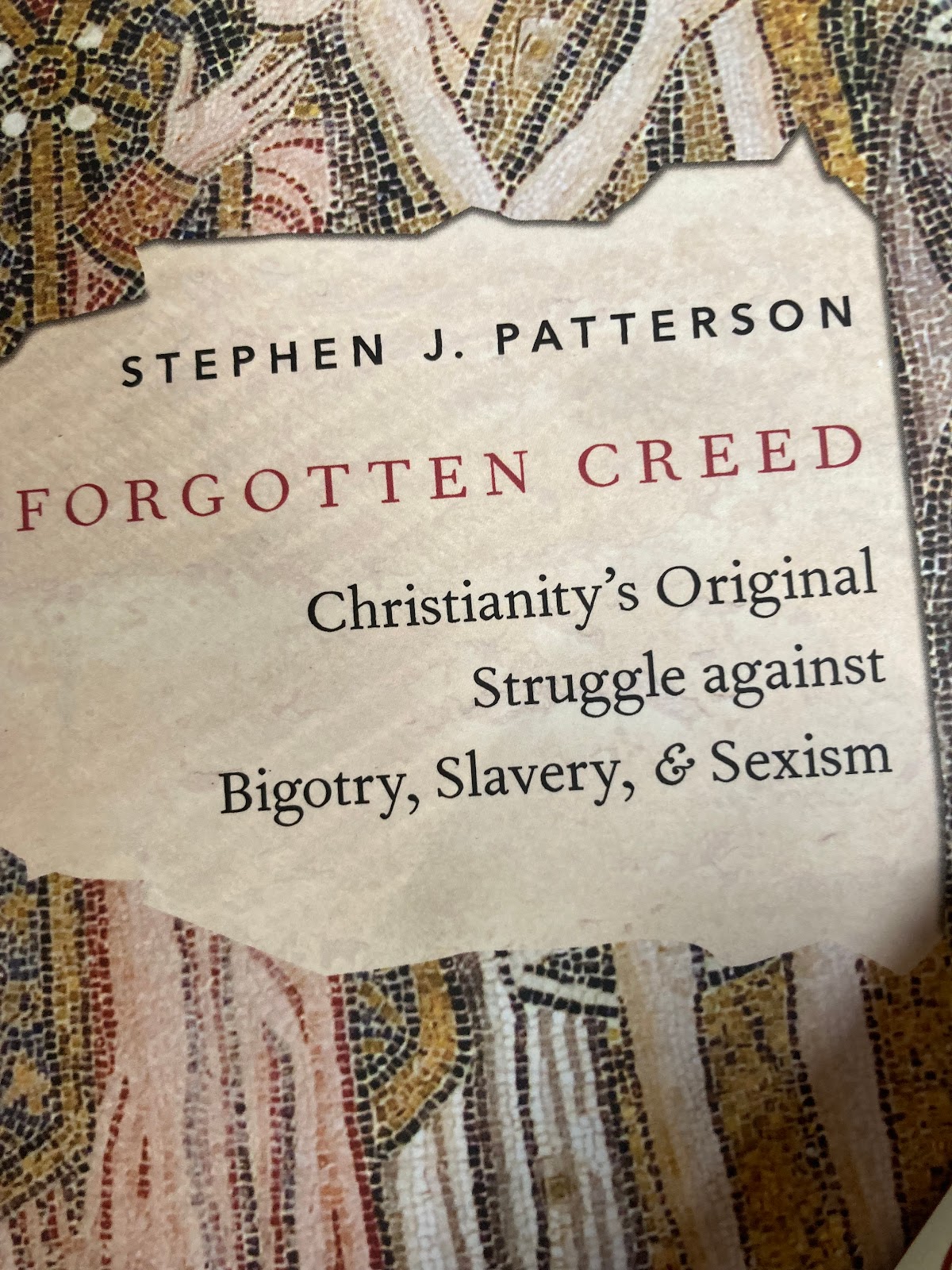
Stephen J. Patterson, in “The Forgotten Creed: Christianity's Original Struggle against Bigotry, Slavery, and Sexism” (Oxford University Press, 2018) argues that the most primitive creed is this: there is no Jew or Greek, there is no slave or free, there is no male and female. 


And that means… We are all children of God, we are all one in the Spirit. 


So of all the readings guess what Paul says to Philemon in his brief letter Onesimus – his name means “useful” – was useless to you as a slave but I am returning him to you useful as a brother, more than a slave a brother: and Paul makes the somewhat veiled request of Philemon that he set Onesimus free and even somewhat hints that it would be best to send him back again to Paul but now as a freedman. 


So how does Onesimus go from being useless to useful: is it through the transforming power of God through the Spirit?


In the letter to Philemon, as in many passages in the Hebrew and Greek scriptures, slavery is taken as a fact of society of the time: that doesn’t mean it is condoned so much as recognized as part of how life and society were, so that in the Old Testament (Hebrew Bible) readings there is slavery even of Jews and sometimes of Jews by others … but elsewhere in the New Testament we encounter Paul at his best: this passage in Galatians (3:26-29) :


“In Christ Jesus you are all children of God through faith. As many of you as were baptized into Christ have clothed yourselves with Christ. There is no longer Jew or Greek, there is no longer slave or free, there is no longer male and female; for all of you are one in Christ Jesus. And if you belong to Christ, then you are Abraham’s offspring, heirs according to the promise.”


Today our challenge is to come to an understanding in our full maturity in our current social context of what it means to be free, what it means to be freed, and what it means to have been enslaved in the first place.  


Over the centuries, as my teacher Neal Flanagan OFM has pointed out, the church has dealt with these three bondages: 


  • the ethnic and racial conflicts that “no longer Jew or Greek” represents, especially in the ancient world but on up through our own peril-fraught times; 
  • the justice conflict of “slave or free” including historic chattel slavery on up through the mid-19th century; and lastly 
  • the inequity of male-female relations, which the church began to address afresh only in the middle years of the 19th century and the various feminist movements to follow.  


The reconciliation of peoples means that there is no Jew or Greek, no slave or free, no male and female, in terms of precedence or power or right.


And, to return to our original theme, overcoming those conflicts is part of what it means to be reconciled in Christ: first to God, and then to others and ourselves … and we are learning that ‘others’ includes all of creation, including all created beings and certainly one another. 


And this helps us move forward in one challenge of our age: reconciling with other people not like ourselves. 


It is in Christ, in his work, in his life as well as his death, from incarnation on through crucifixion to resurrection, that we find our hope and the new possibility and even power to come to a right relationship with each other, ourselves, and God. That is the Christian hope.


Jeremiah 29:11-13 (CEB)

I know the plans I have in mind for you, declares the Lord; they are plans for peace, not disaster, to give you a future filled with hope. 


When you call me and come and pray to me, I will listen to you. When you search for me, yes, search for me with all your heart, you will find me. 


So what does it mean to be reconciled in Christ? What does it mean to be in right relationship with God, each other, and ourselves, and to come into right relationship with God, each other, and ourselves? 


It means to be reshaped as the potter reshapes the pot. It means to be reshaped, to submit ourselves to be reshaped, but also to undertake conversion - that is, to take responsibility for our own growth, development, and indeed, transformation.


We take active part in our own reshaping to God’s hand, to firing and glazing, to becoming solid in our place in creation, after testing it may be, becoming useful - as Onesimus became useful - in bringing into shape the reign of God, and becoming a legacy, lasting and good.


https://www.commonenglishbible.com/ 


Thirteenth Sunday after Pentecost

Proper 18

Jeremiah 18:1-11
Psalm 139:1-5, 12-17
Philemon 1-21
Luke 14:25-33


https://www.eckelspottery.com/


Pete Skoro, Eckels Pottery, Bayfield, Wisconsin, on August 25th 2022. At the wheel; the drying pot.


Stephen J. Patterson, The Forgotten Creed. Oxford, 2018.


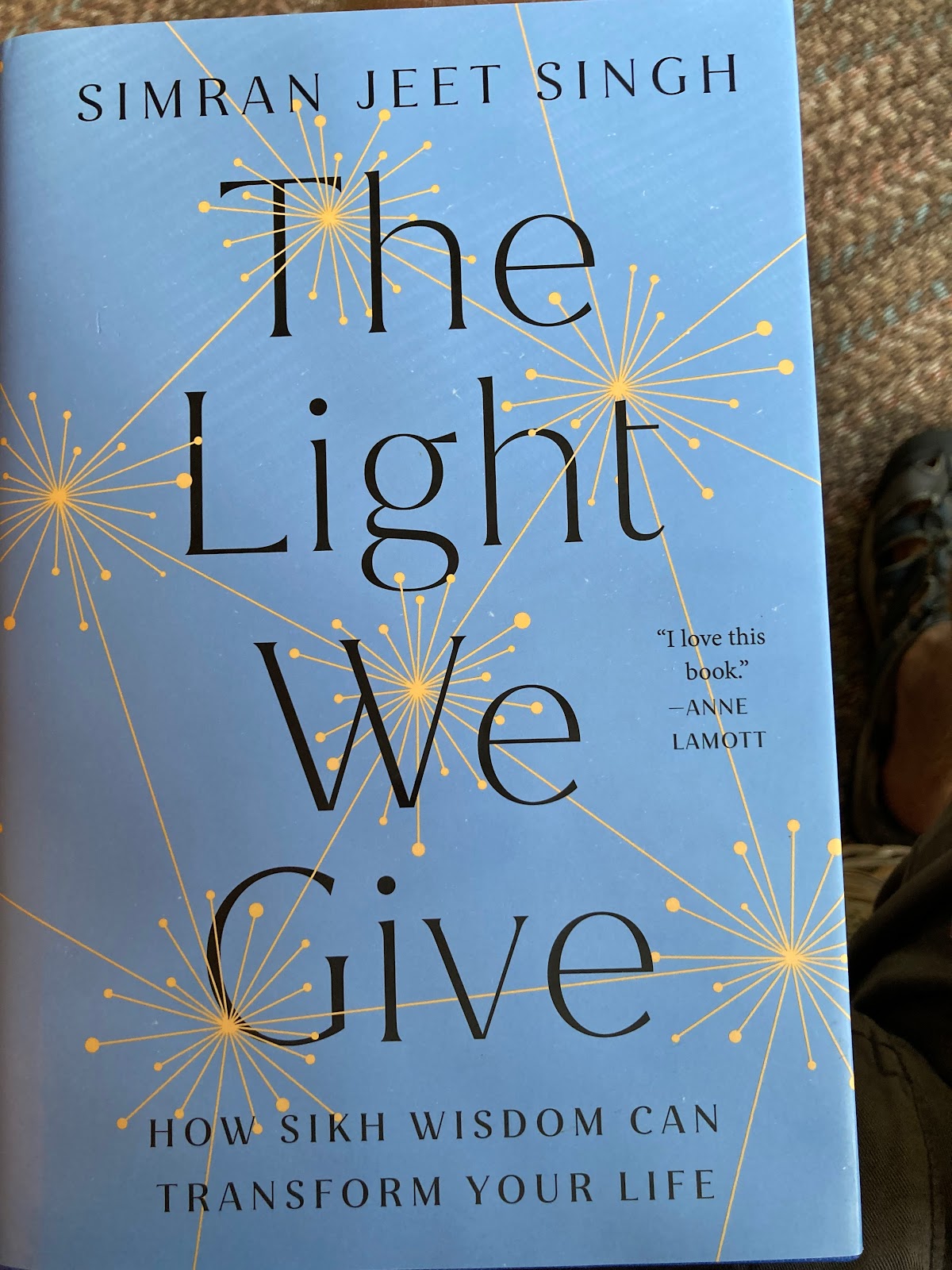
Simran Jeet Singh, The Light We Give. Riverhead, 2022.


Sunday, August 21, 2022

Reconciled in Christ

 In Christian thinking, Christ works in the world reconciling all things. To be reconciled in Christ is first of all to be reconciled with God in Christ and then with each other and with ourselves. It is in Christ that we are reconciled, that we come into right relationship with God, each other, and ourselves; just as we are commanded to love God with all our heart, soul, mind, and strength and our neighbors as ourselves.  

Reconciliation is with God and thanks be to God through Christ with others and with ourselves. And that plays out in how we differ and how we are united. Stephen J. Patterson, in “The Forgotten Creed: Christianity's Original Struggle against Bigotry, Slavery, and Sexism” (Oxford University Press, 2018) argues that the most primitive creed is this: there is no Jew or Greek, there is no slave or free, there is no male and female. 


And that means… We are all children of God, we are all one in the Spirit. 


So guess what Paul says to Philemon in his brief letter: Onesimus – his name means “useful” – was useless to you as a slave but I am returning him to you useful as a brother, more than a slave a brother: and Paul makes the somewhat veiled request of Philemon that he set Onesimus free and even somewhat hints that it would be best to send him back again to Paul but now as a freedman. 


In many passages in the Hebrew and Greek scriptures slavery is taken as a fact of society of the time: that doesn’t mean it’s condoned so much as accepted as part of how life and society were, so that in the Old Testament (Hebrew Bible) readings there is slavery even of Jews and sometimes of Jews by others and in the New Testament we encounter Paul at his best:  this passage in Galatians (3:26-29):


“In Christ Jesus you are all children of God through faith. As many of you as were baptized into Christ have clothed yourselves with Christ. There is no longer Jew or Greek, there is no longer slave or free, there is no longer male and female; for all of you are one in Christ Jesus. And if you belong to Christ, then you are Abraham’s offspring, heirs according to the promise.”


Today our challenge is to come to an understanding in our full maturity in our current social context of what it means to be free, what it means to be freed, and what it means to have been enslaved in the first place.  Over the centuries, as my teacher Neal Flanagan OFM has pointed out, the church has dealt with these three bondages: the ethnic and racial conflicts that “no longer Jew or Greek” represents, especially in the ancient world but on up through our own peril-fraught times; the justice conflict of “slave or free” including historic chattel slavery on up through the mid-19th century, and its aftermath on into our own century; and lastly the inequity of male-female relations, which the church began to address afresh only in the middle years of the 19th century and the various feminist movements to follow. The reconciliation of peoples means that “there is no male and female” in terms of precedence or power or right.


And, to return to our original theme, what it means to be reconciled in Christ: first to God, and then to others and ourselves … and we are learning that ‘others’ includes all of creation, including all created beings and certainly one another. And this helps us move forward in one challenge of our age: reconciling with other people not like ourselves. It is in Christ, in his work, in his life as well as his death, from incarnation on through crucifixion to resurrection, that we find our hope and the new possibility and even power to come to a right relationship with each other, ourselves, and God. That is the Christian hope.


The Rev. Dr. John Leech is priest associate at the Episcopal Church of Saint Matthew in Tucson.

Saturday, November 7, 2020

Reconciled

 Let justice roll down like waters and righteousness like an ever-flowing stream!


Brother Roger of Taizé, during a pilgrimage of youth to the Washington National Cathedral in about 1980 or 1981, at the conclusion of the service invited anyone who wanted to come up and he would offer them a sign of reconciliation: and he would make, with his finger, the sign of the cross in the palm of your hand. 


Responding to the racial upheavals of fifty years ago, James H. Cone wrote his famous, fiery book Black Theology & Black Power. He said that reconciliation comes with the establishment of justice and righteousness, with telling the truth. 


James H. Cone reminded his readers that it is in Christ that reconciliation comes. And he cited the words of St. Paul: 


God was in Christ reconciling the world to himself. (2 Corinthians 5:19)


Two very different voices, but both call on God as the source and endpoint of reconciliation. 


If you want peace, work for justice.


Even last Sunday we were reminded, in the national service of prayer for healing and wholeness, to be brave, and seek the truth. (Valarie Kaur)


And in the truth, we will find our way toward justice, righteousness, and peace, the peace of reconciliation, to one another, and as these Christian witnesses would say, in Christ.


This Sunday, the second Sunday in November, I want to talk about reconciliation. Racial reconciliation is one of the three themes, along with creation care and evangelism, that the Episcopal Church has undertaken to address during this triennium, the three years between General Conventions. But of course that is not the only reason to talk about reconciliation today. Last Sunday at the suggestion of our local precinct captain, neighbors began to remove political yard signs from their yards, since there was anticipation of some unrest regardless of the results of the national general election. And this Sunday, November 8th, is the Sunday after Election Day. 


It is also the Sunday before Armistice Day, Veterans Day: a day to remember the efforts of veterans and others to practice reconciliation after armed conflict, beginning with the first World War. Among the returning veterans from that war were the founders of the Iona Community, notably George MacLeod, who began to work for justice, and work toward their own righteousness, in community, on the windy western island of Iona, in Scotland. Iona began to attract visitors and volunteers, and continues to be a pilgrimage destination to this day. 


After the second World War, in the small village of Taizé near the demarcation line which had divided France in two, a community gathered that became a place where people could seek reconciliation across national and generational boundaries, and seek the Spirit in guidance and celebration. Brother Roger came from there.


And on our minds this year in this country has been the overwhelming need to seek reconciliation between alienated people, of different races, classes, and political persuasions. 


When reconciliation seems most impossible, then it most needs to be sought: in the work and words of Jesus we find a way toward it; and his footsteps we follow toward that goal.


***


Among the impressive achievements of reconciliation in the past centuries has been the effort of old soldiers, veterans from opposing sides of past wars, to reconcile with some of those from the other side. This may be rare, and therefore celebrated all the more. Veterans from the first and second World Wars have gradually found each other; leaders of nations from that conflict have met each other. Veterans of the American war in Vietnam have journeyed back to meet the people from the other side. An American president laid a wreath at Hiroshima.


After the Civil War, widows and veterans north and south began to decorate graves on certain days; eventually these observances were merged into one national Memorial Day. Problematic as some of the monuments were and are, there were attempts also to see the resolution of the conflict in peace. 


Of course, “if you want peace work for justice” … which is why to move toward reconciliation we tell the truth, and strive for righteousness, and work for justice.


And that is what this day, between Election Day and Veterans Day, is about.


Working for justice, striving for righteousness, that peace may flow like a river, “flowing out from you and me, flowing out into the desert, flowing to the sea.”


****


So often with Old Testament (Hebrew Scriptures) prophets we want to know what the context is: when were they writing, to whom, what was going on around them. With Amos, in this passage, we know! He is writing to us, now, about what is going on around us. That seems to apply regardless of the immediate circumstances. And of course we cannot just cut and patch what he has to say into our own arguments. But we can use them as a prophetic distraction from our own concerns, our own perspective, and look beyond even his original readership to what God is doing in our listening to this ancient denunciation of vanity, hypocrisy, injustice, unrighteousness, and the lack of peace, truth, and reconciliation. Wisely, many have taken a page from the South African initiative called the Truth and Reconciliation Commission. And others no less astute have learned from mediation teachers like Hizkias Assefa, as they lay out and model the steps to peace. 


One time Dr Assefa waited all day at the edge of a jungle clearing, in southern Sudan, with representatives of the official government, as they kept an appointment with some one no one had see for ten years: the leaders of the Lord’s Resistance Army, an insurrectionary group famous for its violent methods. At the end of the day the sun was setting, everybody was getting nervous - they were in the middle of the jungle, far from safety -  and the LRA vice-president emerged from the jungle, clad in immaculate white safari suit. He had been watching from the jungle for signs of betrayal and only emerged when he was satisfied. And so, on a pad of group-process newsprint Dr Assefa, as mediator and facilitator, began to enumerate the ground rules of the conversation. No interrupting, yes, raise your hand, listen, but first: begin by not killing people or kidnapping children any more


What Amos does for us is remind us that 

we are not the ultimate, 

we are not alone, that in fact 

what God is doing and 

what therefore we are called to do, will always 

stand in judgment over our own perspective and our actions.


What does the Lord require? 


To do justice, to love mercy, to walk humbly with our God. (Micah 6:8)


What does the Lord require, of us, now? God is present in the present moment, the moment of freedom, of decision: what now shall be done? We don’t always know.


And so we seek wisdom from the ages not just our own. Even ancient wisdom of a faraway people in a time long ago, Amos in Israel... and next door. Right now.


χρόνος is out the window! καιρός is what is going on now. That is, clock time, twenty-four hour-a-day check-your-phone time, is no longer applicable. What matters is time in its fullness, the completion of time, the consummation of time. That is when the bridegroom arrives.


You may know people who operate like this - they arrive when they arrive. I’ve seen it everywhere from a Sufi imam to a group of Miwok dancers absorbed in a gambling game and missing their turn on stage at an acorn festival. It makes the manager types - the clipboard carriers - tear their hair out. And I’m not immune myself, having been to a wedding where the bride was twenty clock minutes late. 


Then, on the arm of her uncle, in she walked. Radiant. At last! and right on time.


And that is what is, was, is, will be, like when Jesus comes. At last! And at once.


The bridegroom. Here at last, after shaking as many hands as could reach him, making his way down the street from congratulatory bottle-happy well-wisher to cheek-kissing lipstick-planting auntie. 


All of it happens at once and for always. Every moment becomes the present moment, the moment of freedom. 


And now - as it is always now - we face the judge who is our friend.


That is the last scene that this gospel is leading toward, the scene beyond dreams that is the last judgment, when Jesus meets again for the first time those who have treated the least of these as they would have treated him.... Christ the King. And your neighbor.


Amos 5:18-24

Psalm 70

1 Thessalonians 4:13-18

Matthew 25:1-13

Proper 27 Year A (Revised Common Lectionary)


https://pima.bibliocommons.com/list/share/1102635677_pimalib_kindred/1747324749_the_power_of_the_black_vote


https://pima.bibliocommons.com/list/share/338799627_pimalib_nuestrasraices/1658182879_borderlands_a_scarred_landscape


https://www.library.pima.gov/blacklivesmatter/


Barack Obama, Dreams From My Father: a Story of Race and Inheritance (1995; Broadway Paperbacks, 2004)


Barack Obama, The Audacity of Hope: Thoughts on Reclaiming the American Dream (Crown, 2006)


Barack Obama, We Are the Change We Seek: The Speeches of Barack Obama. E. J. Dionne Jr. and Joy-Ann Reid, eds. (Bloomsbury, 2017)


Barack Obama, A Promised Land (Crown/Penguin Random House/Bertelsmann, 2020)


Martin Buber, I and Thou (1932)


James H. Cone, Black Power and Black Theology (Harper & Row, 1969; Orbis Books, 2018)


James H. Cone, Said I Wasn't Gonna Tell Nobody: the Making of a Black Theologian (Orbis Books, 2018)


King, Martin Luther, Jr., Where Do We Go From Here; Chaos or Community? (Beacon Press, 2010)


Wallis, Jim, America's Original Sin: Racism, White Privilege, and the Bridge to a New America (Brazos Press, 2016)


Taizé: The Beginnings (https://www.taize.fr/en_article6526.html)


November 1, 2020: 11am Sunday Worship Service at Washington National Cathedral (https://www.youtube.com/watch?v=zaoajBV890g&feature=youtu.be)


The Episcopal Church, November 1, 2020: Holding onto Hope: A National Service for Healing and Wholeness (https://www.youtube.com/watch?v=JXCaXNSrX8s)(https://episcopalchurch.org/posts/publicaffairs/presiding-bishop-michael-currys-sermon-holding-hope-national-service-healing-and)


The Call, Reconciled, LP (1986: WEA/Elecktra/Asylum (catalog#60440)


J. S. Bach, Wachet auf ruft die stimme BWV 140 (https://youtu.be/DqZE54i-muE)


https://www.youtube.com/watch?v=Q9MXYTNgZFM