Sunday, August 9, 2020

no sign


As Confederate Generals descend from their pedestals, and our nation rethinks what it has held up as worthy of secular reverence, I've been thinking. About symbols, but not just of civil religion.


The church I frequently attend has a big crucifix above the altar at the front of the church. What if instead we had something else? A Good Shepherd window perhaps, or an icon of the Trinity.


To me the crucified Christ depicted above the altar was the one who lived and died and rose again on our behalf, whose life was filled with unwavering integrity and absolute obedience to the point of accepting even betrayal at the hand of a friend and execution by the authorities.


To someone else it was a dead Jew, a man pursued and tortured and executed, not a redeeming work at all.


What if something else were at the front of the room? If another symbol focused our worship?


On a break during a conference on the 21st century church some years ago at Washington National Cathedral, I sauntered into the gift shop, where the author of the article cited below told me she was looking for a Trinity symbol, one she could wear. There were plenty of crosses. Helpfully I suggested where she might find some: Irish import stores. Maybe so;  a friend wears a Newgrange Trinity symbol ball cap. But her purpose was not to affirm Ireland, as you can read for yourself. What she was looking for was similar to my inquiry above: what if we went with a different symbol, or no sign at all?


Jesus said, according to the gospel of Matthew (12:39), no sign will be given this generation except the sign of Jonas. Thomas Merton wrote about ‘traveling in the belly of a paradox’, that is, to be in a place of not-seeing, not-knowing, but still moving forward in that divine darkness.


The Sign of Jonah

Then some of the scribes and Pharisees said to him, ‘Teacher, we wish to see a sign from you.’ But he answered them, ‘An evil and adulterous generation asks for a sign, but no sign will be given to it except the sign of the prophet Jonah. For just as Jonah was for three days and three nights in the belly of the sea monster, so for three days and three nights the Son of Man will be in the heart of the earth.  


What if that is the sign we need?  


To set aside our ideas of what is what and to look again and be open, and let ourselves see what is not there. And what is.


And what, out of that darkness, is being borne into the light.


Barbara Brown Taylor, "How my mind has changed: Finding God outside the church walls", The Christian Century, July 9th 2020. https://www.christiancentury.org/article/how-my-mind-has-changed/finding-god-outside-church-walls


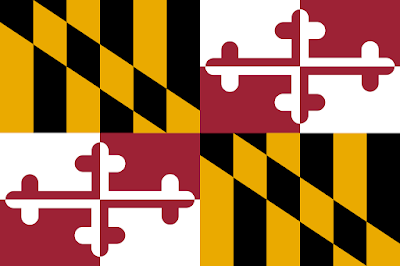
retrocessional


Give it back. That was the caption of my drawing showing my suggestion for a new flag for D.C. - the 17th-century heraldic banner of arms of Cecil Calvert, 2nd Baron Baltimore. Look familiar?


The Washington Star ran a contest back in the 1970s: it was time, they said, for a new flag for the District of Columbia. 


I thought of representation, of ‘taxation without representation’, and of “DC : The Last Colony”, and wondered, if it were not time to make sure that residents of the federal city had a vote.


Hence my suggestion.


From the first days of our republic, the U.S. Constitution (Article I, Section 8, Clause 17) provided for a district set aside for the federal government, to comprise a territory not exceeding ten miles square. So the founders picked a place, straddling the Potomac River, with some land ceded by the states on either side, Virginia to the south and west and Maryland to the north and east.


But from 1801 the residents of that district no longer had a vote in federal elections, as The Economist points out (“DC history: Without representation”, August 8th 2020, 23). And by 1846 the people on the Virginia side had had enough, and by an act of retrocession recovered the franchise, and the Old Dominion its territory. 


So the orphaned voters were only on the northern side. But they need be orphans no longer. 


It is time for the residents of the Capital city to have a voting representative in Congress. The question is how.


Before the Senate languishes a House resolution to grant the District statehood. They could pass it, and send it to the Resolute desk for signature. That would do it. 


But perhaps ticklish Senators will seek a compromise. And that could come another way: by retrocession of territory to Maryland, reserving for the seat of government a federal district comprising the Capitol, the National Mall and Memorial Parks, and the President’s Park (White House), all now national park land and with no permanent residents.


Washingtonians would gain voting representation in both houses of Congress; but they would become residents of Maryland, perhaps of a new county, called Potomac or Columbia.


It may not fly. But hey, why not run it up the flagpole and see if anyone salutes?


https://www.heritage.org/report/the-constitution-and-the-district-columbia

https://en.wikipedia.org/wiki/Flag_of_Maryland

https://www.economist.com/united-states/2020/08/08/residents-of-washington-dc-could-once-vote-for-congress

Saturday, August 8, 2020

yesterday


Yesterday for the first time since June 5th we put the dogs in the car and drove up to the top of Mount Lemmon. The last time we drove up Mount Lemmon was the day before we watched lightning strike the western slopes of Pusch Ridge. That was the beginning of the Bighorn Fire, which burned 120,000 acres before the first big monsoon rain finally put it completely out. As the fire began to ebb into embers and ashes, and the many crews of firefighters, weather service, deputy sheriffs, and game and fish officers, could pack up, the conversation began around how to recover, or what is next. The forest service has something in place: a Burned Area Emergency Response plan. 

What we saw yesterday was much the same, for awhile, until we got up to where we had picknicked two months before and saw from the edge of the road the whole mountainside to the north down to the next valley scorched and covered with ashes. As we descended from the ski area above Summerhaven we could see how close the fires had come to the mountaintop telescopes and the edge of the road. And we could see the first small green sprouts as new growth began on the ashen slopes of the mountain faces.

And so this local disaster, which occupied our minds and feelings for over a month, as the smoke, the helicopters and airplanes, and on many days the flames, occupied our senses, began to release its hold on us. In the middle of the fire month of June I had listed our common anxieties in order of longevity - and perhaps in reverse order of attention. 

1. The Bighorn Fire

2. The Coronavirus Pandemic

3. The Presidency

4. Climate Change

The Bighorn Fire began June 5th in the Catalina Mountains and ended a little over a month later. (Fire season is far from over in the Southwest, but see below under #4.) 

The Coronavirus Pandemic began sometime last December in southern China and has far from peaked, though there is hope that with proper precautions at the individual, social, national, and global levels, and the efforts to develop and distribute a vaccine, it can become another endemic disease, like the flu or the common cold, rather than the fourth scourge alongside tuberculosis, malaria, and HIV/AIDS. 

I'm skipping one. 

Climate Change began 250 years ago and will have its effects for the next millenia. It causes things like our wretched summer of excessive heat as well as the more extreme weather events and the more frequent droughts, fires, rainstorms, floods, and mudslides that are piling on top of each other.

The Presidency will, according to The Economist, nine chances out of ten be handed over to the opposite party in January. 

After the Bighorn Fire the Burn Area Emergency Response plan goes into effect. Shall we re-seed as we did after the Aspen Fire? After the fire in the Big Bear area some years ago, Giant Sequoia were planted. Will we see planting of indigenous species? After the Oakland Hills fire of 1989 people built back, better one hopes. After the second Great Earthquake and Fire of San Francisco, the one in 1909, the City came back, different but greater.

We talk about the new normal. We talk about before, during, and after. We talk about building back better. 

But I can tell you, since the first Tuesday after the first Monday in November four years ago, an obsession has gripped many minds. And so we when we begin to talk about what is next what we talk about is the disaster continuing. But nine chances out of ten less than ninety days from now there will be an election that begins to overturn the current situation, political but not climate or health, and people have NO IDEA what that will look like. I hope the prospective next president has some people on board who do see a future with hope. Too many are too obsessed with the present to look ahead.

And yet the future is where we will live. At least the next generation, and many of us, will live in it.

We will not see again what we had before. But we can begin to build what we can become, indeed what we are called to become, as individuals, as citizens of this nation, and as creatures on this planet. 

We have to. For we will survive, and it is our duty.


Sunday, July 19, 2020

sputnik

Humanities, this may be your Sputnik moment. Sputnik was a wakeup call to American educators to improve their teaching in science, technology, engineering, and mathematics. But technological expertise is not enough. In meeting the challenges of society today we will want to draw on the resources of philosophy, politics, and economics, as well as historical and religious studies.
Recently the New Yorker magazine online ran an article on the importance of the press for democracy, drawing upon a mid-century study by a group that included Reinhold Niebuhr. Follow that line and you get to his prescient essay, "The Race Problem", first published in the summer of 1942 in Christianity and Society. That it was prescient is not the point. That it was dedicated to a thorough and serious examination of the persistent challenges of human society is: these are more than pandemic issues.
And even more recently, in an article by Lawrence Wright, entitled, in the July 20, 2020, issue of the New Yorker, Gianna Pomata, a medical historian from Johns Hopkins, observed, "After the Black Death, nothing was the same. What I expect now is something as dramatic is going to happen, not so much in medicine but in economy and culture. Because of danger, there's this wonderful human response, which is to think in a new way."

Sunday, July 5, 2020

Getting Rid of Stuff

Bighorn Fire, Catalina Mountains.


My brother used to talk a lot about getting rid of stuff. After his death, we went through his apartment. We found his clothes and his excess vitamin supplements, his training equipment and his furniture, and eventually opened the top drawer of his dresser. The Lord of the Rings DVDs were in the drawer under the TV. We found a double rack of six storage bins with his personal papers. In the closet were his hiking hat, green pullover pile sweater, and fancy walking stick. On the wall hung our grandfather's campaign hat from the forest service or the first world war. 

Up front as we entered the apartment had been an organizer bin propped on a dining room chair, full of photographs. In the trunk of his car were a bunch of road flares. All we took was a box of things that seemed practical at the time. A Pendleton blanket. I don't know what else. What happened to his lifetime of photographs -- he was a pretty good amateur photographer -- or anything else, and it doesn't matter. What really mattered was gone.

In the early days of the Bighorn Fire, from the evening we watched the lightning strike the Catalinas, and the next morning's first smoke, I remembered the smoke rising over the Oakland Hills on the Sunday morning when hot dry winds fanned slumbering embers into flame that consumed a neighborhood. Among the parishioners were a man named Bob who lost everything and another man who already had, in a divorce. The second man shrugged and said he'd sleep at the hospital where he worked for awhile. Bob was devastated. I hope he's okay. 

And I'd remember longer ago, the family memory of 1906 in Cow Hollow, San Francisco. Aunt Carol said, "When I was eighteen years old there was an earthquake. My father said, 'Carol, stand in the doorway, and I did!" The Japanese art student living with the family asked, "Do you have these here often?" And, we learned, the family evacuated to Golden Gate Park, or perhaps the closer Presidio, where "Mama cooked in a big black pot over an open fire" and they slept in a tent until the all-clear.

Early in the past month I recalled the picture of Gandhi's personal effects assembled after his death: two pairs of spectacles, sandals, a dhoti, and a rice bowl. And what was found in the coffin of Saint Cuthbert of Lindisfarne, when they opened his tomb in Durham Cathedral five hundred years ago: his episcopal ring and pectoral cross (the latter often copied), his comb, and his portable altar with its mica top (for a stone surface) and inner drawer for the bread, the wine, the oil, the sacraments.

I thought of aunt Em's last possessions, as she waited death in a convalescent home in Millbrae. Just a wall bulletin board pinned with family photographs, and the latest copy of TV Guide, which I sent her. What she remembered were the visits of aunt Diane. Her own sister Virginia had predeceased her by years.

And I thought about the stuff in my house after the Loma Prieta earthquake, how I'd gotten home from San Francisco late that evening (at 5:04 in the office hallway I'd remembered Carol's words and stood in a doorway) to a house full of light and the cats with their eyes wide. And I could step outside and shut the door behind me and walk around that house and everything I had was in it. But nothing mattered, not so much as friends and family and life itself. But sometimes we lose even those.

What then shall we save? What will be preserved? Left behind? What will matter then? To us, to those who remain?

Habit, William James would tell us. Habits of behavior - ‘how you wind your watch, how you pack your pipe’ - and habits of mind, that ‘set like plaster’ by the time you’re thirty. 

Ben Weir told me that what he remembered during the months and years in captivity, held as a hostage in the dark by militants in Lebanon, were the words of Presbyterian hymns. And since then I’ve made a practice of daily devotions, taking in words and phrases, prayers and psalms, from the Bible and The Book of Common Prayer. So those are the habits of mind and heart I build in myself. 

“They devoted themselves to the apostles’ teaching and fellowship, to the breaking of bread and the prayers.” (Acts 2:42)

When Herb O’Driscoll came to visit my anxious congregation, he had me move the baptismal font front and center. He reminded us that as long as we have the story, and the water and the oil, the bread and the wine, each other - and the Spirit - we’ll be alright. What we have in these anxious days may not be the daily or weekly gatherings we cherish but we do have the story, each other, and the prayers. Those remain.


Saturday, June 13, 2020

Benedict, Gregory, and we

View from a Hermitage
There is one word omitted from a sentence in “Learning to pray while cloistered: Benedict, Gregory, and me” by M. Craig Barnes (Christian Century, June 3, 2020, 13). The sentence reads: “We join 1,500 years of cloistered monks who brought the world’s laments before God in search of a vision of salvation.” The missing word is “have” - have brought. 

Don’t count us out! A few years ago the Camaldolese community celebrated our first thousand years since the founding of the original monastery in Italy. (The American first foundation was in 1958.)

Benedict, Gregory, and we, contemporary contemplatives, carry on the monastic contemplative prayers begun over 1500 years ago with Anthony in the Desert, Benedict in Nursia, … in Tours, Enda in Ireland, Columba in Scotland, and so many more. 

What is different today is that the cloistered monks are joined by hundreds of friends, associates, and Oblates, in a rhythm of daily prayer and practice, including witness, hospitality, and contemplation. 

Before reading the article I had been in a monthly call with fellow Camaldolese Benedictine Oblates. After the call I received an invitation to the annual gathering of oblates, this year to talk about “new wineskins” - how we were part of a new monastic adventure outside the walls, or as Suzanne Guthrie has put it, “at the edge of enclosure.” 

Some years ago, before that thousand-year mark, my wife and I were on retreat at Incarnation Monastery in the Berkeley hills. After a week or so, she remarked that the psalms were chanted particularly slowly. Fr Thomas replied, “Yes, someone else mentioned that - in the 13th Century.”  Each. word. carried. weight. “By the end of the retreat,” my wife observed, “I could hear the prayer running constantly in my heart.”

Now, in the current situation, she and I are in a community of two: contemplative continuity helps us turn enforced isolation into elected solitude.

The Rev. John R. Leech, Oblate OSB Cam.
June 13th 2020.


Wednesday, June 3, 2020

William Temple

William Temple (15 October 1881 - 26 October 1944)

“Christian charity manifests itself in the temporal order as a supra-natural discernment of, and adhesion to, justice in relation to the equilibrium of power.”

—William Temple, writing in the Christian News-Letter of 29 December 1943, on ’What Christians Stand For in the Secular World’, quoted on page 536 of William Temple, Archbishop of Canterbury, His Life and Letters, by F. A. Iremonger, (Oxford, 1948) in the chapter by Dorothy Emmet, “The Philosopher”.


Dry as dust, you would think, a biography read now of a mid-twentieth century Anglican divine and prelate. William Temple began as a junior teacher of philosophy at an Oxford college - well actually as a son of a bishop who became Archbishop of Canterbury - then sought holy orders, after seeking understanding of his own faith, became deacon, priest, bishop, and archbishop in due order. He was known in his time as a preeminent ecclesiastical thinker, able to lead his church, the established church in England, in war-time, and into new visions of ecumenical community and the pursuit of justice in relation to society. His belief was that the Christian held an ultimate allegiance not to any party or nation but to God. So that turns out to be very relevant today. We cannot abandon hope for a Christian activity in pursuit of justice, certainly not now, and we are compelled to seek a means for serving the ultimate end of our ultimate allegiance through the present catastrophe. The catastrophe I mean is that of the continued abandonment of right relations between peoples, and that means justice, exhibited by too many of our secular politicians. “If you want peace, work for justice”—Paul VI.