Showing posts with label Psalm 16. Show all posts

Saturday, April 15, 2023

doubt

"Or perhaps it was a croissant..."

Doubting Thomas 


The two Sundays following Easter Sunday, are still part of the resurrection message – as is everything up until the Ascension. In the Gospel of John (20:19-31) we read of disciples gathered the evening of Easter Day, anxious and afraid – at least “concerned,” as I said of myself after a real earthquake. They instinctively drew together for shelter and comfort, not knowing what would happen or what to do next. If it had been a fire in an office building, they would have gathered in the parking lot, in impromptu attire, chatting about what happened, pondering it. 


Billy Graham once in a sermon described evacuating a hotel in the middle of the night as a fire alarm woke everybody up, and as people milled around looking for someone familiar, they saw him, the one person they recognized and came over. “And I ministered unto them,” he said.  


For the disciples on the first last day it was Jesus who showed up, much less expected than Billy Graham, despite “an idle tale” they had been told but dismissed out of hand, and He ministered unto them. He reassured them. The idle tale was true. The resurrection was real. He was real.


And then one thing happened. “We have seen the Lord,” they said to one who had not been there, one who would turn a sudden 180° from disbelief to total faith: Thomas. He would not put his faith in hearsay; he wanted to see and feel for himself. 


And so a week later on the second Sunday of Easter he did. Here, go ahead, test me, touch me, feel me: what you see and hear and hold in your arms is real. Jesus is for real. 


Thomas expressed all the doubt and unbelief of the fresh first day of the new, risen Lord, and then made his exclamation of radical faith a Sunday later. 


How blessed are we who heard the news from afar and centuries later, who can yet testify, and put our faith in one who we have not seen but yet believe. 


What went on from here, what grew from here, was a community not only of those few apostles, witnesses to Jesus’ life and messengers of his resurrection, but an ongoing community that could testify to the reality of the risen Lord. He is alive, he is at work in the world, and he is at work in the world through our hands, and he proclaims the good news of the reign of God that is at hand through our voices, word and deeds. 


We continue the work that the first apostolic community began. The third week of Easter season we hear another story of the risen Lord, set in the place that once held the world record for the largest platter of hummus. That's another story. It involves bread and, like this story, discouragement and grief: grief turned to wonder and faith. 


For now, though, we join Thomas at the feet of an unexpected Jesus, and there’s one thing to say: “My Lord and my God.” (John 20:28)


The Rev. Dr. John Leech serves as a priest associate at the Episcopal Church of Saint Matthew, Tucson.


(Meditation for The Second Sunday of Easter 2023)


https://cdn.britannica.com/93/152993-050-57F2DCCE/Marcel-Proust.jpg


Friday, April 24, 2020

the spirit and the bread


William Blake, Ancient of Days (1793)

Exodus relates the story of the manna, the bread from heaven, that the Israelites gathered each day in the desert; except on the Sabbath they ate what was kept over from the day before. And they saved some for a long time, to remind them of that time in the desert and God's providence for them.

God's providence for his children is revealed again in the Scripture passage from the Gospel of John, where Jesus comforts his followers with the assurance that while he must depart they will receive an Advocate - the holy Breath, the spirit that moved across the face of the waters at Creation.

And so it is that how we experience God now is through that holy Breath, that same Spirit that was in the beginning, that works through his people, from then until now.

We experience the Father, sure, through our experience of reality as Creation. We experience Jesus through our experience of existence as in need of and in receipt of redemption, sanctification, salvation - something to make it holy, to make it not our own sordid playground but a thing of God.

But it is in the Spirit that we know him, and through the Spirit that God makes himself known to us.
But it is in the Breath that we know her, and through the Breath that God makes herself known to us.

The Spirit in fact may be conceived of as the conceptual efficacy within the Godhead. While the creator is called Father and Jesus is the obedient Son (or Child) it is by the Spirit that he is conceived. This theological doctrine is a bit of a mystery, but it helps us understand how God while often painted as a white-bearded old man, is beyond gender but somehow it is within, comprehended, by God.

Daily Office readings for Friday in the Second Week of Easter:
Exod. 16:23-361 Pet. 3:13-4:6John 16:1-15


the manna and the matzo


What am I going to do with all this matzo? Somehow inadvertently - without meaning to hoard - I've ended up with a 50 days supply of matzo, enough to carry me from Passover to the feast of Tabernacles, or from Easter Day to the high feast of Pentecost...

Now, matzo, unleavened bread, is as Exodus 12 tells us, to be eaten for seven days during Passover.

Manna is the bread from heaven the Israelites ate in the desert for forty years per Exodus 16.

Don't confuse the two.

Now the fact that I have a storehouse full of Matzo that will last me through the end of next month, that's beside the point. 

Sunday, April 19, 2020

all of us are witnesses


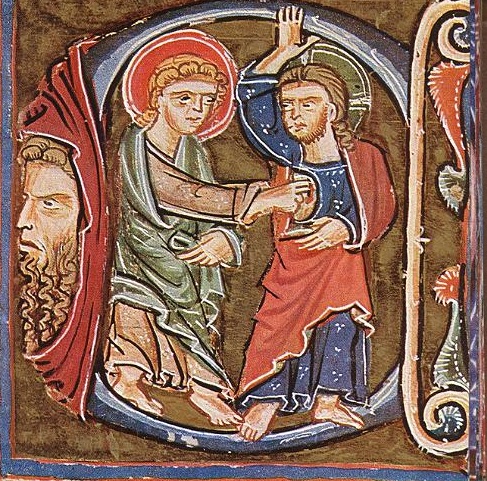
Incredulity of Thomas  
A week later his disciples were again in the house, and Thomas was with them. Although the doors were shut, Jesus came and stood among them and said, "Peace be with you." Then he said to Thomas, "Put your finger here and see my hands. Reach out your hand and put it in my side. Do not doubt but believe." Thomas answered him, "My Lord and my God!"                                                                                                          -John 20:26-28


detail, The Incredulity Of St Thomas, Frankish Miniaturist, Psalter, 1279


Almighty and everlasting God, who in the Paschal mystery established the new covenant of reconciliation: Grant that all who have been reborn into the fellowship of Christ's Body may show forth in their lives what they profess by their faith; through Jesus Christ our Lord, who lives and reigns with you and the Holy Spirit, one God, for ever and ever. Amen.

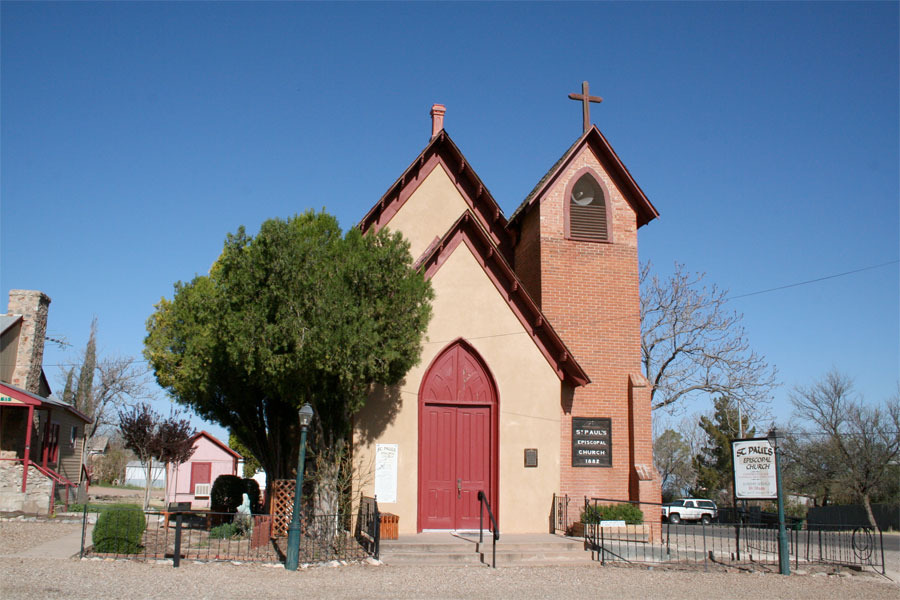
This morning participating in morning prayer with the good people of St Paul's Tombstone lead by Deacon Heather Rose, as we recited the Apostles Creed, I thought of its unfamiliarity to Sunday morning worship in the days of weekly common Eucharist. (Other days and daily offices, sure.) And I thought of the affirmation of faith it contains that echoes Simon Peter's brave announcement to the assembled powers-that-be in Jerusalem, the very ones he feared so much during the trial of Jesus. 

He is not afraid and we should not be either. We are more likely now to face people who think it is all just a story, that Jesus did not live, that at best he is a good example of a moral teacher. But those powers that be - including Pontius Pilate, prefect of Judea, who name and rank are chiseled into a stone stele found recently in Lebanon - did not crucify Jesus because of his resurrection. That is not what they feared, at least not yet. 

Jesus was crucified under Pontius Pilate because of how he lived: his faithful adamant witness to the truth, as the Gospel of John puts it so clearly. He confronts everyone with reality. It is not convenient. Just like his cousin John the child of Zechariah and Elizabeth before him, Jesus is quite willing to speak truth to power. And he is willing to tell truth to ordinary people too.

"What do you want me to do?" he asks a blind beggar. The response to the respect Jesus shows is immediate. Bartimaeus does not ask for something comfy. No, not at all. "That I might see!"

And see he does.

It is not always pretty.

And his fate, as a witness to the power of Jesus alive, is subject to the threat of the we-don't-want-to-hear-it people of his time.*

This courage Peter shows as well as he stands before the assembled authorities and bravely loudly proclaims the power of God manifest in the death, resurrection, and life of Jesus of Nazareth.

And now it is our turn. All of us are witnesses, now, to the power of God, the triumph of life, made manifest in Jesus. "Receive holy Spirit" Jesus said, as he breathed upon the disciples: it is this empowerment, this equipment, with the presence of the Spirit of God in us, that makes us able to stand up and testify, to be witnesses to the resurrection and power of God, in our own time.


Collect for the Second Sunday of Easter
Almighty and everlasting God, who in the Paschal mystery
established the new covenant of reconciliation: Grant that all
who have been reborn into the fellowship of Christ's Body
may show forth in their lives what they profess by their faith;
through Jesus Christ our Lord, who lives and reigns with you
and the Holy Spirit, one God, for ever and ever. Amen.


*Authorities in our own time did not want to hear it, and certainly did not want the news to spread and undermine their self-conscious authority, that there was a virus in town...

Thanks to Deacon Heather Rose for her sermon this morning for the people of St. Paul's Tombstone.


Sunday, April 23, 2017

locked rooms

There have been conflicting reports, you know, of what happened on Easter morning; who saw him first, or whom they saw, or what they said, or where they were. Be that as it may. The afternoon passed away. And what had been said or heard in the morning seems to have been forgotten, lost in the anxiety of the afternoon.


And that evening, gathered, afraid, disciples gathered, closed the doors of the house behind them, and waited, in a locked room, for they knew not what. They were afraid.


By the time John wrote his gospel, it was the people of their own nation that they feared; the ones who had betrayed their Lord, they thought, would tip the word to the soldiers and they, too, would suffer at the hands of Rome.


But it was not Rome that came. It was he, himself, alone, who appeared among them. And his first words were words of comfort, of greeting, and, yes, of challenge. Peace be with you.


Shalom be with you, it means. And shalom means the peace and the reign of God. That is comfort. It is greeting. It is also challenge. For their vocation, their business, was to proclaim that kingdom at hand.


That was his work, until then, and now it was theirs. And, after he had shown them that it was truly him, he spoke again. As the Father sent me so I send you.


And then he breathed on them: he breathed, and said, receive holy spirit. He breathed on them the very breath of God, that had enlivened Creation at the very beginning, in Genesis, when the spirit, the breath, had moved upon the primordial waters.


It was the same breath, by the way, that Ezekiel prophesied to, in the valley of dry bones. That was a vision Ezekiel had, that all of Israel was like a boneyard, a deserted battlefield strewn with the remains of defeated warriors, but that at God’s words those dry bones had come together again and with God’s breath upon them they were kindled again into new life.


And now Jesus, their Lord, their Master, was breathing that holy breath upon them, putting that same spirit into them, that they might find new life and share it, spread it, throughout the world.


Receive holy Spirit - and the breath came into them.


The once-dead man, Jesus, had brought them new life.


They had been given a message and a mission: to bring the world the news of the kingdom of God - and now they had the power to achieve it: to speak and to act, that God’s love, God’s reign, might be known in the world.


This meant that the kingdom of the power of love had conquered the kingdom of death. And the ones who followed his way were there to proclaim it.


But hold on there! What if I have not seen? Can I yet believe?


Not everybody was present that evening. In fact, one of the twelve, Thomas, speaks up on behalf of those who have not seen.


Speaking to comrades who were wrought with despair the last time he saw them, Thomas says I won’t believe it until I see it - and not only that, have tangible evidence in my own hands, my own body, that it is true. I have to see, I have to touch, before I can join you in your happy party.


Eight days later they are all together in the same house, doors closed again, and Christ reappears: Christ reappears, reassures, and reconciles the “doubter” Thomas to community. And Thomas, through his stupendous confession, returns and more than returns to fellowship. For it is not a return to how things were Before - this day begins a new relationship with Christ, and therefore in Christ with the other disciples.


Their whole relationship to each other, God, and themselves, is changed, made new by the transforming power of the resurrected Jesus: who is here among us today, in the reconciled community of the beloved-by-God.


God is with us! In the apostles’ teaching and fellowship, in the breaking of the bread and in the prayers… he is here with us as we go forth into the world in the name of Christ.


What Christ gives us in this story of the locked-up house, and the freed-up disciples, is more than a new set of rules: it’s the good news of a living Lord, a life-giving breath. God is present with us, empowering us, enlivening us.


Breathe on me, Breath of God, fill me with life anew, that I may love what thou dost love, and do what thou wouldst do.

Jesus Christ our Savior, you have delivered us from sin and death. You have filled us along with your first disciples with the enlivening power of your spirit and made a new beginning; grant us strength and humility, love and courage, hospitality and faithfulness, wisdom and compassion, mercy and grace, to enter into life, and to welcome into the new life in Christ the stranger we meet who becomes our brother, the foreigner who becomes our kinsman, the enemy who becomes our friend, the opponent who becomes our teacher, the sorrowful who becomes a wellspring of joy: all the gifts of the Spirit we anticipate may we receive with abundance of grace, through your transforming love. Amen.


"Breathe on me, Breath of God." #508, The Hymnal 1982.

Sunday, November 18, 2012

BProper28


In the name of God, source of all being, eternal Word, and Holy Spirit. Amen.


Lord, what is man, that Thou hast
       regard for him?
Or the son of man, that Thou takest
       account of him?

       Man is like a breath,
       His days are as a fleeting shadow.

In the morning he flourishes and grows up
       like grass,
In the evening he is cut down and withers.

       So teach us to number our days,
       That we may get us a heart of wisdom.

This prayer, read at funerals, is adapted from Psalms 144 and 90.

(Barbara Myerhoff, Number Our Days, New York: E. P. Dutton, 1978, xiv.)

So teach us to number our days, says the Psalmist, and when we try, we find we cannot, not to the end— no one knows it. So we learn: we can accept the gifts our days offer, and to receive those gifts in both hands, with delicate reverence, and in our hearts, with joyful fullness.

The people we love, the place we know, the times we live in, and the blessings we receive, large and small: treasured moments, new friends, and old movies…

We cannot number our days, not to the end, but we can treasure them—
and release them at last, trusting in the hope of resurrection, knowing that our God loves us and death is not the end. We do not see beyond it but we know we shall be united in the presence of a living God.

Living in hope — as we are living now, between the already and the not-yet of God —
is about expectation;
is about assurance;
is about yearning for the end of the world — not to stop the pain of present existence but to begin the new life now!

Living in hope is about the already-but-not-yet reign of our Savior. It is the hope of eternal life, of the resurrection.

Beyond that, it is the hope of the beginning of the larger drama of which resurrection is a part: the inevitable triumph of God’s justice and righteousness in a transformation of all things. In the consummation of time, God will make all things new. 

(Fred B. Craddock et al., Preaching Through the Lectionary, Year B, Harrisburg PA: Trinity Press International, 471)

And so our hope is found in faith, in confidence in God our resurrection as part of the fate of the people of God: the hungry and thirsty, the sick and the lame, the naked, the captive, the sorrowful; all those to whom Jesus proclaims the acceptable year of the Lord.

We live with that hope, in confidence and trust, knowing the light of Christ shines already – and darkness cannot put it out.

God of all power and might, give us grace to trust you in the darkness as well as the light. In the face of danger and adversity, sorrow and loneliness, be our strength and hope, so that we may live and work to your praise and glory; through Jesus Christ our Lord, who is alive and reigns with you and the Holy Spirit, one God for ever.

(David Adam, Traces of Glory, London: SPCK, 146-147)

Forgiven and accepted by God, in the confidence of new life,

Let us hold fast to the confession of our hope without wavering, for he who has promised is faithful. And let us consider how to provoke one another to love and good deeds, not neglecting to meet together, as is the habit of some, but encouraging one another, and all the more as you see the Day approaching.

(Hebrews 10:23-25)

May God, who gives grace to us, give us grace to give others; may God, who is merciful to us and kind, bring kindness and generosity into our lives; that we may share the abundant love of Christ with those around us.

May we, seeking to do your will, find it in serving you; in seeking you to serve you; and find you in the face of others, friend and stranger.

May we, serving you in others, find ourselves at home; and find our home in you, Jesus Christ our Lord. Amen.


BProper28, Twenty Fifth Sunday after Pentecost, Daniel 12:1-3, Psalm 16, Hebrews 10:11-25, Mark 13:1-8,


O Lord, what are we that you should care for us?*
       mere mortals that you should think of us?
We are like a puff of wind;*
       our days are like a passing shadow.

You sweep us away like a dream;*
       we fade away suddenly like the grass.
In the morning it is green and flourishes;*
       in the evening it is dried up and withered.

So teach us to number our days*
       that we may apply our hearts to wisdom. 

(The Book of Common Prayer, Psalm 144: 3-4, Psalm 90:5-6, 12)