Showing posts with label Psalm 127. Show all posts

Sunday, July 7, 2024

Ruth 4 : wear sandals


https://www.levasiondessens.com/wp-content/uploads/2019/04/fiancee-.jpg


Mark 6:6  And he was amazed at their unbelief.


Not much of a welcome-home for Jesus. Who is this guy to tell us what is what? Who does he think he is? We know his family! Or do they?

Who are Jesus’ family? Those who do the will of God.

What we have learned from the story of Ruth, Naomi, Boaz, and the Bethlehem community, is that family - and community - can be fluid and flexible, and belonging can begin with something other than familiarity, ancestry, or common origin. We see people acting on the basis of a larger community, a family of faith, we tend to call church, or the people of God. That, I think, is who Jesus is seeking out: in this passage and others. “Who are my mother and brothers and sisters? Those who keep my Father’s commandments.” (cf. Mark 3:35) 

Who is doing the will of God: his family. How do we become his family? 

Individually? Are we born with it? This is easy to answer if we think faith is something we keep to ourselves, some sort of membership card that can be flashed to collect benefits or enjoy discounts. But becoming part of God’s family is more than a private individual matter: it involves ourselves in humankind. Human. Kind. Not always those we have known from birth, or growing up; sometimes total strangers or people we won’t even know. Whoever they are, ‘family’, those who do the will of God, are kin to me and you.

So how extraordinary it was that Jesus was not welcomed home with more joy. Except possibly for what he had to say, and what he was going to do. From his hometown, he set out once more on his mission, and commissioned messengers, we call apostles, to spread out - and to move fast - to get the message out, too. 

And what was that message? Good news! Turn, turn around, and make your way from the land of sadness, exclusion, them vs. us, cruelty, idolatry, into a new life, a new community, a new world. The kingdom of God, the reign of compassion and mercy, are at hand, right here among you: see the signs of wonder that warn you. It is here. Step into it; live it and believe it.

And, as they say in Doctors without Borders, 

COMPASSION HAS NO BOUNDARIES.

In some ways the story of Ruth is an early warning of this in-breaking kingdom of joy: we are learning, and the people of Israel around her are learning, that the reign of God does not depend on an earthly sovereign or dominion power over others. It depends on power with - not over - others. It comes out of mercy and kindness, compassion and forgiveness. And it is strong. Strong as death, as the psalm says, and on its way, even already among us, at hand.

Was Ruth a prophet? Ruth bore in her own person a prophetic message as her presence revealed more about God: God was at work in the world bringing people together beyond kinship groups or survival alliances for a holy and great purpose.


I was thinking about how people are related as family and remembered…

When I was a file clerk at the EPA Region IX office in San Francisco, I came across correspondence regarding a new water treatment plant to be sited near Grass Valley, California. The correspondence was stamped in bright red letters: HANDLE AS PRESIDENTIAL. The first item in the file was a letter from one Ruth Milhous, to her nephew Richard, complaining about what she had heard would be a ‘cesspool’ near her house. It was signed, “Aunt Ruth.” And to the letter was attached a note, “She really is his Aunt Ruth.” Subsequent correspondence politely reassured her of the facts of the matter. (It’s a modern wastewater treatment facility, not an open, stinking cesspool.) The takeaway is this, of course: She really was his Aunt Ruth. She was family.

In our story, which concludes today (aw gee!) …wait, not entirely: because Ruth really is his great-grandmother; ‘him’ being David, the son of Jesse, the son of Obed, the son of Boaz and Ruth. 

Before we go on there is that zany custom of theirs, closing a deal with a sandal…

“Now this was formerly done in Israel in cases of redemption or exchange: to validate any transaction, one party would take off a sandal and hand it to the other. Such was the practice in Israel. So when the redeemer said to Boaz, “Acquire for yourself,” he drew off his sandal.” (Ruth 4:7-8, JPS/2023)  

(And thus Boaz took on the responsibility of the next-of-kin, and of a husband.)

This is not the deal we might expect from the later arrangement of the levirate marriage, where refusing to raise up kin to the deceased caught the response of a shoe in the face. That was a gesture of disgust and contempt. Happier times for Boaz and his cousin. It was simply an acknowledgment of the exchange: who was going to act as next-of-kin, as redeemer, for Ruth and Naomi and the late Elimelech and Mahlon. 

One who had once been outside, a stranger, had become family indeed. Two isolated, lonely women had been welcomed into the embrace of a whole city. From widowhood they become mother and grandmother. But we have already noticed how Naomi referred to her daughter-in-law as ‘my daughter’ and even Boaz, Naomi’s kinsman, began by addressing her as ‘my daughter.’

She was what we call ‘married in’ but was hardly an outsider - following the laws and customs of that ancient time, family ties that had been frayed by famine and death were strengthened. The Lord, the hidden player in this drama, had been at work throughout, and the hand of God is now revealed in the way that what was small and unpromising, the remnant of the broken family of Elimelech, had been redeemed and welcomed into something great and flourishing, that will become the forebears of the family of David. Small beginnings, greater ends, seems to be the MO of our God. 

Acting into the kingdom of heaven and making it real in our actions on earth, becoming like Ruth and Naomi steadfast comforters and hope-bearers, and claiming God’s way of compassion as our own - bring us into the story: we are now the people of God, who welcome and are welcomed in turn; thus giving the world around us a foretaste of the kingdom of heaven.

Two lonely widows: does that look like the start of a kingdom? A small act of kindness: will that change the world? Perhaps it does, perhaps it might. 

“...for the Lord does not see as mortals see; they look on the outward appearance, but the Lord looks on the heart.” (1 Samuel 16:7b)

Compassion knows no boundaries. 

How do we expand ours?

In some ways the answer may be as obvious as next door. New neighbors, while the noise of construction may not be soothing to the ears, may mean a new set of friends, and certainly of people to whom to offer a welcome.

In the old days in Russia a new neighbor was greeted with bread and salt. I haven’t seen that yet, here, but I have seen invitations extended and received, to getting-to-know you gatherings. 

Beyond that sort of step, – and by the way, no strings attached: we cannot ask them to walk our dogs or join our committees, just yet anyway! – there are broader ways to spread the good news of the kingdom and to live into it. The acts of compassion symbolized and exemplified by food banks, clothes closets, soup kitchens, children’s clinics, and the other ministries of the church and the community around us, are part of that good-news spreading. They show that the kingdom is coming; it is already beginning.

Kingdom. Funny word. It usually brings up the image of a guy in a crown, or a woman waving to a crowd. But the kingdom of heaven is not that; it is more than that, and oddly less: there is no need for a crown. There is only need for compassion. Mercy. Kindness. Forbearance. Loving kindness.  When you have those cooking the real kingdom is on its way. Let us rise up and welcome it.


Sermon Series: Ruth at Santa Cruz Lutheran Church, Tucson, Arizona. The Rev. Dr. John Leech.


July 7  ELW #676  “Lord Speak to Us that We may Speak”

First Reading: Ruth 4. Psalm: Psalm 127.

Second Reading: 2 Corinthians 12:2-10. Gospel: Mark 6:1-13.


Wednesday, July 3, 2024

She really is his Aunt Ruth

For Sunday, July 7th 2024, at Santa Cruz Lutheran Church, Tucson.

I was thinking about how people are related as family and remembered…

When I was a file clerk at the EPA Region IX office in San Francisco, I came across correspondence regarding a new water treatment plant to be sited near Grass Valley, California. The correspondence was stamped in bright red letters: HANDLE AS PRESIDENTIAL. The first item in the file was a letter from one Ruth Milhous, to her nephew Richard, complaining about what she had heard would be a ‘cesspool’ near her house. It was signed, “Aunt Ruth.” And to the letter was attached a note, “She really is his Aunt Ruth.” Subsequent correspondence politely reassured her of the facts of the matter. (It’s a modern wastewater treatment facility, not an open, stinking cesspool.) The takeaway is this, of course: She really was his Aunt Ruth. She was family.

In our story, which concludes today (aw gee!) …wait, not entirely: because Ruth really is his great-grandmother; ‘him’ being David, the son of Jesse, the son of Obed, the son of Boaz and Ruth. (The story will go on: turn the page and you are reading about the end of the time of judges and the beginning of the time of kings, in the first book of Samuel.)

One who had once been a stranger had become family indeed. But we have already noticed how Naomi referred to her daughter-in-law as ‘my daughter’ and even Boaz, Naomi’s kinsman, began by addressing her as ‘my daughter.’

She was what we call ‘married in’ but was hardly an outsider - following the laws and customs of that ancient time, family ties that had been frayed were strengthened, and the Lord, the hidden player in this drama, had been at work throughout, now revealed in the way that what was small and unpromising had been redeemed into something great and flourishing. Small beginnings, greater ends, seems to be the MO of our God.


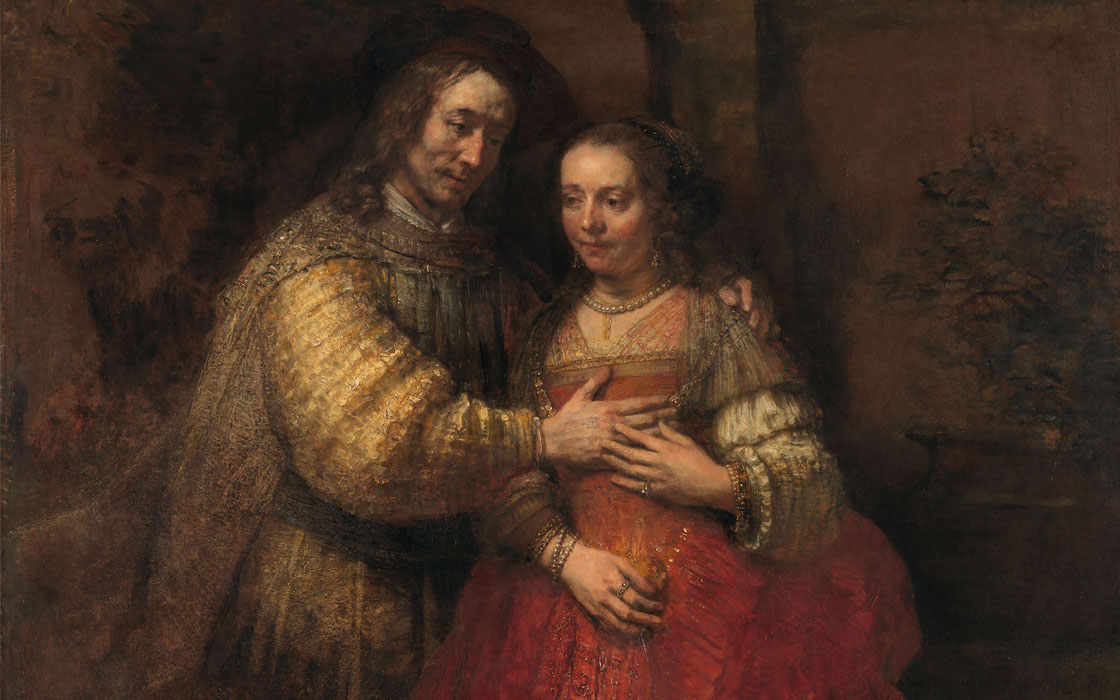
https://www.pubhist.com/works/09/large/rembrandt_boaz_ruth.jpg


Sermon Series: Ruth at Santa Cruz Lutheran Church, Tucson, Arizona.  © 2024 John Leech. All rights reserved.

June 16  ELW #681 “We Plow the Fields and Scatter”(Wir pflugen)  
First Reading: Ruth 1 
Psalm: Psalm 146
Second Reading: 2 Corinthians 5:6-10 [11-13] 14-17
Gospel: Mark 4:26-34

June 23 ELW #597 “My Hope is Built on Nothing Less” 
First Reading: Ruth 2
Psalm: Psalm 147
Second Reading: 2 Corinthians 6:1-13
Gospel: Mark 4:35-41

June 30  ELW #612  “Healer of Our Every Ill” -
or ELW #733  "Great Is Thy Faithfulness"  
First Reading: Ruth 3
Canticle: Ecclesiastes 3:1-8
Second Reading: 2 Corinthians 8:7-15
Gospel: Mark 5:21-43

July 7  ELW #676  “Lord Speak to Us that We may Speak”
First Reading: Ruth 4
Psalm: Psalm 127
Second Reading: 2 Corinthians 12:2-10
Gospel: Mark 6:1-13

First reading is from the Revised English Bible [REB] (Cambridge/Oxford, 1989).


Sunday, November 8, 2009

the widows’ might

Today we have heard a part of the story of Naomi, returning from exile, of Ruth, the foreigner in a foreign land, and of Boaz, who is there to meet them.

It is a story that moves from famine to harvest, from scarcity to abundance, from widowing to wedding, from poverty and widowhood to providence and safety.

Naomi, the tale tells us, was a woman of Israel who had traveled to the land of Moab in a time of famine. She had been married then, and had two sons, who married local women, there in Moab, Orpah and Ruth.

Those men, all three of them, had died. And so Naomi was left alone in a far country.

Could she provide new husbands for her daughters-in-law? No, she said, I cannot. All I can do is return, alone, to the land I came from long ago, and hope to make out some kind of living there among the people who once knew me. Leave me, and return to your own people, she said. Orpah did so, turning back from the long road to Israel, and saying farewell to Naomi, but Ruth stuck with her.

Where you go I will go, where you live I will live; your God will be my God, your people my people; where you are buried there will I be buried also. And so the two of them set out, crossing the miles and miles from one side of the Jordan to the other and moving up into the hill country of Ephraim, to the little town of Bethlehem.

It was in this country, the home country Naomi had come from, that they hoped to live.

Would Naomi be accepted back? Would anyone remember her? What about her husband’s land, the inheritance she would have to reclaim to make a living from? Could she, with the younger widow working beside her, farm it and live on the produce? In the meantime, how were they to eat?

It is a harvest time. Ruth goes out, to gather the grain left behind by the reapers; she is gleaning, a traditional way the poor kept from starving.

She finds favor in the sight of the farmer. His name is Boaz, and he has heard of her selfless care for her mother-in-law; in fact, he is kin. And he knows the law of the land—the law that laid out a role for the next of kin, the closest male relative to Naomi’s late husband and Ruth’s, to serve as the redeemer, the one to take over the care of the inheritance and of the family’s future.

Imagine the sorrow and loneliness Ruth felt; now turning to joy. She had been a widow from a far country, traveling among strangers and serving her mother-in-law. She had been gleaning in the fields, trying to make a livelihood out of poverty and forbearance, and had been rewarded with the regard of the man in whose fields she had gleaned.

Her mother-in-law, a widow too, saw this and, savvy to the ways of men, saw a way out of poverty. Put on your best clothes, my daughter, and go to the threshing floor tonight, where Boaz will be resting. Quietly go to him in the night. He’ll take it from there.

Ruth comes home that night to Naomi, bearing grain in her cloak— and good news. It must have been clear from her face.

Naomi may have thought things would progress farther than they had, in one way. Boaz had a good heart and saw that Ruth had one too. He continued to look after her, and did offer her protection, not the warmth of a night’s blanket but a lifetime of husband-hood.

Already he—a man of means, and of generous manner—saw in her his equal, calling her a worthy woman, that is, a person of honor and wisdom, like the capable wife, the accomplished life-partner, extolled in Proverbs (31:10-31).

He went to the city gate in the morning, where such business was transacted in that land, and there he made the deal— to a closer kinsman of Naomi, the one who had prior rights, he said, you are the redeemer, if you choose to be, of the inheritance of Naomi: a parcel of land, to farm, and a daughter-in-law, with whom to marry and raise a family. This is what you have to redeem, if you will be the redeemer.

I cannot do it, said the other man; I have an inheritance of my own to protect. And so he sealed the deal with Boaz, clearing the way for the marriage— and a new life for Ruth, and Naomi.

Soon there would be children, and this stranger to Israel, this sojourner in their midst, became one of them. Her faithfulness, her steadfast loyalty to her mother-in-law, her sacramental love and care for her, would be recognized and rewarded. She who had been a foreigner, daughter-in-law to Naomi, the returning exile, would marry the man who had stayed in the land—she became included among the people of God.

There is something more than blood kinship at work here; there is more than fulfilling an obligation of law. There is grace, and welcome, and faith made effective in love.

The story goes on to tell us about the children of Ruth, her son Obed (which means “servant”), her grandson Jesse, and of Jesse’s son—David, who would become king.

This widow, in her steadfast love and loyalty, her selfless care, is not the only widow extolled in today’s stories. She is not the only example of God’s care, of what it is to live in faith.

In the gospels we hear parable after parable to tell us what the kingdom of God is like. It is like a treasure buried in a field, it is like a pearl beyond price, it is like a mustard seed; it is like a father welcoming home his prodigal son.

Today also we have what amounts to a living parable, the poor widow that Jesus watched in the Temple, as she gave without stinting her last two coins, all she had to live on—in effect, her whole life—given over as a free gift to God.

Look, Jesus said to his men: there it is.

This is what the kingdom of God is like. It is like a poor widow, who on reaching the Temple gave without reserve her whole life as a sacrificial offering to God. She, unlike the others who came there that day, had no prominence in the eyes of men: she had no large gift to catch the eye, nothing that would show off well, just a simple gift—of everything.

Where is the good news in this story?

The good news is manifest in God’s unfailing love, open-handed beyond caution or common sense, acted out by this woman at the Temple treasury.

The good news is in God’s open-handed love, beyond precedent in the lives of men or women, which would soon be shown by Jesus himself, as he offered himself as a sacrificial offering, once for all.

The priests who entered the Holy of Holies, Hebrews reminds us, did so every year: not so our Lord, who once in his lifetime offered his whole life to God, for the redeeming of us all.

This is what the world looks like when God is truly in charge: a world in which all comes from God, and everything we have we have from God. All we offer to God—our gifts, our work, our offerings of thanks—comes from God and it is to God that we return.

So Ruth is welcomed home to a place she had never been before; she is welcome, known, recognized, as one of the very own of God—generous, loving heart, faithful—she is home, for the very first time.

So we too are welcome, in the kingdom of God, a world characterized by what the Hebrews called chesed, loyalty or faithfulness arising from commitment, the steadfast love of a loving Lord, the God who first loved us.

The widows in the story of Ruth, the widow in the Temple—they are exemplars to us of faith in living. The widow in the Temple does not give her whole life, her two coins, as a bet—she is not placing a desperate wager on the generosity of the Messiah. This isn’t a holy lottery, hoping that last dollar will turn into thousands. She is, by what she does, showing us a picture of absolute faith in the providence of God, the one who has given her all she has, and of whose own provision she has made radical return. We don’t, most of us, give with that little thought for the morrow.

Giving out of the abundance God has granted us, with thanks, with obedience, with grace, and with the knowledge that all we have is his, is what we do: it is the human thing to do.

What we see in the widow’s mite is more than just a human response—it is a sign, of God’s grace, of God’s abundance, of God’s profligate generosity. For soon, as the story carries us forward, this same son of Man who watched the widow put her two coins in the Treasury, will himself be given—will give himself—as the gift of God for our own souls’ redeeming.

He is the one who did not count equality with God as a thing to be held onto, but will be the one of whom it is said, God so loved the world that he gave his only Son that whoever believed in him, whoever trusted him so completely as to put their whole life into his care, would not perish but live eternally.

Everlasting life—and the love that is its source—is what stands behind the widows’ story.

Love, loyalty, life itself: time, talent, treasure: all we have, all we give, comes from God—who gave himself for us.

Guide me, God of grace, to give, as you would have me give, of what you have given me.

AMEN.


+


The Lessons appointed for use on the 23rd Sunday after Pentecost;
Proper 27, Year B, in the Revised Common Lectionary (RCL):

Ruth 3:1-5; 4:13-17 and Psalm 127
(or 1 Kings 17:8-16 and Psalm 146)
Hebrews 9:24-28
Mark 12:38-44


The Abingdon Bible Commentary
(Abingdon Press, 1929)

The HarperCollins Study Bible, Revised Edition (HarperSanFrancisco, 2006). Galatians 5:6, n.

The New Revised Standard Version Bible (National Council of Churches of Christ in the United States of America, 1989)

+