Showing posts with label Genesis 15:1-18. Show all posts

Sunday, March 16, 2025

Jerusalem


John Leech on the Mount of Olives, January 2015.
Photo: Timothy Dombek.


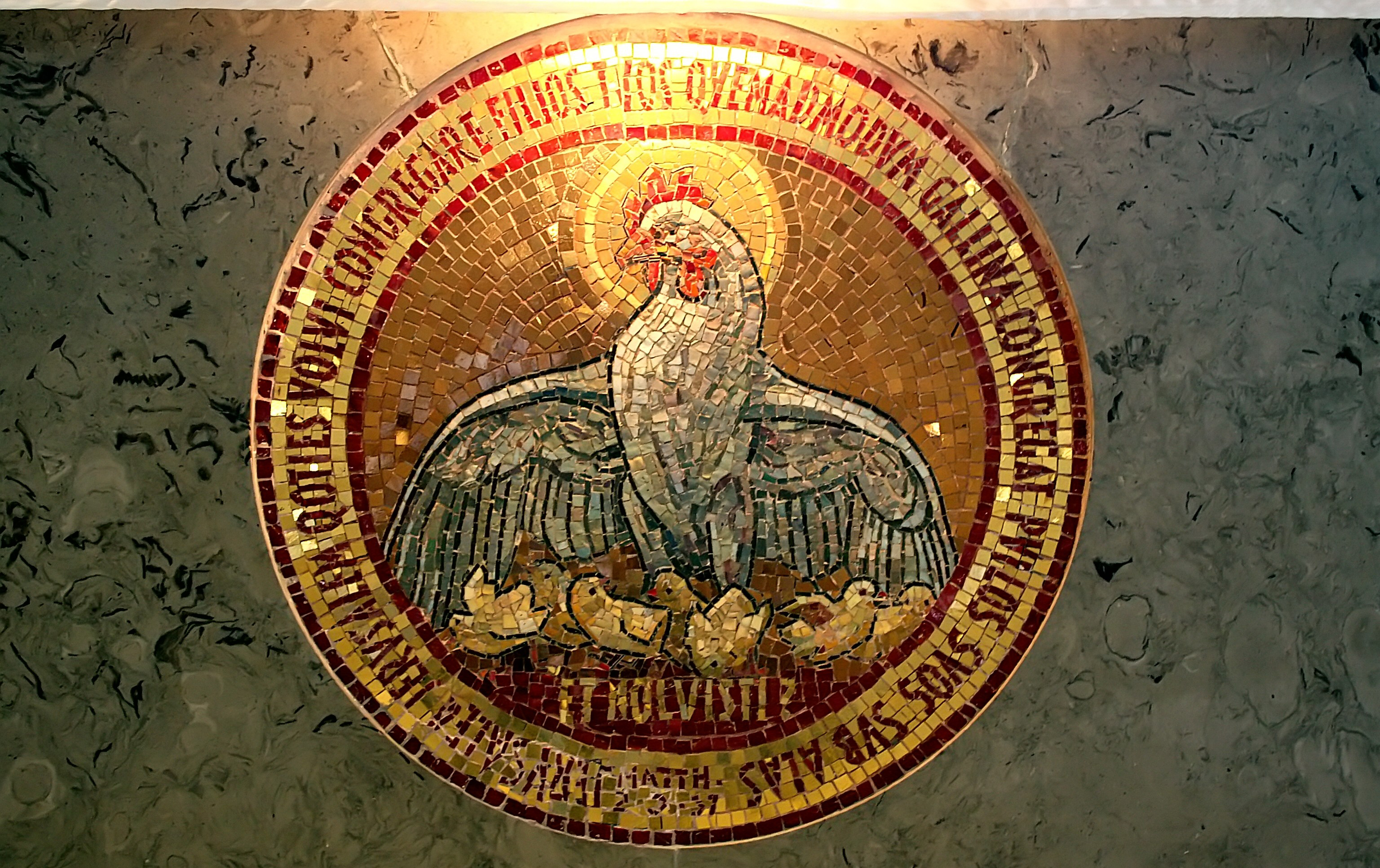
O Jerusalem Jerusalem how often have I longed to gather your children to me as a mother hen gathers her chicks under her wings.

When I first saw Jerusalem it was a dream fulfilled. It did not look like I had imagined it would, except for the big buildings so frequently photographed. My pilgrim group, largely Episcopal priests and their families, had come to the City from Bethlehem, where we visited the Church of the Nativity. Now we were going into the Old City of Jerusalem, where we would visit the Church of the Holy Sepulchre. We would stand atop the Temple Mount aka the Haram al-Sharif. We would also approach its base, where the Western Wall calls to its stone the supplications of devout Jews and curious Christians. And we beheld the City from across the Kidron Valley, when we walked down through the graveyards of the Mount of Olives to a church near its base, called Dominus Flevit (“The Lord wept”). There, right near the Garden of Gethsemane and its nine ancient olive trees, I sat in the front pew facing the altar. Through the arms of the Cross on the altar I sighted straight across to the Temple Mount and the Dome of the Rock.

Dominus flevit. The Lord wept. “As he came near and saw the city, he wept over it, saying, ‘If you, even you, had only recognized on this day the things that make for peace! But now they are hidden from your eyes.’” (Luke 19:41-42) 

When he came to Jerusalem for the last time and beheld that same sight, the Lord had cause to weep. And he cried out, ‘Jerusalem, Jerusalem, the city that kills the prophets and stones those who are sent to it! How often have I desired to gather your children together as a hen gathers her brood under her wings, and you were not willing! See, your house is left to you. And I tell you, you will not see me again until the time comes when you say, “Blessed is the one who comes in the name of the Lord.” ’ (Luke 13:34-35)

When I first saw Jerusalem, I had a book along with me, in my luggage, packed carefully. It is by my college advisor Donald Nicholl, who served four years as rector of the ecumenical study institute at Tantur, outside Jerusalem on the way from Bethlehem. In it he related his attempts to be a bridge person, one whom people from various traditions and with varying viewpoints could all come for an understanding heart. And he related how he and his wife, Dorothy Nicholl, had agreed to try to maintain balance. If we find ourselves favoring one side to the exclusion of the other, they agreed, we will find that our hearts have been hardened. [Donald Nicholl, The Testing of Hearts: A Pilgrim’s Journal (Lamp Press/Marshall Morgan and Scott, 1989), rev. ed. 1998 subtitled A Pilgrim’s Journey. (Darton, Longman  and Todd)

A friend emailed me from Santa Cruz Friday: ‘I remember him saying something quite similar, which was that they had a test that if they ever chose one side over the other, it was time to go home. And like you, I have always remembered it and it has come up in different circumstances fairly often.’ (Seana Graham, 3/14/2025, email)

Have our hearts been hardened? How difficult it is not to take sides. How challenging but how necessary to peace to engage and to humanize people with whom we disagree. Listen to them, see them as human, not as Those People or even as some sort of objects. In Dorothy and Donald’s time, forty years ago, as in ours, the Holy Land is in conflict, and still it is between those whose collective trauma is the Holocaust and those for whom it is an-Nakba, the Catastrophe. For the Israeli there is something in the past that can never be forgotten and should not ever be factored out of their perspective. For the Palestinian, 1948 was the time, not of the War of Independence, as Israelis may call it, but Catastrophe, the displacement from ancestral homelands that forms their historical trauma. 

To take one side in such a  struggle is to harden one’s heart. If we can keep our hearts as hearts of flesh and not of stone we can find peace. There are people in the Holy Land trying to do that. We pilgrims met two fathers, one Israeli, one Palestinian, who each lost a son in the conflict there, but now together will meet with groups such as ours to talk about their common work at building understanding across divides. And as recently as the Academy Awards ceremony American filmgoers learned of a pair of film makers, one Arab, one Israeli, who have documented together the life in one village during the current conflict.

Not long ago the Rev. Dr. Gary Mason, who directs a conflict transformation organization based in Belfast called ‘Rethinking Conflict’, came to Tucson to talk about how in Northern Ireland they have addressed the questions, Why are we divided? and What can we do about it? [Besides the Arizona Faith Network, he also advises Carter Center groups in several states, nonpartisan democracy resilience networks, to address these questions.]

https://blogs.timesofisrael.com/northern-irelands-lesson-for-israel/

He told us that the Good Friday agreement was one of the peak achievements of American diplomacy of the last fifty years. That was a peace facilitated by George Mitchell and Bill Clinton. Indeed I remember when we were in the western islands of Galway our innkeeper made a point of telling us how grateful the people of Ireland were for this agreement and the American help to reach it. 

We did not send guns or bombs. The coins and currency in glass jars on bars throughout the United States, that went for such things, did not help at all. What helped? Two people who helped them see what was dividing them and what could be done about it.

There is much there to discover. One thing I recall is that once people once divided began to see each other as people rather than adversaries, their eyes began to change. One man, once a partisan, said, if I had been born 300 yards away I would have grown up supporting the other side. It was just that. A human moment. It helped him imagine and acknowledge the humanity of a stranger, indeed an adversary.

In Jerusalem today the same Gary Mason sometimes visits and compares notes, shares what he and his compatriots have learned, as the peoples of that holy land seek to reconcile with one another and find a way to peace. This is the real Jerusalem. And you know what? It is not that far from that imaginary - or prophetic - holy new Jerusalem in the sky. 

Because the distance from one to the other is the distance across a human heart. The distance, also, from one heart to another. The distance that closes when we begin to see each other in aspiration, that is, as the holy spirit conceives us to be in our best selves. And that best self, in each of us, is shaped by that spirit as we are brought closer to the perfection that is only ours as it is a gift of that savior and a work of that spirit that came to the Mount of Olives years ago, and called across the valley, “O Jerusalem Jerusalem, how often have I longed…”

In Jesus’ time the conflicts were perhaps even more bitter, within the Jewish community, with their neighbors, with the imperial power in whose unfond embrace they found themselves.  

We recently recalled the miracle of the transfiguration, the end of the Galilean ministry, after which Jesus set his face toward Jerusalem. Accompanied by his disciples, he made his way into the City and into the Temple. After driving out the monetizers of devotion, and rebuking the hypocritical rule-makers, Jesus spread his arms and spoke the words we remember, O Jerusalem Jerusalem.

How can we imagine him as any other than the one sent by God to bring his people together? It is not a martial metaphor. He is not like the heroes of old, arming to resist conquerors. He is coming for more than political liberation. He is coming for the total liberation from bondage to more than political oppression. And he is coming for all people.

***

Civil conflicts, Gary Mason told us, ‘are mostly based in land, identity, and religion’. This is true for northern Ireland, for the Holy Land, and even for ourselves, when we find ourselves in polarized political headlock.

Various factors predispose a situation for conflict. Change can be hard. Fear. Polarization is bigger than any one of us – but understanding that should lead to grace. We need to identify shared values, and to create platforms for conversation.*

We need to move from misperception to understanding, to create a language of understanding. Engage and humanize. Invite and listen: “tell me your story.” And to realize: we love this place, this state, this country, this earth, we share, and in large part we do trust each other. And that can grow. And it must.

Democracy, quipped Winston Churchill or Mark Twain or my mom, is not the best form of government until you have tried all the others. Maybe human kindness is not the quickest way to sudden success, but it is, after you have tried all the others, the way forward to the day we live together in peace and charity, with liberty and justice for all.

The beginning of wisdom lies in acknowledgement of our own folly, and then forgiveness. 

O Jerusalem Jerusalem - may the one who longed to gather your children to himself be the one to gather us together. 


***

“Jerusalem, Jerusalem! You who kill the prophets and stone those who were sent to you. How often I wanted to gather your people together, just as a hen gathers her chicks under her wings. But you didn’t want that”. (Matthew 23:37, Common English Bible)

* Nathan Stock from the Carter Center gave Arizona Democracy Resilience Network an excellent presentation on why we are divided and what we can do about it. 

Second Sunday in Lent. Episcopal Church of Saint Matthew, Tucson. Sunday 15 March 2025. JRL+

© 2025 John Leech

Second Sunday in Lent


Second Sunday in Lent 


Mosaic on the altar of Dominus Flevit Church, on the Mount of Olives, overlooking Jerusalem.


Thursday, March 13, 2025

If I forget thee, O Jerusalem…


Two friends, one Palestinian, one Israeli, who run a restaurant together, remarked of their common home, –
“It is more than 20 years since we both left the city. This is a serious chunk of time, longer than the years we spent living there. Yet we still think of Jerusalem as our home. Not home in the sense of the place you conduct your daily life or constantly return to. In fact, Jerusalem is our home almost against our wills. It is our home because it defines us whether we like it or not.
“… a city with 4000 years of history, that has changed hands endlessly and that now stands as the center of three massive faiths and is occupied by residents of such utter diversity it puts the old tower of Babylon to shame.”
(Yotam Ottolenghi & Sami Tamimi. Jerusalem: A Cookbook. Berkeley: Ten Speed Press. 2012. 9.)
Where is your Jerusalem? Where is that place in your heart that lives as home whether you are there or not, or whether you have ever been there or not?
Is it California? Is it Tucson? Is it imaginary or real? In their hearts many people have yearned for Jerusalem. “If I forget thee, O Jerusalem” says the psalmist. And Jesus, gazing upon the city itself, calls “O Jerusalem Jerusalem how often have I longed…” We long for a place we do not know… or perhaps we do. A city that we have never visited, as the poet Auden said, that has awaited our arrival for years. (Hymn #463)
But the real Jerusalem, like the real Belfast, or the real Tucson, has its woes and troubles as well as its ecstatic charms and mysteries. In 2015 on a pilgrimage into the Holy Land I found myself looking through a window, and through the arms of a cross, out across the Kidron Valley to the Old City of so many longings.

On the Mount of Olives, once we walked down from the churches at the top, through the graveyards of so many, we came to the church of Dominus Flevit, which means “the Lord wept”. It was from this vantage point, sitting in the front row of the congregation, that I found myself with that view. Through the arms of the Cross across the Valley to the Temple Mount, the Dome of the Rock, the Haram … and beyond it the Church of the Holy Sepulchre.
It is well to be reminded that that church has another name: the church of the Resurrection. But let us not get ahead of ourselves. It is not Good Friday yet, not to mention Holy Saturday, or –
Recently I was reminded of something I had carelessly forgotten: this is the weekend just before the feast of Saint Patrick, apostle bishop of Ireland. Patrick had no city to remember, none to yearn for: there were not many in his time and he did not hope for Rome. Instead he went to the edge of the world, to the land where he had once tended sheep as a slave, to bring the good news they had to hear: the news of Jesus. The same news we know: and are not likely to forget.
Maybe that is the city we need to remember. Not the earthly city at all but the “new” Jerusalem envisioned by the Apocalyptic saint John. A city not made by human hands, but where all humanity in all our flavors are to be welcomed.
I mention Belfast because it is a city under contention. 27 years after the end of the Troubles, their euphemism for civil war, so many pieces, so much damage, is yet to be healed and resolved. This past week I got to hear again from the Rev. Dr. Gary Mason, a Methodist minister of that city, who was talking about what divides people and what can be done about it.
He told us that the Good Friday agreement was one of the peak achievements of American diplomacy of the last fifty years. That was a peace facilitated by George Mitchell and Bill Clinton. Indeed I remember when we were in the western islands of Galway our innkeeper made a point of telling us how grateful the people of Ireland were for this agreement and the American help to reach it.
We did not send guns or bombs. The coins and currency in glass jars on bars throughout the United States, that went for such things, did not help at all. What helped? Two people who helped them see what was dividing them and what could be done about it.
There is much there to discover. One thing I recall is that once people once divided began to see each other as people rather than adversaries, their eyes began to change. One man, once a partisan, said, if I had been born 300 yards away I would have grown up supporting the other side. It was just that. A human moment. It helped him imagine and acknowledge the humanity of a stranger, indeed an adversary.
In Jerusalem today the same Gary Mason sometimes visits and compares notes, shares what he and his compatriots have learned, as the peoples of that holy land seek to reconcile with one another and find a way to peace. This is the real Jerusalem. And you know what? It is not that far from that imaginary - or prophetic - holy new Jerusalem in the sky.
Because the distance from one to the other is the distance across a human heart. The distance, also, from one heart to another. The distance that closes when we begin to see each other in aspiration, that is, as the holy spirit conceives us to be in our best selves. And that best self, in each of us, is shaped by that spirit as we are brought closer to the perfection that is only ours as it is a gift of that savior and a work of that spirit that came to the Mount of Olives years ago, and called across the valley, “O Jerusalem Jerusalem, how often have I longed…”

* * *


Monday, March 10, 2025

any other land


One of my difficulties preparing sermons this Lent is the tendency in the Old Testament lessons to emphasize conquest of the land. As a friend once said, who-was-here-first bickering tends to pit the 5th civilization against the 7th civilization. We learned another way to go from our local guide in Canyon de Chelly. He explained that first there were the Ancient ones, then the ancestral Pueblo, then the Hopi, "then we came along - the Diné …"

Or as a writer in the Smithsonian magazine tells it, “the Archaic people, who inhabited these lands from 2500 B.C. to 200 B.C…the Basketmaker people between 200 B.C. and A.D. 750... the Ancestral Pueblo people, who dwelled here between A.D. 750 and 1300… the Hopi farmed in the valley seasonally from the 1300s to the 1600s, and the Hopi and the Pueblos still maintain their ties to the site today. Since the early 1700s, the Diné people have lived in the canyon…”

In either telling there is a sensitivity to the progression of peoples who have lived in the same place.
And to be fair the Museum of Israel teaches by artifact something of the same lesson. The earliest traces of human habitation going back 17 thousand years do not tell the story of any of the historical peoples of the land, however long their memories.
What these examples do tell us matches with what I learned 11 years ago in a lecture entitled ‘migration spirituality’ - people move; that is what we do. Sometimes unhappy collisions or emigrations or flight, from a reign of terror or a tremendous crisis in the natural environment, from war, civil strife, natural disaster, political oppression, crime, pestilence, or any of the plagues visited upon Pharaoh in the story of the Exodus.
And that brings us back to the Hebrew scriptures, the Old Testament of the King James Version, and how the books of the Torah, the Pentateuch, and early historical books, highlight the process of infiltration, conquest, assimilation, and nation formation, that Genesis, Exodus, Leviticus, Numbers, Deuteronomy, Joshua, and Judges, narrate for us.
Do we see a triumphant progress as the incoming Hebrew people take over from earlier people the ‘promised’ land? Do we see a pattern of conquest? Do we see ourselves?
Do we see ourselves as inheritors, or supercessionist conquerors, replacing and erasing earlier - so obviously less God-favored - people?
And if the favored people of God, ancient Hebrews or modern Christian nationalists, are right - is it because of might, or right behavior? Certainly the latter is lacking – unless of course you feel you are anointed for this very purpose. You know what? I’d doubt it.
The challenge for most of us is not some extreme political theology, or self-justifying self-dealing: it is the easy fault to fall into, of thinking of our way of worshipping God as supplanting those of others. It is easy to judge. It is hard to learn from strangers.
Especially if you think they are wrong, or that God has commanded you not to spare even one of them. This sounds like genocide. And that is not the God of love we know.
Christian, Jew, Muslim, Buddhist, Hindus, Jain, Sikh, Shinto, animist, unbeliever, all know and serve, at their best, a higher principle, a better way of being.
We Americans so proudly wave the flag of the bill of rights, passed in the early days of our republic and ratified by the states; but there is a later document, from an organization then chaired by a first lady of the United States, the Human Rights Commission of the United Nations. It is the universal declaration of human rights. Whatever its details it goes beyond the 18th century Enlightenment individualism and balance of power, and the emphasis on civil freedom, that the founders of our democracy bequeathed to us. And it came out of a terrible crucible.

Perhaps there is progress in humankind after all. It is a peculiar kind of progress. It is not linear. Perhaps it bends like an arc, toward justice.
And maybe like Jerry Garcia’s description of his own band, human progress is a forlorn and humble thing, an awkward bumble bee, bumping into things, flying on one wing… but getting there, getting there, and making music along the way. And maybe, like Bill Graham’s description of that same band, the people who strive for democracy are not the best at what they do, they are the only ones that do what they do.
Democracy, quipped Winston Churchill or Mark Twain or my mom, is not the best form of government until you have tried all the others. Maybe human kindness is not the quickest way to sudden success, but it is, after you have tried all the others, the way forward to the day we live together in peace and charity, with liberty and justice for all.
The beginning of wisdom lies in knowledge of our own folly, and then forgiveness.

(https://www.smithsonianmag.com/history/canyon-of-the-ancestors-180985955/)

(https://www.patheos.com/blogs/jesuscreed/2013/10/15/nt-wright-and-the-supersessionism-question-what-did-paul-do)

(https://billofrightsinstitute.org/essays/eleanor-roosevelt-and-the-united-nations)

(https://www.un.org/en/about-us/universal-declaration-of-human-rights)


Toward the Second Sunday in Lent 

https://www.lectionarypage.net/YearC_RCL/Lent/CLent2_RCL.html

https://www.imdb.com/title/tt0030127/

http://edgeofenclosure.org/lent2c.html


JRL+

Sunday, March 13, 2022

under the mercy


Medieval Map of the World with Jerusalem at its center, c.1250


Eternal God, your kingdom has broken into our troubled world through the life, death, and resurrection of your Son. Help us to hear your word and obey it, and bring your saving love to fruition in our lives, through Jesus Christ, our Savior and Lord, who lives and reigns with you and the Holy Spirit, one God, now and forever. Amen.


O Jerusalem, Jerusalem, which killest the prophets, and stonest them that are sent unto thee; how often would I have gathered thy children together, as a hen doth gather her brood under her wings, and ye would not!

Behold, your house is left unto you desolate: and verily I say unto you, Ye shall not see me, until the time come when ye shall say, Blessed is he that cometh in the name of the Lord. (Luke 13:34-35)


Once while she was at a table in a restaurant nestled among the vineyards of the Sonoma Valley, a winemaker looked out a window and saw kids running desperately through the rows of vines. Why were they running? 

She found out. These were kids escaping a dangerous situation. They had been incarcerated in the juvenile hall down the road and it was so decrepit, she discovered, that the cell doors would not even lock, and so the kids felt unsafe and afraid. And they ran. 

Her response was to work to get the situation changed. Eventually, a new more secure facility was built. 

And among those who brought some comfort and humanity to those children, for children they were, was a woman from a local church who would visit the detention center and read to the kids. They called her Grandma.


And so those children were gathered under a mother’s, and a grandmother’s, wings.


The motherly impulse to embrace and cover those exposed to violence or insecurity led these women to take steps to care for and protect people otherwise left on the edge of society, inmates of “juvie” - but now they were seen as people, children, even children of God.


“Luke saw a persistent intent on the part of Jesus to bring in those cast out, to raise up those beaten down, to bring those on the extremities of the social order close to the heart of God.” (Michael B. Curry, Feasting on the Word, Year C, Vol. 2. Louisville, Westminster John Knox Press, 2009. 71)


And so we realize that “... the infinite reach and eternal embrace of God’s reign was at the core of the gospel message of Jesus.” (Ibid., 73)


In the years 82 and 83 of our era - that is, early in the days of the church, a Roman governor - not Pilate, Agricola - led his troops north through Britannia to Caledonia, what we now call Scotland,  and attacked the local forces arrayed against him. The account of their actions, written by the son-in-law of that Roman general, put these words in the mouth of the leader of the last resistance to Roman imperial rule in those parts. 


“Brigands of the world, after exhausting the land by their wholesale plunder they now ransack the sea. The wealth of an enemy excites their greed, his poverty their lust for power. Neither East or West has served to glut their maw. Only they, of all on earth, long for the poor with as keen a desire as they do the rich. Robbery, butchery, rapine, these the liars call 'empire': they create desolation and call it peace." Tacitus, Agricola, 30. (Mattingly trans., Penguin, 1948/2009, p. 20).


And so it was in Roman Palestine, during the time of the Jewish revolt, that had taken place only a few years before Agricola’s advance - that is, from 66 to 70 of our era. And there too the Romans, led by Vespasian and then Titus, laid waste to the countryside - and imposed the famous Pax Romana. They created desolation and called it peace.


These events would have been fresh in the minds of Luke’s first hearers, especially Titus’ destruction of the Temple - the house of God - in 70 CE.


“Your house is left to you” - that is, “your house is forsaken” - would not only remind them of the work of the Romans but of the destruction of the first Temple, when the house of God was first destroyed. 


Indeed the prophets from Isaiah to Jeremiah first prophesied the judgment of God. 


But later there was both exhortation and consolation.


After the people returned from 70 years’ exile in Babylon they began to rebuild their city, and build themselves some nice houses. But the prophet Haggai exhorted them: ``How can you live in your comfortable houses when the house of God lies desolate?” And so they began the work of rebuilding the Temple. 


They were called to begin the work, a work that would last beyond their lives, of rebuilding not merely the physical temple building but the moral temple: the kingdom of God that lay within their hearts.


It was in 70 CE the Roman general Titus – cf. Josephus, the Jewish War, 6.5.1 – sacked the city. And in 70 CE, Rabbi Tarfon commented on Micah 6:8, saying: 

“Do not be daunted by the enormity of the world's grief. Do justly now, love mercy now, walk humbly now. You are not obligated to complete the work, but neither are you free to abandon it.” (Talmud)


We are called into the work of building and rebuilding the house of God.


As in the time of the return from Exile so many centuries before, so again after the destruction of the temple in the first century of our era, the people of God -both Jew and Gentile - were called into the shelter of the God who not only judges but redeems.


Indeed his mercy always prevails over his wrath. 


And the message is ultimately of hope. 


Hope outlasts fear. Hope lives beyond desolation. 


The house will be rebuilt. And there is room for all God’s children.


God’s promise is renewed. Remember the promise to Abraham. 


‘“Look toward heaven and count the stars, if you are able to count them. Then he said to him, “So shall your descendants be.”’ (Genesis 15:5)


As we have learned from the Apostle Paul those descendants are all the children of faith, not only the people of Israel but the people of all nations on whom God’s loving embrace has fallen - and that happens to mean everybody: there is room, there is room, for all the children of God in God’s house; everyone can find shelter in the Temple not built with hands, but with the love of God. 


“His steadfast love endures forever.” Ps 118: 1, 29.


God ultimately is a god of compassion not anger, of redemption not rage. And of a promise fulfilled, not broken. 


As often as the people of God strayed and have strayed, God has called them back under his protection, the shelter of his wings. 


In talking about the goodness of the God of creation, an archbishop of Canterbury writing about the year 1100 reminded his readers of this passage in the gospel of Luke. 


‘Anselm describes the consoling, nurturing Jesus as a hen gathering her chicks under her wing (Matt. 23:37) and suggests that mother Jesus revives the soul at her breast. . . .

‘“But you, Jesus, good lord, are you not also a mother? Are you not that mother who, like a hen, collects her chickens under her wings? Truly, master, you are a mother. For what others have conceived and given birth to, they have received from you. . . . You are the author, others are the ministers. It is then you, above all, Lord God, who are mother. . . .

‘“And you also, soul, dead by yourself, run under the wings of your mother Jesus and bewail your sorrows under his wings.

‘“Christ, mother, who gathers under your wings your little ones, your dead chick seeks refuge under your wings. For by your gentleness, those who are hurt are comforted; by your perfume, the despairing are reformed. Your warmth resuscitates the dead; your touch justifies sinners. . . . Console your chicken, resuscitate your dead one, justify your sinner. May your injured one be consoled by you; may he who of himself despairs be comforted by you and reformed through you in your complete and unceasing grace. For the consolation of the wretched flows from you, blessed, world without end. Amen.”’


His love endures forever - or shall we say, her love endures forever. Amen.


(Anselm of Canterbury, Opera omnia 3: 33 and 39-41. Quoted by Carol Walker Bynum, Jesus as Mother, University of California Press, 1982, p. 114-115.)


Sermon for the second Sunday of Lent 2022, for people of the Episcopal church of Saint Matthew, Tucson. JRL+


March 13th 2022 Second Sunday in Lent Genesis 15:1-12,17-18 Philippians 3:17-4:1 Luke 13:31-35 Psalm 27 https://www.lectionarypage.net/YearC_RCL/Lent/CLent2_RCL.html