Showing posts with label Ezekiel 37:1-14. Show all posts

Sunday, March 26, 2023

Recalled to Live


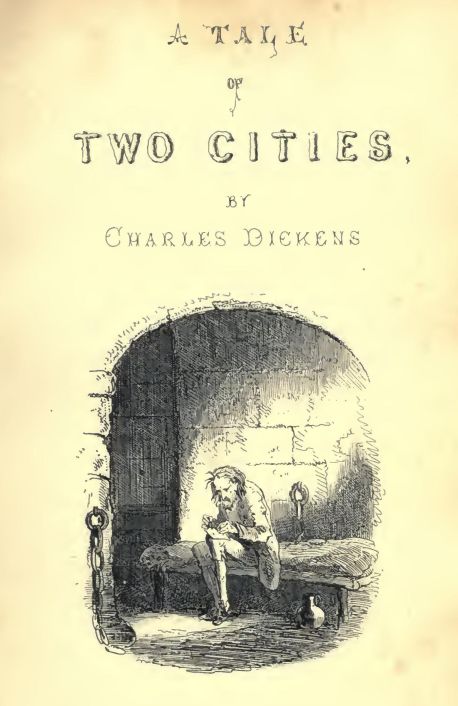
Recalled to Life. Chapter One of "A Tale of Two Cities" by Charles Dickens. 


“Recalled to Life” is the title of the first section of Charles Dickens’s classic novel, “A Tale of Two Cities.” In that story - spoiler alert - the person ‘recalled to life’ was a prisoner held incommunicado, indefinitely, in a prison of the old French regime before the Revolution of 1789. He is ‘recalled to life’ from his imprisonment, and is reunited with a daughter he last saw as a toddler.

This is an example, drawn from classic literature, of a transformation of a life from a living death to a life lived in the sunlight of freedom. Another example, from another novel of Charles Dickens, is that of Ebenezer Scrooge, in “A Christmas Carol”, who lived in a dungeon of his own making until he was brought into a fuller life by, yes, loving relatives, but more by the spirits of the holiday, and by the examination they provoke, confronting him with his past disappointments and failures, and his own choices that had led him into the cramped cold corner he had been making of his life. 

Scrooge, unlike the prisoner in the first tale, was not imprisoned by others. But he is freed, nevertheless, and restored to a fullness of life. He is still an old man, but a happy one.

Of course what recital of near-death resuscitations in popular culture would be complete without the words of Miracle Max from the now-old movie, “The Princess Bride”. Confronted with the challenge of reviving The Man in Black, he makes a key observation. His friends think The Man in Black is dead. But Max says, “Your friend here is only mostly dead.There is a big difference between mostly dead and all dead… Mostly dead is slightly alive.” And begins his bogus but effective curative efforts. 

But few Bible commentators would agree with the proposition that Lazarus, whom Jesus raised, was only mostly dead. In fact the evangelist makes the point clear when “Martha, the sister of the dead man, said, ‘Lord, the smell will be awful! He’s been dead four days.’” (John 11:38b) The tradition was that after four days a person was surely all dead. 

Lazarus is dead. Now Jesus begins to work, when all earthly hope is gone. And he has said to the grieving family and their friends that the delay in reaching the deathbed until too late for Lazarus to recover would provide an opportunity for them to believe, to have faith, and to see God’s glory. 

This is a partial answer to the vexing question, why doesn’t God save everybody? Why does anybody have to die? In the case of the man born blind, Jesus said that affliction was not due to anyone’s sin, not a punishment, but an occasion in which God’s glory could be shown.

And here he goes again, healing somebody, and he says this too is an occasion to see God’s glory, and to receive the gift of faith. It is not a fix-it situation. 

That is hard to say. Causes a wrench in the gut. Why not heal the poor guy? He does, of course, this time…

Jesus’ ministry of walking around Palestine, Galilee, Samaria, Judea, and beyond those borders, was one of proclamation of life, and of a fullness of life, that became possible as people began to accept the limits and truth of their own folly and hardness of heart, as with Scrooge, with the call of love, as with that cast of clowns in the old movie, with the injustice and redemption again of the people in “A Tale of Two Cities”, and with us, as we begin to receive the words of life in the midst of death, mostly dead or even all dead.

One well-worn Bible study technique is to listen to a passage being read, then call out key words or phrases that have struck each person in the group. When I listened in on a Zoom Bible Study about the Raising of Lazarus the words that called out to me were “dead, dead” and “life, life”. 

Jesus calls us to turn from death to life. From the death-bringing patterns of our past to the freedom he brings to us in his own gift and sacrifice. We are to be “recalled to life” and enter into the fullness, however painful, of that restoration, to the people whom we are called truly to be.

Almighty God, your Son came into the world to free us all from sin and death. Breathe upon us the power of your Spirit, that we may be raised to new life in Christ and serve you in righteousness all our days, through Jesus Christ, our Savior and Lord, who lives and reigns with you and the Holy Spirit, one God, now and forever. Amen. (Lutheran prayer for the Fifth Sunday in Lent)


The Rev. John R. Leech, D.Min., is a priest associate at the Episcopal Church of Saint Matthew, Tucson, and a frequent guest preacher in southern Arizona churches.

Sunday, March 29, 2020

Dry Bones: Notes for the Fifth Sunday in Lent

Breathe on me, Breath of God... 


Notice that in Ezekiel's prophetic vision the resurrection of the bones takes two steps, v. 8 ("but there was no breath in them" and v. 10 ("the breath came into them, and they lived", as does Jesus' healing of the blind man who at first saw people only "like trees walking" but after Jesus laid his hands on his eyes the second time "saw everything clearly" (Mark 8, verses 24 and 25). This is taken, sometimes, as laying down a requirement for a two-fold action, of baptism and confirmation, or baptism in water and baptism in the Spirit. But - commenting on this passage in the notes for the New Oxford Annotated Bible, ed. 3, Stephen L. Cook writes: v. 3 “... this vision refers to the reestablishment of the exiles in their homeland.” And, of v. 4-8, that “as in Gen 2.7, life is generated here in two stages.” The meanings of this prophetic vision are dynamic and fluid. In the verses that follow there is a continuing play on the Hebrew term “ruah” with its multiple meanings of breath, wind, and spirit. In Genesis, the Lord forms the dust of the ground into a human being in one action, and in another breathes the breath of life into his new creation. The bones gather together, bone to bone, in a great rattle, but it is only when the spirit is breathed into them that they come to life. And at last we come to v. 14 of Ezekiel, “I will put my spirit within you, and you shall live, and I will place you on your own soil; then you shall know that I, the Lord, have spoken and will act, says the Lord.” It is the action of God throughout that brings life - not animated dust or rattling skeletons but truly living people who rejoice in life and in God’s faithfulness in Word and action. The promise is one that we also find in a name:


The Church of the Holy Sepulchre has another name: it is also the Church of the Resurrection. The place in which the body of Jesus was laid is also the place from which he arose. And as we seek new life in times when mortality seems so close, we also may recall God’s promise. The one who made us is the one who redeems us is the one who fills us with the Spirit - and brings us fully to life.

Sunday, May 27, 2012

Disturbing Comfort

Disturb us, O Lord

when we are too well pleased with ourselves,
when our dreams have come true because we dreamed too little,
because we sailed too close to the shore.

Disturb us, O Lord

when with the abundance of things we possess,
we have lost our thirst for the water of life,
when, having fallen in love with time,
we have ceased to dream of eternity,
and in our efforts to build a new earth,
we have allowed our vision of Heaven to grow dim.

Stir us, O Lord

to dare more boldly, to venture into wider seas
where storms show Thy mastery,
where losing sight of land, we shall find the stars.

Push back, O Lord,

the horizons of our hopes;
Make glad our hearts and embolden us
To follow the lead of your Spirit
With courage, compassion, generosity, and love.

This we ask in the name of your Son,
Who is Jesus Christ our Lord.

--Adapted from a prayer attributed to Desmond Tutu, adapted from a prayer attributed to Sir Francis Drake

(http://godspace.wordpress.com/2012/03/02/disturb-us-o-lord-a-prayer-by-desmond-tutu-4/)


Jesus sends the Advocate, the Comforter and Guide, the one who stands alongside us and gives us aid in time of trial. He sends the Spirit of truth from the Father, to encourage us and renew us, to breathe into us courage and build in us new life.

He sends us peace, but a peace that disturbs us. He does not leave us comfortless, he does not leave us without a guide; but he does not leave us without a mission either.

We are called to complete his work in the world, to follow his lead into its farthest corners. We are called to bring the light of the gospel, the good news of God’s liberating hand, to all people.

The Spirit brings the living presence of Christ into our lives and hearts. And that means we have work to do. The Spirit is both comfort and conviction; we are not left alone in sin but pulled right out of it, away from the things that cling us to earth, and caught up into heavenly purpose.

The Spirit will bring into remembrance all that Jesus taught in his earthly walk with the disciples. What the Spirit teaches is consistent with the Gospels.

Where the Spirit leads is consistent with the work of Christ: In him, God has brought us out of error into truth, out of sin into righteousness, out of death into life.

Through the Spirit we come to our true selves and receive new life in Christ. As Martin Smith has said, it is in the Spirit that we receive our real identity, full of new possibility.

We find our identity is, in the light of Christ, not based on where we have been or ancestry or social standing, but on our part in the realization of God’s future, a future with hope. Our true vocation is to build God’s kingdom.

God is doing an amazing thing! The Spirit leads and the Church follows, as the good news of the free Spirit, the word of the Kingdom coming, spreads to all people. And we are called to join in this work.

We enjoy and celebrate what God is doing. We are invited into the unity of love, which is God’s own nature, and to share and abide in that love.

The Spirit is the life-giving breath of God, the wind of his grace, the fire of his love. It brings us into intimacy with the divine.

The Spirit is the Paraclete, the one who walks beside us and guides us, and the one who leads us, whom we follow into a hopeful future.


Holy Spirit, comforter and advocate, grant us the courage to witness in word and deed, to the teachings and acts of Jesus, to spread the news that God is at work in the world reconciling all things to himself.

Come, Holy Spirit, convince the world of truth, turn it from sin to righteousness, in your judgment burn away falsehood and expose the reality of love. Guide us into all truth.

Encourage us in faith and witness that we may show forth in our lives what lives in our hearts, the liberating gospel of your love.

May your continuing presence in our lives bring comfort to us and become in us a beacon of light to the world.

Glory to God whose power, working in us, can do infinitely more than we can ask or imagine: Glory to him from generation to generation in the Church, and in Christ Jesus forever and ever. Amen.    (Ephesians 3:20, 21.)

Sunday, April 10, 2011

The Raising of Lazarus

After the raising of Lazarus Jesus was clearly a dangerous man.

As Bishop Sutton put it, when dead people don’t stay dead the world is unstable. Anything is possible. I may have responsibility to create new possibility.

After Lazarus Jesus is clearly a dangerous man.

But surely he cannot raise himself! The Sanhedrin met late into the night.

What then to do about Jesus of Nazareth?

He is calling us to repent – to change the direction in which we search for happiness.

We may be comfortable with the rulers of the world. We may have worked hard for an accommodation. This will make it impossible to continue!

Caiaphas said unto them, Ye know nothing at all. Do you not see that it is expedient that one man die for the nation rather than the whole nation should perish?

These were priestly words, prophetic words. Soon enough they were to be proved true, just not in the way Caiaphas had meant them. The Temple would be torn down, and all would be swept away of the Sanhedrin and its rule. And someday, Rome too would go.

They were faced with a problem. And they began to see their way to a total solution.

Others since have faced the dilemma of death and resurrection. Over the years of the war and even in the decades preceding it, a pastor in Nazi Germany struggled with the question. What should I do – what should we do – what should the church become – in the face of massive, industrial, institutional evil?

He thought resistance would be enough – nonviolence would be enough. He organized a community, along the lines of an Anglican monastery or (more fancifully) Gandhi’s ashram – a community of believers whose life together was a beacon of peace and a training ground for the future church. But that future would not be a future in which his church could fit. Not as it was. He came to see that. And so – he accepted the change.

What happens?

The raising of Lazarus prefigures the death and resurrection of Christ. It is a sign that points to the working of God’s power in the world. The miracles of Jesus, these wonders he works in the world, are signs pointing to God’s promise of eternal life realized now. Not far away or long, long ago but here and now, among us: God is with us. Eternal life – everlasting life – begins. A new order of the ages now begins – with us. Today, if you like – and yesterday and today and for ever.

That is because repentance, turning toward Christ, a change in direction as we seek for happiness, is to be raised up with Christ – not just once, one day, in a lifetime, but every day, every hour, every minute, every decade. Each moment can be a moment of decision, of discernment. What is God’s call for me now? In this how am I called to be a Christian? How are we called to be Church? How are we called to be the people of God here, now?

Repentance – the essence of Lent, the pre-requisite for reconciliation, the stuff of new birth – means re-orienting from the world darkness to the light of the world, to Christ.

It happens every day. Are we part of it? That is our call and our challenge.

Let’s hear a bit more about Dietrich Bonhoeffer. He was a young man, a pastor, teacher, and theologian, when the National Socialist Party took power in his native country, his beloved Germany. He gave a speech on Radio Berlin the day after Hitler became Reichschancellor, to remind the Führer – the Leader – that his power was relational, contingent, limited. For some reason the broadcast was cut off. 

And eventually he came to a strange decision – that loyalty to Germany and loyalty to God required of him a profound disloyalty to the state, as then constituted. Bonhoeffer joined a conspiracy to prepare for the end of the Nazi regime - and to work for that goal. They even were involved - somewhat tangentially - in an elaborate plot to kill Hitler.

It was a difficult and controversial choice to make - one we still wonder about.

No other loyalty finally mattered before allegiance to God and all other loyalties were questioned in light of the Gospel.

For to live is Christ: to die is gain. What does that require?

What is required of you, O Mortal, but to do justice, to love mercy, and to walk humbly with your God? 

To do justice to the God-news calling – but how?

Each of us in each part of our lives, and all of us in our life together, face this question.

What happened to Lazarus was a prefigurement, a foretaste, of what was to come. It was a sign of what was about to happen. It did not in itself change the world. What it did was point to what was really significant - the God-action in the world fulfilling his promise.

What was about to happen would change everything forever.

The life-giving action of God calls forth faith, in Mary and Martha, in the disciples, in us.

What was about to happen was the light of the world shining brightly - the glory of God being revealed - the life source of love pouring itself out for the redemption of the world - that all who believe in him should not die for ever but should have everlasting life.

I AM the resurrection and the life - do you believe this?

Yes, Lord, she said, I have come to believe that you are the Christ, who will carry all things to completion in the last day.

That day is here. That time is now.

And she came, and saw, and believed.

At the tomb of Lazarus death was denied for a time.

Dietrich Bonhoeffer received a sentence of death - and an offer to escape. But he realized that, take it or not, that offer was only a reprieve. Death would be denied for a time. For death to be defeated would require something more. Something essential would be torn away, would be lost forever, would be changed completely. And not by his doing either.

It would be the Cross - the Cross of Christ - carried and borne and suffered on Calvary - that would redeem and save the world - and in that death, that tomb, death defeated forever.

How are we to deny the one who died for us? How are we to accept his gift of life for us?

We are to receive, in this moment of decision, a change - a chance for life to begin anew - and it will require of us not less than everything, as God gave us not less than everything.

Those were heroic times, dangerous times. The times of Nazi Germany, the time of Jesus. But what about us? What about our time, our lives? How shall we now live?

We may seek what is expedient, convenient, useful - as Caiaphas did - we may seek a partial solution, a temporary fix - or we may seek the kingdom of God. What does it mean to us as a church to follow Jesus? To be open to change, in our lives, our hearts, our actions, our behaviors? What we give up and what we gain, by accepting Christ as Lord?

It may mean some simple things - some day to day things - for the decision to follow Jesus is one that happens any moment. It may mean discernment - choosing life - in little ways. It may mean a new attitude toward what we possess, hold dear, cling to - for life.

We may be clinging to something we need to release, let go of, in our search for Christ. Favorite behaviors, activities, choices, preferences, - little things, loved things, favorites - may gladly go by the wayside. This can happen when we follow Christ to life, for life.

For life to begin anew in our hearts may mean every thing, little or big, seems reoriented, redirected, as we change the direction in which we search for happiness: as we repent.

Repent and turn to the Lord. That is the prophets’ call to us. That is the Savior’s gift. That is the invitation of the Holy Spirit. That is redemption, and the new beginning of life.

Together we seek that new life in the name of Christ. It is not easy, it is not ‘safe’ - not in the world’s way of safety, not a contingent, part-time kind of security, but a full, forever, and total gift. The one who gave us life, the one who redeems our lives, is the one who is with us in our lives, coming with us as we journey through the wilderness of this world to the ultimate home, where we become most truly ourselves, as we live into his kingdom.

May we live in Christ, and may Jesus live in our hearts, forever.

In the name of God, source of all being, Eternal Word, and Holy Spirit. Amen.

+

The Rt. Rev. Eugene Sutton, remarks at clergy conference, Alderbrook, Union, WA: Tuesday 5 April 2011.


+

Sunday, March 9, 2008

dry bones

In the name of the God who lives. Amen.

Imagine a deserted wilderness, an ancient battleground: now desolate, picked over, even the scavengers long fled. It is a wasteland, occupied only by old bones of the once living… It could be Stalingrad, Chancellorsville, or a village in Iraq. It is Israel. Once proud, inheritor of David’s realm, conquered by Joshua, the Promised Land: now desert. The Babylonian army has crushed their hopes – they are in Exile, now, by the rivers of Babylon, and their own land lies discarded, bleak.

What could possibly revive their hopes? What, indeed, but the word of God? The word of Life, which brought forth upon the earth bread, the fruit of toil, all the produce of the garden, all that is, all that we have – Life itself. This is the voice that comes to the prophet Ezekiel.

Breathe – breath the breath of God. And prophesy: and the old bones come to life. Israel returns to the Promised Land. And builds anew. The people return; the land begins to recover, to quicken with new life. Laughter can be heard in the streets, once empty, now full of life, and hope, and light. What could revive the people of God – but the Word of God?

Out of the depths I call – this is the cry of the lost, the abandoned; the desperate soul, in a desert of its own: a prison ward, a hospital cell; a place of abandonment. There is nothing to bargain with.

The soul waits, alone – bereft of any hope … but the original hope, the origin of hope, the Creator and Redeemer and Sanctifier of souls. Breathe on me, the soul cries. Make me live, take me out of this desolate place. And God responds – lifting me beyond myself, into a scene beyond dreams.

Jesus has left Jerusalem, where it is dangerous. Hot. They’re after him, now. And so he has cooled off, gone across the Jordan to a quiet place.

And then the word comes after him – from that beloved village, that home where he is at home, where Martha and Mary and Lazarus are, tragic news, and desperation: Lazarus is dying.

Dare he risk it? Can he make it to his friend’s side, in time, before the cops come and drag him away?

He waits.

He waits.

It is not for anything less than the glory of God that he has come, and nothing less will bring him forth, to risk it, to go where certain exposure could take him to his own death. But Lazarus is dying.

He goes quietly. Before he can even get to the village, Martha comes out to greet him – and a crowd follows her.

No entrance through the back door, no slipping in and out – this must happen in full view of the people, of the Jews of Jerusalem: the authorities will hear of it.

Where were you? You could have saved him. I will take you to him.

Jesus wept.

And then, he is there. He is with us. And he brings more than consolation, more than revival: he brings the word of Life. He is Life, and Resurrection, and in Him the fullness of God is pleased to dwell.

And he says the word – as simple as, let there be light. He says,

Bring him out.

And they do – and the dead walks. The forgotten man lives, and is restored to his home.

This is the resuscitation of a corpse, not the resurrection of the last day. Lazarus is not the first-born of the dead, but the last and most wonderful and most dangerous Sign Jesus performs before the powers of the world crush him and bring him down to his death, to his own place of desolation (and from which he will rise to God’s glory).

For now the glory of God is restoration – to see hope once abandoned live again, to see a beloved brother restored to his sisters.

Soon enough a greater miracle will come – Jesus will be betrayed to his own death, and beyond it will come… (the unexpected morning, the dawn of Easter.)

Jesus performs this sign, this miracle: and the cost is his life. Now he’s torn it – now they will meet in council to dispose of this problem.

And he knows it – he knows it. And this too will be to the glory of God. Because beyond their planning, beyond their imagining, is a scene unimaginable to the eyes of the world-bound: the vision of plenty, of abundance, life in God’s new world, in his very presence.

For beyond death and even now God is present with us. And beyond this life we are present with him, no longer seeing through a glass darkly, but face to face.

This new life, this eternal life in the presence of God, does not wait for death or the second coming: it begins now, as God is present with us, in the midst of us… as he was in the dark valley, of the shadow of death, as he was with Ezekiel in the valley of bones, as he is with the prisoner and the abandoned and the desolate, ...

...as he was with Jesus and Lazarus at the side of the tomb unwrapping the grave clothes, hurry – hurry! As Martha waits to embrace her brother, all hope abandoned now all disbelief exchanged for joy.

Mary waits; she has seen it. And perhaps she sees beyond, too: to a day when she will see another beloved one emerge from the grave.

He is with her. He is her master. He is ours. And she waits – as we do – for the day beyond Good Friday, the day of the resurrection, the day when all hope will be transformed in the joy of Easter morning.

Be with us now, Lord, in the breaking of the bread. Breathe on it, and us, that you may be present with us and we with you. Even now.

Come, Lord, restore, renew, & revive your people. Amen.

+

THE BLESSING

May you find in Christ crucified
a strength in times of darkness,
a support in times of weakness,
and the assurance of eternal life,
and the blessing of God almighty,
Father, Son, and Holy Spirit, rest upon you now,
and remain always with you. Amen.

(adapted from David Adam, Clouds and Glory)

Lent V Year A
Ezekiel 37:1-14
Romans 8:6-11
John 11:1-45
Psalm 130

David Adam, Clouds and Glory: Prayers for the Church Year: Year A (London: SPCK, 2000)

Fred B. Craddock, John H. Hayes, Carl R. Holladay, Gene M. Tucker,
Preaching Through the Christian Year: Year A (Harrisburg, Pa.: Trinity Press International, 1992)

Barbara Crafton, "If Christ Were Here/Hope in the Dry Bones", The Almost Daily eMo, Geranium Farm
http://www.geraniumfarm.org/dailyemo.cfm?Emo=962

Scott M. Lewis, S.J., New Collegeville Bible Commentary: The Gospel According to John and the Johannine Letters (Collegeville, Minn.: Liturgical Press, 2005)

Lesslie Newbigin, The Light Has Come: An Exposition of the Fourth Gospel (Wm. B. Eerdmans, 1982)

Herbert O'Driscoll, The Word Today: Reflections on the Readings of the Revised Common Lectionary, Year A, Volume 2 (Toronto: Anglican Book Centre, 1999)

Mary Hinkle Shore, Herman C. Waetjen, Richard Eslinger, Melinda A. Quivik, New Proclamation: Year A, 2007-2008: Advent through Holy Week (Minneapolis: Fortress Press, 2007)