Showing posts with label AEpiphany5. Show all posts

Sunday, February 5, 2023

freedom


Photographer: J.H. Kent, 24 State Street, Rochester NY
Collection: A.D74 Frederick Douglass Papers

“You are the light of the world. A city on top of a hill can’t be hidden. Neither do people light a lamp and put it under a basket. Instead, they put it on top of a lampstand, and it shines on all who are in the house. In the same way, let your light shine before people, so they can see the good things you do and praise your Father who is in heaven.” (Matthew 5:14-16, Common English Bible)

Addressing the founding members of the Massachusetts Bay Colony, in 1630, as they approached the New England coast, John Winthrop urged them “to follow the counsel of Micah, to do justly, to love mercy, to walk humbly with our God. For this end, we must be knit together, in this work, as one man. We must entertain each other in brotherly affection. We must be willing to abridge ourselves of our superfluities, for the supply of others’ necessities. We must uphold a familiar commerce together in all meekness, gentleness, patience and liberality. We must delight in each other; make others’ conditions our own; rejoice together, mourn together, labor and suffer together, always having before our eyes our commission and community in the work, as members of the same body. So shall we keep the unity of the spirit in the bond of peace. . .

“For we must consider that we shall be as a city upon a hill. The eyes of all people are upon us. So that if we shall deal falsely with our God in this work we have undertaken, and so cause Him to withdraw His present help from us, we shall be made a story and a by-word through the world.” –John Winthrop, 1630. 

What does it mean to let our light shine before others, to shine as a city upon a hill? How are we to conduct our lives, in relation to one another, and to the society and the land around us? One answer finds itself in the continuous striving for justice and reconciliation in American history.


Aunt Carol gave me a copy of ‘Uncle Tom’s Cabin’ by Harriet Beecher Stowe once she thought I was old enough to read it. She’d already given me ‘King Arthur and His Knights of the Round Table’ by Roger Lancelyn Green (Penguin) and ‘Adventures of Huckleberry Finn’ by Mark Twain. The edition of ‘Uncle Tom’s Cabin’ she got for me was built to last. It survived mailing back and forth across the country better than the Mark Twain book did. And so it endures. The story is controversial now, as the old man of the title is one who survived a lifetime of bondage and chattel slavery, by enduring his condition, and while not condoning it, somehow accepting it as his life. People don’t put up with that anymore and the younger people in the story don’t always either. Remember, if only from ‘The King and I,’ the famous scene of Eliza crossing the ice of the Ohio River, to freedom in the northern states. Or more safely Canada. The reason I bring up this book at all is that it illustrates not only progress in attitudes but also the historical legacy of people who did work against the dismal institution. Sometimes slavery is called, along with the treatment of indigenous peoples, America’s original sin. 


On the Fifth of July, 1852, in an address to the ‘Ladies of the "Rochester Anti Slavery Sewing Society,"’ of Rochester New York, Frederick Douglass called it “slavery--the great sin and shame of America!” 


To him the words of the Psalmist rang true, and he took them as prophetic for his own day:


" By the rivers of Babylon, there we sat down. Yea! we wept when we remembered Zion. We hanged our harps upon the willows in the midst thereof. For there, they that carried us away captive, required of us a song; and they who wasted us required of us mirth, saying, Sing us one of the songs of Zion. How can we sing the Lord's song in a strange land? If I forget thee, 0 Jerusalem, let my right hand forget her cunning. If I do not remember thee, let my tongue cleave to the roof of my mouth." (Psalm 137:1-6a)


In 1853 in upstate New York he was speaking to a sympathetic audience, but he did not identify with their 4th of July: “the birthday of your National Independence, and of your political freedom” - but not his own.


For, he said, Independence Day, the subject on which he was asked to speak, was not a day of freedom for the enslaved, far from it. “The blessings in which you, this day, rejoice, are not enjoyed in common. The rich inheritance of justice, liberty, prosperity and independence, bequeathed by your fathers, is shared by you, not by me. The sunlight that brought life and healing to you, has brought stripes and death to me. This Fourth July is yours, not mine. You may rejoice, I must mourn… the character and conduct of this nation never looked blacker to me than on this 4th of July!” 


 (https://rbscp.lib.rochester.edu/2945)


The military struggle was yet to come, between slaveholder state and free, between the urbanized and industrial North, and the largely agricultural and rural South. We know, however, how closely intertwined these sections of the nation actually were. Each was linked to the other by chains of commerce that were not easily broken. 


And the war came. And in it fought men for their freedom, or freedom not their own, or the principle of Union, or the perpetuation of that sin. 


The Episcopal Church did not split like other Protestant denominations, which only in the mid-twentieth century reknit into single organizations. The Episcopal Church was episcopal in structure, each diocese making its own way, and the General Convention, then as now held every three years, simply did not meet during the conflict. Indeed it lent at least one bishop, Kirby Smith, to the Confederate cause. 


(He went on to teach at the University of the South after the war.) (https://new.sewanee.edu/roberson-project/learn-more/research-summary)


In other words this denominational family, while it did not formally divorce as others did, did not evade the conflict or its causes. Today church institutions like the national cathedral in Washington, D.C., and Virginia Theological Seminary, as part of modern efforts to reconcile, are addressing their past historical involvement with slavery, and their own complicity in and gains from the system of which it was a part and the convenient doctrines that undergirded it. 


Not more than a dozen years after Frederick Douglass spoke, the Civil War came to an end. Many people later gave various explanations for its cause, and its ostensible purpose. When asked what it was about, Nathan Bedford Forrest, Confederate cavalry commander and later Alabama leader of the Ku Klux Klan, said, simply, it was about slavery.


After the Emancipation Proclamation took effect, volunteers “of African descent” were formed into regiments of the Union Army. 


On April 9th 1865, the same day Lee surrendered, three brigades of U.S. Colored Troops fighting alongside other Union soldiers overcame the defenses at Fort Blakeley, Alabama, and received the surrender of some of the last soldiers still fighting for a lost cause: slavery. While other days are more commonly celebrated in connection with the Civil War or with the struggle for liberty for all, this marked the end of the war for many, and a new birth of freedom; the campaign for justice continues. 


Indeed, some of the soldiers who fought in that battle served months or years longer before going home, as they worked to bring the benefits of freedom to the newly free.


Aunt Carol - who said of her own Southern forebears “they were all secesh (secessionists)” - was liberal for her day, a lifelong supporter of the National Association for the Advancement of Colored People (NAACP) – perhaps since its institution – and subscriber to Ramparts magazine (which she would dutifully forward to us once read). 


The NAACP and and the Southern Christian Leadership Conference (SCLC) fostered the Civil Rights movement of the 1950s; and then there followed the Black Power movements of the 1960s, not to mention the emerging theologies of Black Liberation and womanist - Black feminist - theologians. Today we strive to make progress, or regain it, in an era when the churches, including our own, hold racial reconciliation as a goal. 


Some members of our congregations were delegates to the last diocesan convention, whose theme was ‘Reconciled in Christ: Becoming Beloved Community,’ with its title from Saint Paul and its subtitle from Josiah Royce and Howard Thurman - and Martin Luther King Jr. 


This is Black History Month...


On January 15th 1981, on a gray day in Washington, D.C., as a gentle snow was drifting down, thirty thousand people gathered at the foot of a slope southwest of the Washington Monument. From the Park Service stage raised for the occasion, we heard political leaders like Elihu Harris speak on behalf of a new federal holiday they proposed. The chant went up, “We want a holiday – Martin Luther King Day!” And then Steve Wonder introduced a new song, sung gently in the drifting snow: “Happy Birthday, dear Martin.”


We have a long way to go, to become beloved community, and worthily shine as a city upon a hill, showing light to the world, that all people may rejoice in the gifts of our Creator, doing justice, loving kindness, and walking humbly with our God. We have a long way to go, but if we are reconciled in Christ, the work is well begun, and the road is before us.


***


* Union troops at the Battle of Appomattox Court House, that preceded Lee’s surrender, included some 5,000 United States Colored Troops.


***

https://www.americanyawp.com/reader/colliding-cultures/john-winthrop-dreams-of-a-city-on-a-hill-1630/

https://blackhistorymonth.gov/about/

https://www.blakeleypark.com/About-Us

https://www.nps.gov/apco/learn/historyculture/the-surrender-meeting.htm

https://www.nps.gov/apco/learn/historyculture/the-battle-of-appomattox-court-house.htm

https://www.nps.gov/linc/learn/historyculture/lincoln-second-inaugural.htm

https://www.nps.gov/linc/learn/historyculture/gettysburgaddress.htm


Psalm 112:4  Light shines in the darkness for the upright; *

the righteous are merciful and full of compassion. 


***


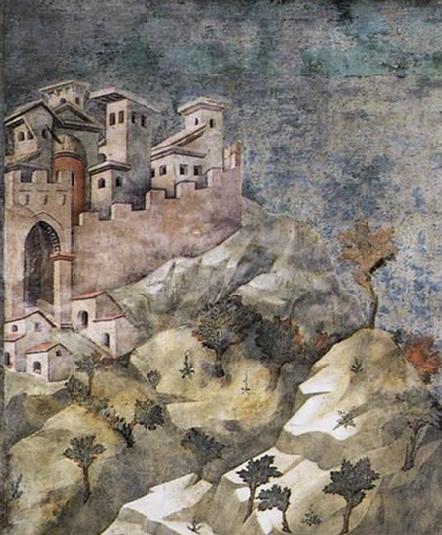
"A City Built Upon a Hill Cannot Be Hid" Giotto, Legend of St. Francis, 1297-99, detail,

(http://edgeofenclosure.org/epiphany5a.html)


From the Diocesan Commission to End Racism. West Virginia. https://www.episcopalchurch.org/responding-to-racist-violence/pray/


1. JANUARY--For an end to slavery: (January 1, Emancipation Proclamation) 


“O God of liberty and justice: we live in a nation in which the institution of human bondage was once a legal and accepted practice. We give thanks for those who worked and fought, at great personal sacrifice, to bring about an end to that cruel and oppressive system in our own land, and we pray that governments and authorities everywhere in the world might be led to make a quick end to the enslavement of any human being, throughout the Earth.” Amen.


3. MARCH-- For racial harmony 


“Creator of all people, in our amazing diversity of size, shape, color, and giftedness: guide us, by your grace, to recognize the beauty and fitness of all whom you have made in your own image. Give us gifts of humility and generosity of spirit to recognize in all people, the face of our Savior, Jesus, and to practice his commandment to “love one another,” toward the end of bringing harmony and peace among persons of all colors, origins, and abilities, for the sake of your Kingdom.” Amen. 


4. APRIL-- For the heroes and heroines of the struggle for civil rights (thanks and future encouragement) (April, death of Martin Luther King, Jr) 


“O bountiful and merciful God: you have blessed your people with great prophets and leaders to advance the cause of equality under law in this nation and in the world. By their teaching and preaching; by their action and example; by their marching, demonstrating, and sitting in; by their organizing, praying and singing, they have made themselves and the dream of non-discrimination impossible for opponents to ignore and possible for those marginalized to dream. Give us such leaders always, Lord. Let the cry for justice always be heard in our land until, by your gracious will, your children live together in freedom, justice, and equality. Amen.

Friday, February 3, 2023

City on a Hill

"A City Built Upon a Hill Cannot Be Hid" Giotto, Legend of St. Francis, 1297-99, detail,
http://edgeofenclosure.org/epiphany5a.html


You are the light of the world. A city built on a hill cannot be hid. No one after lighting a lamp puts it under the bushel basket, but on the lampstand, and it gives light to all in the house. In the same way, let your light shine before others, so that they may see your good works and give glory to your Father in heaven.” (Matthew 5:14-16)

Addressing the founding members of the Massachusetts Bay Colony, in 1630, as they approached the New England coast, John Winthrop urged them “to follow the counsel of Micah, to do justly, to love mercy, to walk humbly with our God. For this end, we must be knit together, in this work, as one man. We must entertain each other in brotherly affection. We must be willing to abridge ourselves of our superfluities, for the supply of others’ necessities. We must uphold a familiar commerce together in all meekness, gentleness, patience and liberality. We must delight in each other; make others’ conditions our own; rejoice together, mourn together, labor and suffer together, always having before our eyes our commission and community in the work, as members of the same body. So shall we keep the unity of the spirit in the bond of peace... For we must consider that we shall be as a city upon a hill. The eyes of all people are upon us. So that if we shall deal falsely with our God in this work we have undertaken, and so cause Him to withdraw His present help from us, we shall be made a story and a by-word through the world.”

What does it mean to let our light shine before others, to shine as a city upon a hill? How are we to conduct our lives, in relation to one another, and to the society and the land around us? One answer finds itself in the continuous striving for justice and reconciliation in American history.


Aunt Carol gave me a copy of ‘Uncle Tom’s Cabin’ by Harriet Beecher Stowe once she thought I was old enough to read it. She’d already given me ‘King Arthur and His Knights of the Round Table’ by Roger Lancelyn Green (Penguin) and ‘Adventures of Huckleberry Finn’ by Mark Twain. The edition of ‘Uncle Tom’s Cabin’ she got for me was built to last. It survived mailing back and forth across the country better than the Mark Twain book did. And so it endures. The story is controversial now, as the old man of the title is one who survived a lifetime of bondage and chattel slavery, by enduring his condition, and while not condoning it, somehow accepting it as his life. People don’t put up with that anymore and the younger people in the story don’t always either. Remember, if only from ‘The King and I,’ the famous scene of Eliza crossing the ice of the Ohio River, to freedom in the northern states. Or more safely Canada. The reason I bring up this book at all is that it illustrates not only progress in attitudes but also the historical legacy of people who did work against the dismal institution. Sometimes slavery is called, along with the treatment of indigenous peoples, America’s original sin. 


On April 9th 1865, the same day Lee surrendered, three brigades of U.S. Colored Troops fighting alongside other Union soldiers overcame the defenses at Fort Blakeley, Alabama, and received the surrender of some of the last soldiers still fighting for a lost cause: slavery. While other days are more commonly celebrated in connection with the Civil War or with the struggle for liberty for all, this marked the end of the war for many, and a new birth of freedom; the campaign for justice continues. Indeed, some of the soldiers who fought in that battle served months or years longer before going home, as they worked to bring the benefits of freedom to the newly free.


Aunt Carol - who said of her own Southern forebears “they were all secesh (secessionists)” - was liberal for her day, a lifelong supporter of the NAACP (perhaps since its institution) and subscriber to Ramparts magazine (which she would dutifully forward to us once read). NAACP and SCLC fostered the Civil Rights organizations of the 1950s; and then there followed the Black Power movements of the 1960s, not to mention the emerging theologies of Black Liberation and womanist - Black feminist - theologians. Today we strive to make progress, or regain it, in an era when the churches, including our own, hold racial reconciliation as a goal. 


Some members of our congregations were delegates to the last diocesan convention, whose theme was ‘Reconciled in Christ: Becoming Beloved Community,’ with its title from Saint Paul and its subtitle from Josiah Royce and Howard Thurman - and Martin Luther King Jr. This is Black History Month...


On January 15th 1981, as a gentle snow was drifting down, thirty thousand people gathered at the foot of a slope southwest of the Washington Monument. From the Park Service stage raised for the occasion, we heard political leaders like Elihu Harris speak on behalf of a new federal holiday they proposed. The chant went up, “We want a holiday – Martin Luther King Day!” And then Steve Wonder introduced a new song, sung gently in the drifting snow: “Happy Birthday, dear Martin.”


We have a long way to go, to become beloved community, and worthily shine as a city upon a hill, showing light to the world, that all people may rejoice in the gifts of our Creator, doing justice, loving kindness, and walking humbly with our God. We have a long way to go, but if we are reconciled in Christ, the work is well begun, and the road is before us.


***


* Union troops at the Battle of Appomattox Court House, that preceded Lee’s surrender, included some 5,000 United States Colored Troops.


***

https://www.americanyawp.com/reader/colliding-cultures/john-winthrop-dreams-of-a-city-on-a-hill-1630/

https://blackhistorymonth.gov/about/

https://www.blakeleypark.com/About-Us

https://www.nps.gov/apco/learn/historyculture/the-surrender-meeting.htm

https://www.nps.gov/apco/learn/historyculture/the-battle-of-appomattox-court-house.htm

https://www.nps.gov/linc/learn/historyculture/lincoln-second-inaugural.htm

https://www.nps.gov/linc/learn/historyculture/gettysburgaddress.htm


Psalm 112:4  Light shines in the darkness for the upright; *

the righteous are merciful and full of compassion. 


Friday, February 4, 2011

City on a Hill

Where I went to college the student newspaper – and the campus - was called the City on a Hill.

That was for two reasons. One, obvious, literal one, was that we were up on a hillside overlooking the town and you could see from miles away our white buildings shining in the sun. You could go down to the cliffs by the ocean, look back up, point, and say, ‘that’s my college.’

The other reason was that we were intended to be an example, a model, even a light, illuminating what was all around us. The university motto was “FIAT LUX” – not Oxford’s “Dominus illuminatio mea (The Lord is my light)” but the University of California’s “Let there be light”.

And it fit that our founding provost was Page Smith, an American historian. He knew – and told us – that the early New England colonists brought with them the idea of being ‘as a city upon a hill’, that could not be hid.

This very passage was their inspiration: they sought to build, right here on earth, an outpost of the kingdom of heaven. They hoped to found their community in such a way that the reign of God would be manifest in them and in their conduct and piety.

That was New England. I’m afraid we did not always come up to their standards. I’m afraid they didn’t either. But we tried – and so did they.

We tried – in a secular way – to be a model community. My own college modeled itself on the ideal of Francis Bacon, ‘the pursuit of truth in the company of friends’.

Not a bad ideal.

What it reflected was the light that has its original more clearly shown in this gospel.

The light of the world is the light of Christ. We are the light of the world because he is the light of the world. And he calls us to be – he declares us to be – the light of the world.

Jesus says to us, not you will be – or should be – or might be, given time – but you are: you are the salt of the earth, the light of the world.

You are what gives the whole world its flavor, what draws it out like salt in a recipe; you are what purifies and preserves, as salt does, so that the meal does not spoil or get rotten.

You are the light of the world; you are the lamp that sheds light on everything around it.

It would be silly to deny it. That is who you are!

That is who we are – and what we are meant to be, what we are called to be.

What good news.

What does it mean to be the light of the world, the salt of the earth?

He has told you, O mortal, what is good; and what does the Lord require of you but to do justice, and to love kindness, and to walk humbly with your God? (Micah 6:8)

What would it look like to do justice – to be one of the blessed, those who strive for righteousness?

What would it look like to love mercy – to perform intentional acts of kindness?

What would it look like to walk humbly with your God? It isn’t simple – ‘walk this way’ – but it is pure in intention.

Is this not the fast that I choose: to show justice toward the weak, compassion toward the downtrodden, and charity toward the poor?

The point of fasting – of giving something up for Lent or for a season or for a day – is to let something go for a positive reason, because we have something larger in mind. There is some larger purpose – there is more to life than food, or clothing, or shelter, or safety.

Or safety. That is the dangerous part: to give up safety – for the sake of peace.

The peace of Christ is not the same thing as avoiding danger, or even conflict. The peace of Christ that is no peace, not as the world knows it. The peace of Christ is the welcoming of righteousness into the world, in every act, being, and gift of our lives.

Listen to what a young pastor said to a large gathering of church people back in 1934:

“There is no peace along the way of safety. For peace must be dared, it is itself the great venture and can never be safe. Peace is the opposite of security. To demand guarantees is to want to protect oneself.”

Dietrich Bonhoeffer explained that peace means giving oneself completely to God's commandment, wanting no security, but in faith and obedience laying our destiny in the hand of Almighty God, not trying to direct it for selfish purposes.

That is where the people Isaiah spoke to were falling down. They were acting piously enough but their gifts at the altar were bribes; they hoped God would be on their side. They were going through the motions of religion. Their sacrifices were not real because they had no foundation in conduct.

Isaiah was not denouncing them for their ritual; he was denouncing the emptiness of their hearts.

If you have a quarrel with your brother, and you are on the way to the altar to make an offering, first, set down your gift, go and be reconciled, and then come to the altar.

The ritual is made real in the actions of the people. That is what Isaiah was missing; that is what, he said, true religion – and true spirituality – requires.

Again, what is required of you, O mortal – is the justice, love, and mercy of God.

And humility.

To walk humbly with your God is to know your right place in the universe.

To walk humbly with your God is to accept your calling.

This calling, Dietrich Bonhoeffer – that young pastor in 1934 – recognized, could require real self-sacrifice, not for a cheap win over one’s opponents, but out of loving obedience.

He went on to say this:

“Victory is won when the way leads to the cross.”

Not an easy lesson – not a happy ending – in the way we ordinarily think of such things.

But a martyr’s death – and that is what Bonhoeffer’s own faith led to – is not the end; it is the beginning. A martyr’s death is an extraordinary calling – rare, uncommon, but real.

The gift of life – the gift of living for God – is the common calling, the one most of us share: we are invited by God into the living of life for others, to live life abundantly, to live life as children of God, and to give the gifts of that abundant life to those around us.

So, we serve one another – and the stranger, in our midst and far away. And as we do so, we serve Christ:

“When did we see you hungry and feed you, or thirsty and give you drink, or naked and clothe you, or sick or in prison and visit you?”

When you did as much for the least of these, my children: and you are my children too.

It is a calling that requires the sacrifice that is not dramatic – not likely to get attention – the simple sacrifice we witness every day, of charity, of hope, of faith shared among us.

It is the calling to be who we really are, as we were made to be: salt and light.

May we be in your world, Lord, the seasoning that brings out the flavor in everything, the preserver and sanctifier that makes every good thing healthy and wholesome.

May we be in your world, Lord, as the radiance reflecting your glory and revealing your love. And, if it be your holy will, grant that this church, a place of your abiding, be continued still to be a sanctuary and a light.

Holy God, you gather the whole universe into your radiant presence and continually reveal your Son as our Savior. Bring healing to all wounds, make whole all that is broken, speak truth to all illusion, and shed light in every darkness, that all creation will see your glory and know your Christ. Amen.


NOTES and SOURCES

Holy God, you gather the whole universe
into your radiant presence
and continually reveal your Son as our Savior.
Bring healing to all wounds,
make whole all that is broken,
speak truth to all illusion,
and shed light in every darkness,
that all creation will see your glory and know your Christ. Amen.

(http://lectionary.library.vanderbilt.edu/prayers.php?id=17)

* Isaiah 58:1-9a (9b-12)
* Psalm 112:1-9 (10)
* 1 Corinthians 2:1-12 (13-16)
* Matthew 5:13-20

http://www.feastingontheword.net/

+

There is no peace along the way of safety. For peace must be dared, it is itself the great venture and can never be safe. Peace is the opposite of security. To demand guarantees is to want to protect oneself. Peace means giving oneself completely to God's commandment, wanting no security, but in faith and obedience laying the destiny of the nations in the hand of Almighty God, not trying to direct it for selfish purposes. Battles are won, not with weapons, but with God. They are won when the way leads to the cross.

--Dietrich Bonhoeffer, "Peace Speech", Ecumenical Christian Council for Life and Work, Fanø, Denmark, 28 August 1934.

Eric Metaxas, Bonhoeffer: Pastor, Martyr, Prophet, Spy (Thomas Nelson, 2010) p. 241.

+

The Jewish Study Bible
(Oxford, 2004) p. 899-900, explains that in Isaiah 58

The prophet denounces the Judeans, focusing not on pagan practices but on apparently proper religious practices that the Judeans perform hypocritically. (People pray for divine intervention in their quarrels against others; their prayers and fasts have selfish purposes, not sacred ones.) The Judeans observe rituals such as fasting, but they do so only for their own benefit, not out of true devotion. Real humility toward God would engender a desire for justice toward the weak, compassion toward the downtrodden, and charity toward the poor. Then fasting would involve a willingness to give up one’s own things rather than the hope to acquire salvation.


+