Showing posts with label Psalm 85. Show all posts

Friday, August 9, 2024

speaking peace

 As the Psalm calls us to do,

Let us listen to what the Lord God is saying, for he is speaking peace to his faithful people and to those who turn their hearts to him.Truly, Mercy and truth have met together; righteousness and peace have kissed each other. Truth shall spring up from the earth, and righteousness shall look down from heaven. Righteousness shall go before him, and peace shall be a pathway for his feet. (from Psalm 85)

***

It is a call not to despair but to repentance. However dire the current situation, God is still extending a hand to humankind, stirring life and hope.

What is the Lord God saying?

Not to the people of the past, anymore, but to us. What shall we do in our current situation? What shall we do, facing eternity?

The Russian novelists of the 19th Century, in their great literature, asked the question, how are we to live?

It is not so different from the question people asked Peter, when he had baptized them: what do we do now?

Now what? is where we are now, where we always are, after the crucifixion of Jesus, after his resurrection and ascension, before the fullness of the kingdom of heaven is revealed in all its joyous power. Now what?

How are we to live - now? Or they asked Peter after Pentecost, what must we do?

Simple words, simple actions, in the telling of the gospels. Don’t cheat, don’t lie, don’t steal, give right weight and proper measure, share, look after the needy. Wait, but not just sitting around. Prepare by being ready, by getting into the habit, by living into the kingdom that is not yet - but whose citizens we already are.

Above and beyond and always questioning our earthly loyalties, to tribe or even family, is that divine calling, that allegiance unpledged, unbought, unvoted for, but ultimately demanding: the welcome undertow of the holy word, the joyous laughter of the Lord of mirth, the happy ending beyond all sorrow, that comes when we come to the Lord, and lay ourselves at his feet.

In our words and in our actions, together as a congregation, individually in our daily lives, and as citizens and people of common humanity, we are making positive steps toward inhabiting the kingdom of heaven that is coming into being.

And – despite all anxieties and threats to the contrary – the kingdom of heaven comes ever closer and even shows itself in places. May it become ever more visible in our lives and the lives we touch.

Let us pray for all worried about or touched by political violence or its threat, that there be listening instead of reaction, compassion instead of anger, and seeking of peace instead of reaching for a sword.

Let us not seek to relieve anxiety in rash and harmful ways but live and act in the compassionate love to which we are always called.

https://tucson.com/life-entertainment/local/faith-values/do-as-the-psalm-calls-us-to-do/article_e0205f1e-4e88-11ef-8a12-0711518687c7.html

Sunday, July 14, 2024

now what


What came to mind for me first on being asked to preach on July 14th was Bastille Day. Then I looked up the readings and noticed the infelicitous phrase “head on a platter” - one that I will not use blithely around in-laws whose ancestors escaped France in the face of the Terror - or didn’t.

In the gospel reading the beheading of Saint John the Baptist is not an enforcer’s work, unless you count heedless teenagers. Even the Lord’s Resistance Army in the east African jungle had to groom and train children to be soldiers. Here the queen’s daughter just seeks to please her.

What a ghastly family. But that is hardly the point. How less ghastly are the people who shout, crucify! or the governor who washes his hands of the whole business. or the people who make money off it, or jeer, or gape blankly, as the man with the cross, John’s cousin, is led to death.

Amos in the first reading delivers the unwelcome news that there will not be a second Passover, no exemption for the people of Israel this time, as God passes judgment on the unholy of the world. That is what “I will never again pass them by'' means. No more passing over. Just as the spiritual, recalling the flood of Noah, warned, No more water; the fire next time. (2 Peter 3:7)

“God gave Noah the rainbow sign, no more water but the fire next time.” https://blog.adw.org/2018/06/fire-next-time-meditation-second-letter-peter/

“But by the same word the present heavens and earth have been reserved for fire, being kept until the day of judgment and destruction of the godless.” (2 Peter 3:7, NRSV)

What Amos does is prophesy, and forewarn of the coming exile of the people of Israel, –the northern kingdom,– soon to be overrun by then-powerful Assyria, a neighbor to the north.

All this cleansing is in response to sin. Pretty harsh punitive measure, or pretty clear warning of consequences. The point is - though ignored by the hearers of John the Baptist - REPENT!

“Turn back O man forswear thy foolish ways,” as they sing in Godspell. 

But the invitation is more positive and joyful than these words and worries would suggest. 

Look at the psalm we sing or say in response to Amos:

Psalm 85:8-13  Benedixisti, Domine

8 I will listen to what the Lord God is saying, *
for he is speaking peace to his faithful people
and to those who turn their hearts to him.
9 Truly, his salvation is very near to those who fear him, *
that his glory may dwell in our land.
10 Mercy and truth have met together; *
righteousness and peace have kissed each other.
11 Truth shall spring up from the earth, *
and righteousness shall look down from heaven.
12 The Lord will indeed grant prosperity, *
and our land will yield its increase.
13 Righteousness shall go before him, *
and peace shall be a pathway for his feet.

It is a call not to despair but to repentance. However carbon soaked the atmosphere, however dire the current situation, God is still extending a hand to humankind, stirring life and hope.

The composer Armand Russell, my fellow bass in the choir at St Patrick’s, Kenwood, set the psalm to music, on the occasion when - one of the occasions when - the United States was about to go to war in the Middle East.

Were we doing the right thing? (The president, a Methodist son of an Episcopalian father, certainly sounded confident that we were.)  Were we listening? What is the Lord God saying?

Not to them, anymore, but to us. What shall we do in our current situation? What shall we do, facing eternity? 

The Russians of the 19th Century, in their great literature, asked the question, how are we to live? In a more awkward form, the 20th Century American Evangelical speaker Frances Schaeffer IV lectured and wrote on the topic, How should we then live? : the rise and decline of western thought and culture. I can tell you it was quite a ride. All my cohort of Christian friends were there hanging on his words, and I wrote them down feverishly, and then forgot them.

But the question of the Russians remains: how are we to live? It is not so different from the question people asked Peter, when he had baptized them: what do we do now?

There’s an old Robert Redford movie, The Candidate, where he plays a young idealist running against an old political pro, mostly to speak up for what he believes, and when he is unexpectedly elected, he turns to his campaign svengali and asks, now what?

Now what? is where we are now, where we always are, after the beheading of the Baptist, after the crucifixion of Jesus, after his resurrection and ascension, before the fullness of the kingdom of heaven is revealed in all its joyous power. Now what? 

How are we to live - now? Or as people asked Peter, what must we do?

Simple words, simple actions, in the telling of the gospels. Don’t cheat, don’t lie, don’t steal, give right weight and proper measure, share, look after the needy. Wait, but not just sitting around. Prepare by being ready, by getting into the habit, by living into the kingdom that is not yet - but whose citizens we already are.

Above and beyond and always questioning our earthly loyalties, to tribe or even family, is that divine calling, that allegiance un-pledged, un-bought, un-voted for, but ultimately demanding: the welcome undertow of the holy word, the joyous laughter of the Lord of mirth, the happy ending beyond all sorrow, that comes when we come to the Lord, and lay ourselves at his feet.

In our words and in our actions, together as a congregation, individually in our daily lives, and as citizens and people of common humanity, we are making positive steps toward inhabiting the kingdom of heaven that is coming into being.

This includes collective action as citizens and as assembled people of God.

This spring, United Methodists, Presbyterians, Lutherans, and Episcopalians each gathered to discuss their future, enact resolutions, and elect leaders for a new era.

Arizona voters began to make their choices; St Matthew’s is again a voting center.

And the kingdom of heaven came ever closer and even showed itself in places. May it become ever more visible in our lives and the lives we touch. Amen.


O Lord, mercifully receive the prayers of your people who call upon you, and grant that they may know and understand what things they ought to do, and also may have grace and power faithfully to accomplish them; through Jesus Christ our Lord, who lives and reigns with you and the Holy Spirit, one God, now and for ever. Amen.


For the Episcopal Church of Saint Matthew, Tucson.

14 July 2024

Eighth Sunday after Pentecost

Proper 10

Amos 7:7-15

Psalm 85:8-13

Ephesians 1:3-14

Mark 6:14-29

http://edgeofenclosure.org/proper10b.html


Sunday, August 13, 2023

on a troubled sea


The day had not started well. Jesus had just heard the news. His cousin John, whom his mother had felt quicken in the womb–that first kick!–was dead. Dead. Herod Antipas had ordered him killed, for a lark, for a trick, to show off to his guests–and to his trophy wife and her enchanting daughter. And so Jesus had reason to be disconsolate, and reason to be afraid.

He was not alone. No one would let him be.

Crowds gathered. They had heard the news too. John the Baptist, the one who heralded a new day for Israel, had been executed. The powers of this world were strong. And so they came to Jesus. The new shepherd. The good shepherd. Can you feed us?

5000 people. Looking for hope. And hungry.

He did feed them - or rather, taught them that their Father did. 

“He maketh me to lie down in green pastures…”

Sit down. And they sat down.

Share what you have. And they broke the bread, and shared it out.

And soon all were well fed, and hope restored.

“He restoreth my soul…”

And maybe that is a miracle too. For he turned their hearts as he turned his own, from fear to faith. Dread walked the earth, but they were no longer afraid. 

Jesus’ disciples were exultant. They were released from anxiety and felt ! like ! kings !

He sent them ahead of him, across the lake. And off they went, fresh from the miraculous meal, with full hearts, and a good star to guide them. Singing they rowed and gladly they sailed, waving goodbye: see you on the other shore, Jesus.

He was ashore. Alone. Silence, in the breeze. And he went up the hill. Maybe on top he’d recall the blessings he’d once preached there, the happiness of the poor, the blessedness of those who seek God. Quiet, and remembering. And then, full of his Father’s new sense of purpose, he left off grieving, and sought out the others, his friends.

They were out on the sea by now. It was getting rough. And they did not expect him to come to them as he did.

So they may have felt a sudden chill.

Remember John the Baptist was just dead. Fearsome forces were at work. And now like the ghost of Banquo or the spirit of Hamlet’s Father, a figure came to them - across the water.

It’s me, boys. Don’t worry. 

Gathering up his courage Peter called: if it is you, call me to come to you. (No ghost would do that, right?)

And Jesus said, what he always said: Come.

What is there to do but follow?

And out onto the water he came, Peter, Rock of the Disciples, faithful … to a point. The wind was sharp and he felt it cut through his warm heart. 

Jesus, save me! 

And Jesus did. What he always did. He brought peace to a troubled and fearful situation. Come. Do not fear. I am with you. 

He reached out his hand to Peter and raised him up, and they got into the boat together. The wind dropped at last. You really are God’s Son, aren’t you? And they were no longer afraid. 

It is the Lord. It is God, who moved, his Spirit a breath upon the waves, as he ordered the chaos at the beginning of Genesis. It is God, who moved, his voice like the sound of sheer silence, as Elijah waited in the cave. It is God, who came, in the fulfillment of his Word, walking on the water, smoothing the chop and quelling the storm.

It is now … that time. The always time. The time of chaos, worry, uncertainty. The age of anxiety. When the ways of this world and its rulers are not enough.

And this is that time, the time when we turn to God, again. For peace. We shall listen to what the Lord is saying. Words of peace and not of fear. Righteousness and peace shall kiss each other, and this world’s woes will be brought to an end. 


JRL+ 


(Matthew 14:22-33, Psalm 23, Psalm 85:8-13.) 


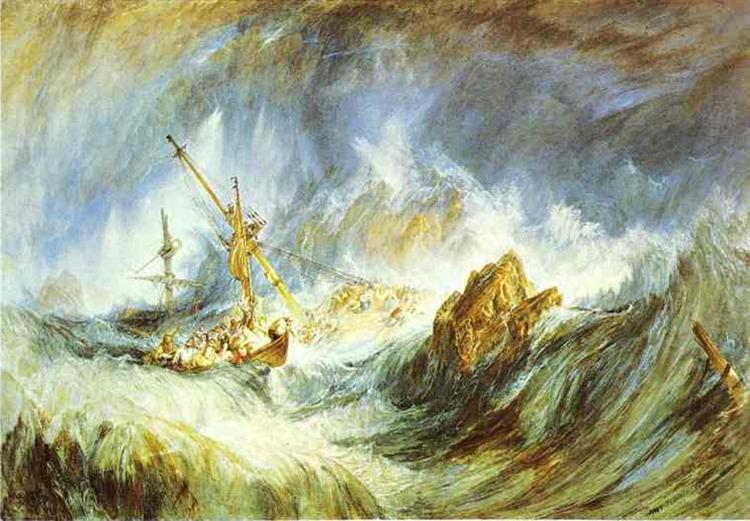
A Storm (Shipwreck), 1823 - J.M.W. Turner 


Tenth Sunday after Pentecost

Proper 14 - Year A

1 Kings 19:9-18

Psalm 85:8-13

Romans 10:5-15

Matthew 14:22-33


Sunday, February 19, 2023

Church is church.


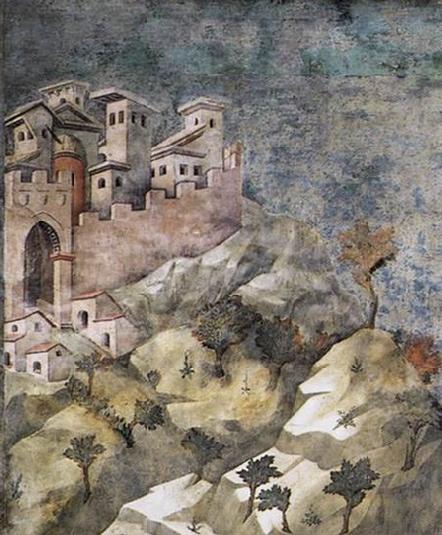
"A City Built Upon a Hill Cannot Be Hid" Giotto, Legend of St. Francis, 1297-99, detail,

(http://edgeofenclosure.org/epiphany5a.html)


“For we must consider that we shall be as a city upon a hill. The eyes of all people are upon us. So that if we shall deal falsely with our God in this work we have undertaken, and so cause Him to withdraw His present help from us, we shall be made a story and a by-word through the world.” –John Winthrop, 1630. https://www.americanyawp.com/reader/colliding-cultures/john-winthrop-dreams-of-a-city-on-a-hill-1630/


At Tucson’s Rogue Theatre not long ago I saw a play about a small group of people in an isolated community who shared a common, if strictly limited faith, and therefore a common, if strictly limited, attitude toward life.

Into their community comes a free spirit, a refugee from another country, someone who brings a different sense of the joy of life and of the possibilities of life to them despite her own long-standing grief. 


P.S. Babette can cook.


The name of the story is “Babette’s Feast” and as a result of the sumptuous Feast that Babette prepares for the people of the small community, they begin to embrace Joy and Grace a little more warmly than they have before. 


As they gather and share the meal they talk and reconcile; old grudges drop away as love emerges. 


They begin to embrace joy, and grace, a little more warmly than they have before – in fact, a lot more warmly, so that it is as if for an hour, they’ve had a glimpse of heaven. 


The prophet Isaiah (25:6) gives us a vision of a heavenly banquet:


   a feast of rich food, a feast of well-matured wines,

   of rich food filled with marrow, of well-matured wines strained clear.


In the midst of this story’s unfolding, I recalled the reflection “church is church” – as the members of the close little community bicker with each other, and at the end, when they embraced each other, and reached a moment of grace, I said to myself again, “church is church.”


That is, both the good and the bad, the happiness and the bickering, and the possibility of the release of mercy based on God‘s own infinite mercy— are church.


Actually, that’s the point made by one of the characters: we are surrounded by God’s infinite mercy. Let’s open our hearts to it. 


The feast helped.


The phrase “church is church” I heard in a group of ministers in about 2010 where a black church musician and pastor was listening to people from very different faith backgrounds from his own talk about what was going on in their congregations and how they were feeling about it and in a moment of recognition he said “church is church.” 


We all have these experiences, as pastors, as church members, as people of God. Even in other contexts– at work, at home, with friends, there is the blessing of community in experiencing both conflict and grace together. As the Psalmist (85:10,12) says,


Mercy and truth are met together :

 righteousness and peace have kissed each other;

The Lord will also give us all that is good :

 and our land shall yield its plenty. 


We have a lot of the same ways of being with each other, the ways we behave, in the way we treat each other and feel about each other, in the congregation, regardless of denomination. In fact, I remember “church is church” when I have spoken with Sufi leaders and Sikh leaders, as well as Christians of my own and other denominations.


Church is church, and we embrace the grace as well as the grit of life together. 


The Rev. Dr. John Leech is a priest associate at the Episcopal Church of Saint Matthew in Tucson.


Published under the title, "The blessing of community", in the Arizona Daily Star, Sunday February 19th 2023, E3. 

https://tucson.com/lifestyles/faith-and-values/the-blessing-of-community/article_882e2f64-a31e-11ed-a8e8-630de1ae0383.html


Sunday, July 24, 2022

things eternal and things temporal


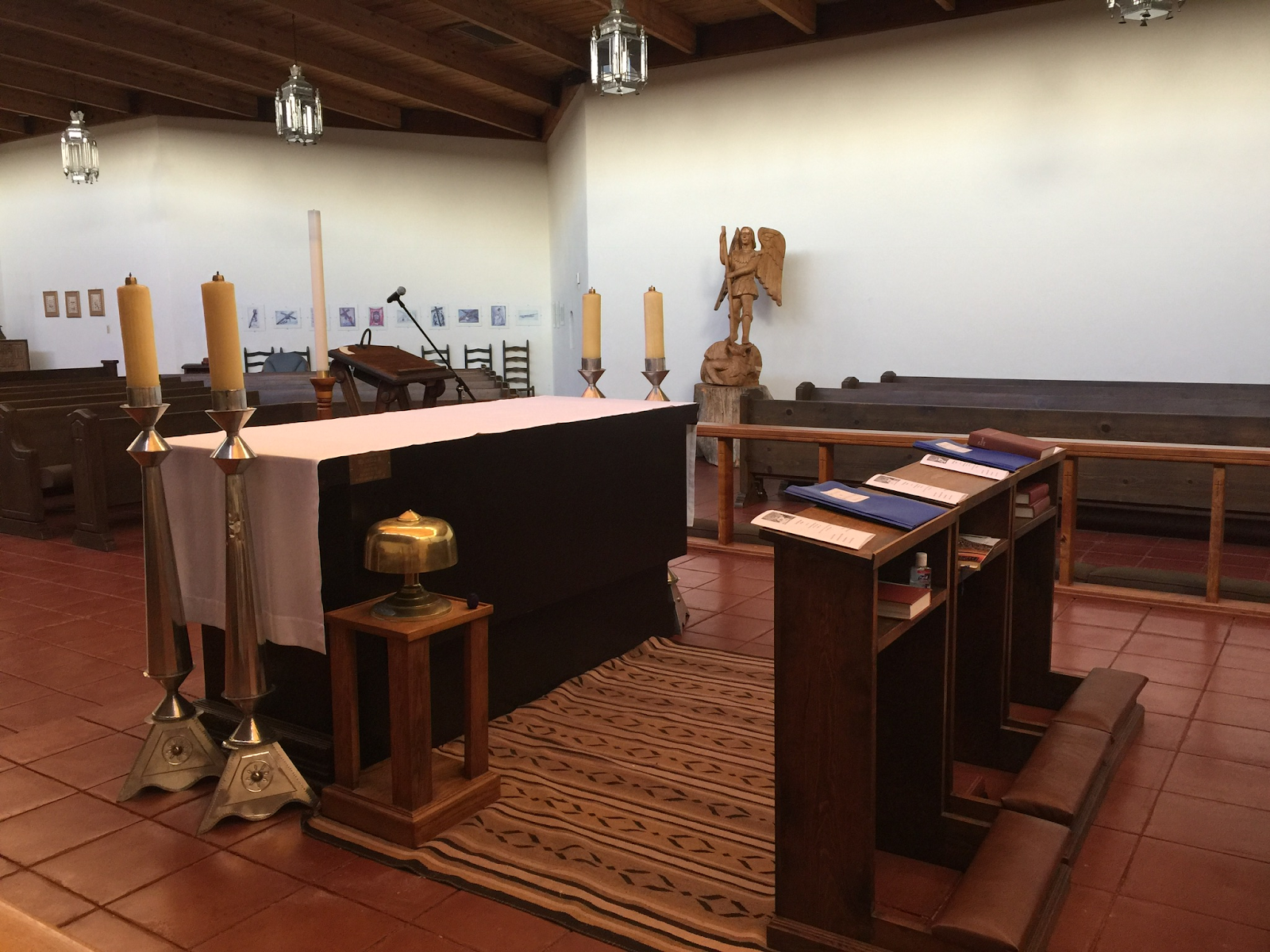
St Michael's Church, Coolidge, Arizona

O God, the protector of all who trust in you, without whom nothing is strong, nothing is holy: Increase and multiply upon us your mercy; that, with you as our ruler and guide, we may so pass through things temporal, that we lose not the things eternal; through Jesus Christ our Lord, who lives and reigns with you and the Holy Spirit, one God, for ever and ever. Amen.


 We live in a world without kingdoms, except in abstraction or in faraway places. (Sorry if you are English or Dutch.) In America since 1776 or so we have learned to live without a personal sovereign. The people are sovereign. That is abstract. And we are sorting out what it means.  

This affects us not only as citizens, not just as consumers, but as people of faith. As Christians we hold that there is a king indeed, just one not of this world. And we are sorting out what that means. Since about the year 30.


We have some help with that one. Human beings have been puzzling out their relation with the divine being since time began to pierce our consciousness. 


What does it mean to be under God, and not under an earthly sovereign? How then do we further the coming of a kingdom not like earthly kingdoms? “On earth as it is in heaven” - what does that mean, and how do we play a part in its coming to be?


Bishop Michael Curry refers to the ‘realization of the beloved community’ - this is part of it, and a pressing part of it for Americans. The beloved community as envisioned by thinkers from Josiah Royce to Howard Thurman and by activists from A. J. Must to Martin Luther King, is a community where all belong, together. 


Where the lion lies down with the lamb, so to speak. Where we learn to live with each other in harmony, delighting in our differences and celebrating our commonality. Where intolerance is not tolerated, and love is an active verb.


Specifically right now the Episcopal Church, like so many other church bodies and institutions, is aching through a process of reconciliation, restoration, and perhaps restitution, as it takes upon itself the historical necessity of confronting the past.


Sins of the fathers, yours or mine or not ours at all, are still affecting us. We may say we were not there, we did not come into this church or this society or this world until long after those sins were past, over, long forgiven. 


Or, as it turns out, not so much. 


People are saying, my children will have less freedom than I have had. Not just less money, less of a material future, but less in terms of rights. Freedom, liberty, and justice for all.


We may have had it. Or felt we never did. As individuals or as a part of society that has never felt free.


But now we have that in our face. And how can anyone be free if not all of us are?


It is getting harder to say.


***


Part of how it is hard to imagine kingdom come is that we no longer live surrounded by people who believe it is “in heaven” as we long it to be “on earth”. 


Heaven–what is that? Will it pay the rent–yours? It is possible to live now in a way that takes no account of the presence of God, of the imminence and transcendence of his kingdom. At least for a while.


You can live not as if you have stopped believing but as if you do not know what that is. 


Do we? Do we also, as much as we see ourselves as believers, act as if we do?


Functionally are we in our personal and social lives “living into the kingdom”, that is, living as if Jesus is real, and his kingdom is here at the stretch of our hands?


As it is in heaven - so let it be on earth. 


****


Keeping the Faith: Kingdom in its Fullness


Jesus’ disciple asked, “Teach us to pray.” He responded with the Lord’s Prayer. (Luke 11:2-4) 


What does Jesus tell us to ask for first? What are we to ask for? “Thy kingdom come.” Ask with boldness and persistence for the arrival of the reign of God. This comes first. Then request what we need ourselves, personally and as God’s people. “Everything comes from you” David prays. (1 Chronicles 29:14) For us to take our part in establishing God’s kingdom on earth as in heaven, we need: daily sustenance, for which we are dependent on God; reconciliation, for which we are dependent on God; and to be saved from “the time of trial”, for which we are dependent on God.


Only then can we be built into the eternal temple of praise which is the kingdom of God. When David said, “of thine own have we given thee” (1 Chronicles 29:14) he was offering the first fruits of the harvest, as the people would in the Temple. So his prayer was one of thanksgiving, and one of celebration. 


Of course the “Temple not built with hands” – that is the eternal place of offering – is what Jesus is bringing into daily life. Incarnate in him is the word of God, and making real in the world the kingdom he proclaims is the duty and the invitation he gives his followers: us.


When we pray “thy kingdom come” we are participating in the coming of his kingdom. When we ask for what we need from the one on whom we are dependent for everything, we are saying he is Lord. And when we ask to be forgiven and freed from temptation, we are saying he is Savior.


And we are saying make us instruments of thy peace, thy salvation, thy shalom, thy reign of peace.


In a recent essay on the website of the Episcopal diocese of Arizona, Canon Pam Hyde invites us to rethink dominion - particularly our sense of “dominion over” the rest of creation. Of course this is part of our rethinking what “kingdom come” might look like. Maybe it really is like the “peaceable kingdom” depicted in 19th Century American art, where lion and lamb lie down together and human beings, explorers and indigenous people, alike, are able to find a place for all beings. (Isaiah 11:6-9)


Don’t hold your breath, I hear you say. “What about–?” What about the travesty of settler lifestyles that tear apart the very fabric of the natural world, through mineral extraction and agricultural industrialization? What about the continuing and historic exploitation of one species by another, not to mention one set of people by another?


How are we to live without exerting our dominion, our “power over” others, as if it were by divine right, even divine mandate? Is not this our “manifest destiny” as Americans, indeed, as the human race?


What does it mean to have “dominion over” anything if God is really in charge? Ask Elizabeth II, queen of England: she has had 70 years to think this one over. She may be sovereign, in her realm, but it is only under God, under the blessing, under the mercy, and under obedience.


How do we play faithful to that mercy, how do we conform to that obedience, how do we share that blessing? The blessing that is the coming and immanent kingdom of God, the ‘dominion’ if you will, that is without end as it is indeed without beginning? The truth is, God reigns now. 


If we could only see it. Sometimes it is hard to see. A traffic accident on the freeway, a senseless act of destruction, an unkindness where a helping hand is called for. Cruelty, gratuitous and severe. Capricious catastrophe.


So we ask for the kingdom to come, to become real. In the meantime, the between-time, between the asking and the fulfillment of the prayer, we are the ones who begin to make it real.


We do this in us-sized ways. We do it in small kindnesses, large life choices, common acts in common life, and unseen acts of small mercies.


We ask for the kingdom to come, and then we pray for what we need to live into its reality.


In Paul’s letter to the church in Colossus, we get a picture of a cosmic Christ, one “in whom the fullness of God is pleased to dwell” and one from whom we receive our own “fullness” as his creatures and his people. “For in him the whole fullness of deity dwells bodily, and you have come to fullness in him, who is the head of every ruler and authority.” (1:19, 2:9-10)


“Fullness” in Christ means a completion of being, a perfection in direction and in action. We sense moments of fullness already; in him our joy will be made complete. 


So dominion and fullness meet in the presence of the Lord. God is the source of all being, therefore the one in whom all authority finally resides; our ‘dominion’ is partial and contingent. And yet our completion, the fulfillment of our calling and our gift as creatures, is already at work through Christ in us. 


We have the challenge of living into that in-coming and already-here state of being.


How can we possibly do this by ourselves? As individuals, as a church, as a society, as the human race? 


We don’t have to do it alone: for the one who creates us is the one who redeems us is the one who inspires and empowers us. By our side, along with us, God is present in the Spirit, and in each other.


We are not there yet, not yet in the kingdom to come, but we work to make it so, and we long for its arrival. In the grace of God and under the mercy. Amen.


The Rev. Dr. John Leech studied history and religion at the University of California, Santa Cruz. He serves as a priest associate at the Episcopal Church of Saint Matthew in Tucson. This sermon was given at St Michael's Church, Coolidge, Ariz. http://stmichaelscoolidge.com/


Genesis 18:20-32
Psalm 138
Colossians 2:6-15, (16-19)
Luke 11:1-13

Hosea 1:2-10
Psalm 85
Colossians 2:6-15, (16-19)
Luke 11:1-13


https://azdiocese.org/2022/06/rethinking-dominion/

https://www.nga.gov/collection/art-object-page.59908.html


Charles Taylor, A Secular Age. Cambridge, Mass.: Harvard University Press, 2007.