Sunday, July 16, 2023

The Sower and the Seed


The Sower

By Jean-François Millet (French, 1814–1875)
1850
https://collections.mfa.org/objects/31601
(public domain)


The Sower
Vincent van Gogh (1853 - 1890), Arles, November 1888
https://www.vangoghmuseum.nl/en/collection/s0029V1962


The sower came to my house the other day with a hose and blew hydroseed all over the place. Sure enough, some fell on rocky ground, of which we have plenty; some fell on the path and the road and if the birds had a chance on it before the trucks ground it into the dust, I’m sure they had their fill. Some fell among weeds, where it became indistinguishable from them: a weed is a plant growing where you do not want it, but until it grows up to maturity how do you tell which is which? And some fell among good soil. We’ll see what happens there.


The parable of the sower that Jesus tells in the gospel of Matthew (13:1-9) touches on this common experience. Picture him sitting on the shore near a small fishing village, ready to teach, until so many people come to hear him that he gets into a small boat and from just offshore looks back at the crowd and speaks to them from there.


How many of those people decided to fit themselves, and others, into categories? That guy looks like rocky soil to me, says one to himself, while the other thinks the first has a weedy look.


That is hardly the point of the parable, in my mind. Like many of Jesus’ parables it turns our everyday expectations upside down. And that is a place to start. Why was the sower so indiscriminate? Why not pay attention to where you’re throwing, and focus on the good soil? Or better yet what is this sowing all about in the first place?


Jesus’ sower seems to work with joyous abandon, spreading far and wide a seed-message that in only a few can take hold and grow into something productive. He seems bent on starting something, and he does it in the most extravagant and outrageous - and democratic - way. 


The seed, I would suggest, is the message that Jesus - and we - bring to the world, the coming of the ordering of everything under heaven into its right relationships. We call this the reign of God. 


And why not spread it far and wide? Why deny anyone the chance to receive it? Sure they may seem rocky or weedy or road-weary to us, but let’s see what happens when the seed falls, and the sun shines, and the rain falls: will it grow? Will it become something wonderful? We will have to wait and see. And meanwhile we must cultivate our own garden, that it well receive what we seek to spread.


Almighty God, we thank you for planting in us the seed of your word. By your Holy Spirit help us to receive it with joy, live according to it, and grow in faith and hope and love, through Jesus Christ, our Savior and Lord. Amen. (Sundays and Seasons)


Let the rain begin!

JRL+


An edited version of this meditation appeared in the Arizona Daily Star, page E3, Keeping the Faith feature, Sunday July 23, 2023, under the title “The seed of God’s word.”

Sunday, July 9, 2023

Rebekah waters the camels


Rebecca at the Well and the Meeting of Rebecca and Isaac. 

Johannes Lutma (1624-1689)https://www.rijksmuseum.nl/en/search/objects?q=rebecca+and+isaac&p=1&ps=12&st=Objects&ii=1#/BK-2009-273,1

Officiating at a cousin’s wedding, I was glad someone got to read the passage from the Song of Songs (2:8-13) that we hear on the Sixth Sunday after Pentecost. While it may be explained as an analogy of the love of God for Israel, or for humankind, or of Christ for the Church, it is pretty romantic stuff and obviously a welcome paean to brides and grooms on their big day.


The story from Genesis (24:34-38, 42-49, 58-67) is a good one, too, for marriages. I’m not sure how often it’s read, or if it’s even suggested. It’s not in the Book of Common Prayer list of suggested readings for “The Celebration and Blessing of a Marriage” – more’s the pity. 


Abraham sends a servant to his far-away family, seeking a bride from among them for his son. The servant finds the daughter of the house fetching water from a well. He asks her for a drink, and she gives it, and not only that, waters his camels and then she adds, ‘We have plenty of straw and fodder and a place to spend the night.’ The servant gives thanks: he’s found the right place and the right woman. Soon they are journeying back to bring the bride and her prospective husband together.


It is as much a comedy - a story with a happy ending - as the story from the book of Tobit (8:5b-8) I’ve heard read at weddings more than once. That’s the one where Tobias and Sarah, his bride, pray by the bedside “that she and I may grow old together” before they climb under the covers and sleep through the night. 


In this story from Genesis, of a wife sought and a husband found, we hear good words about good people, not only the bride and her groom but also the good people who are Abraham’s family, and his household.  


The worthy and humble action the daughter of the house takes upon the servant’s request, to which she responds generously, seals the deal in his mind. And I think once Isaac saw Rebekah they were both pretty clear that the coming nuptials were a good thing.  “Who’s that?” she asks, spotting Isaac for the first time. 


The story of Rebekah and Isaac makes a good story, like Ruth and Naomi, or Esther and Mordecai. It comes in the older book, the one about the whole business of God bringing humankind into relationship with himself. In that book, which begins in the beginning, we hear a lot about mythical characters from the distant past. So that it is all the more endearing to hear them talked about as human beings, with feelings, however distant their time and place and customs are from our own. 


How many notions that This is the One begin with seeing Her watering the camels? 


And yet this is the kind of test, of observed behavior, that in even martial settings tells the person with open eyes what to do. Remember how Gideon selected from his soldiers the ones who drank from a stream in a particular way. And how the son watching over the sheep, young David, was chosen to be shepherd of his people.


Rebekah was a woman of virtue. And alone among the Matriarchs, she seemed to get her man to herself. Sarah and Hagar both bore children to Abraham. And the competition between Leah and Rachel to supply sons to Jacob was so fierce they each supplied a handmaid - their names were Bilhah and Zilpah - to give birth to some of the twelve sons of Israel. That is indeed far from our times and customs.


Rebekah however had no such problems, as the story comes down to us. She had another one. Her husband was almost sacrificed by her father-in-law. A lot of love had to come from another earthly source since Abraham, faithful as he was to God, was so rarefied in his affections among humans. I think one of his best moments was entertaining the three angels who came to the tent at the Oaks of Mamre. 


And Rebekah was a worthy successor in hospitality to her parents-in-law, offering not only water but food and shelter to the strangers whom she met at the well.


The blessing given Rebekah is like the blessings given Abraham and Sarah. (Genesis 24:60: ‘May you, our sister, become thousands of myriads; may your offspring gain possession of the gates of their foes.’ She will become the mother of many, like Sarah before her, and through them a blessing for all people. 


To the faithfulness of Abraham is added the hospitality of Rebekah. 


Where shall we go to find such abundance of blessing and virtue in our own day? And how will we know it when we see it?


The Rev. Dr. John Leech serves as a priest associate at the Episcopal Church of Saint Matthew and is an occasional guest preacher at other churches throughout southern Arizona.


An edited version of this meditation was printed on page E3 of the Arizona Daily Star, July 9th 2023, in the Keeping the Faith section, under the title “A test of observed behavior.” and online under the same heading at https://tucson.com/life-entertainment/local/faith-values/a-test-of-observed-behavior/article_77717684-1436-11ee-b224-93f28543ce76.html


Genesis 24:34-38, 42-49, 58-67

Song of Solomon 2:8-13

Tobit 8:5b-8

AProper9 RCL


Portrait of a Couple as Isaac and Rebecca, known as 'The Jewish Bride'
c. 1665 - c. 1669
Rembrandt van Rijn
https://www.rijksmuseum.nl/en/search/objects?q=rebecca+and+isaac&p=1&ps=12&st=Objects&ii=0#/SK-C-216,0

Sunday, July 2, 2023

THE RAM IN THE THICKET


Abraham's sacrifice, Rembrandt van Rijn, 1655 

https://www.rijksmuseum.nl/en/search/objects?q=sacrifice+of+isaac&p=1&ps=12&st=Objects&ii=5#/RP-P-1962-14,5


God put Abraham to the test, saying to him, “Abraham.” He answered, “Here I am.” “Take your son, your favored one, the one whom you love, Isaac, and go to the land of Moriah, and offer him there as a burnt offering on one of the heights that I will point out to you.” (Genesis 22:1-2)


As it happens, God acknowledges Abraham’s faithful obedience, and an angel stays his hand before he can slay his son. He spots a ram in a thicket, and offers that instead. 


Listening to the story from Genesis (22:1-19), of the Binding of Isaac, we may wonder: what was Abraham thinking? Where did he get the idea that he should sacrifice his son? That God would want that? What kind of a god would ask this? What kind of a father would think to do it? Does the last-minute substitution of a ram make it OK?


The surrounding cultures, as I understand it, worshiped gods who did indeed require human sacrifice – just as much as the god of the Aztecs did. The cult of Moloch demanded the burnt offering of the firstborn son. Somehow Abraham got into his head the idea that this may be required even of him – that the God who has led him to the promised land, has given him his son, has promised him uncounted progeny – that somehow this is the same god.


All the way up the mountain, Abraham kept faith with God. Believing in the promise he somehow continued to expect the impossible. He laid the firewood on Isaac’s back – like requiring a man to carry his own cross – saying, “God himself will provide the lamb.”


Not knowing what would happen, in the fear of God he bound his son, and took up the knife. The angel stayed Abraham’s hand, and showed him the ram in the thicket. I think there is more going on here than the substitution of a sheep for a man.


God did not require the death of Isaac. He required his life – that is, that Isaac and all the future and the hope that he represents, belongs to God, not Abraham. This life is not a life to be grasped onto but to be freely accepted as a gift from the willing hand of God.


Abraham responds to God’s call in faith, in obedience, yielding all claim to ownership to what is most precious to him – the promise, the future and the hope embodied in Isaac – and he dedicates that beloved Child to God, to God’s purpose, not his own. 


And it is through the efficacy of this obedience, this act of faith, that Abraham becomes the father of nations – not through heredity but through faith in the love of God. 


And it is this faith that gives him descendants innumerable. “I will shower blessings on you, I will make your descendants as many as the stars of heaven and the grains of sand on the seashore.” (Genesis 22.17)


Abraham chose obedience. Through his radical obedience, Abraham became the father of our faith, the exemplar of total trust in God.


What he was required to yield up, that which was most precious to him, what had to be relinquished to God when God required it, was Isaac’s life – not his death, but his life. The future and the hope that Isaac represented were not for Abraham to own and to master, but for him to trust in God to provide, just as he provided the ram in the thicket on the mount that came to be called, “God provides”.


When he set his face toward Jerusalem, Jesus began to teach his disciples that the Son of Man must undergo great suffering, be rejected, and be killed, and after three days rise again. Jesus chose obedience – he lay his own life down, that very life that was to become the first fruits of the resurrection. Life is not to be grasped to oneself, but to be freely offered in obedience to God. Jesus did not give just his death to God; he gave his life – a life of integrity, of witness, of proclamation. He took up his cross rather than live a life of self-protection.


Jesus kept faith with God, proclaiming in word and deed the reign of God’s love, of justice, peace, and forgiveness. He embodied the fullness and image of God’s compassion and love for humankind. Just as Abraham traveled to a distant land ready to sacrifice his beloved son, so Jesus, knowing full well that it might cost his life, traveled up to Jerusalem to give witness to the reign of God.


He took up his cross rather than living a life of self-protection. We participate in the life of Christ, in the proclamation of the kingdom. We receive the life he continues to give to us. By his life we live. His life makes it possible for us to live faithfully, in radical obedience to God, with a future and a hope. 


To live in faith is costly; God asks a lot of us. Life is full of frightening and painful and hard things. We have this consolation, that Jesus went through this already and goes through this with us –we are not alone, and death is not the end of the story. 


No place we are ever asked to go – no height nor depth, no hardship or distress, no persecution or famine, no epidemic, no war - can take us away from the love of God. He has been there already. He is there with us. And he will bring us through to the other side. No other thing is required. God’s mercy is full and complete. He takes us from the broken places to wholeness, from the darkness into light; we were lost and are found.


Genesis 22:1-14


A version of this meditation appeared in the Arizona Daily Star, July 2, 2023, under the heading “God will bring you through" and online as "God will bring you through to wholeness." https://tucson.com/life-entertainment/local/faith-values/god-will-bring-you-through-to-wholeness/article_6c0ee3c4-1438-11ee-87ab-9fbfdae51b50.html


The Sacrifice of Isaac, anonymous. c. 1540 - c. 1550

https://www.rijksmuseum.nl/en/search/objects?q=sacrifice+of+isaac&p=1&ps=12&st=Objects&ii=0#/BK-1953-18,0

Saturday, June 24, 2023

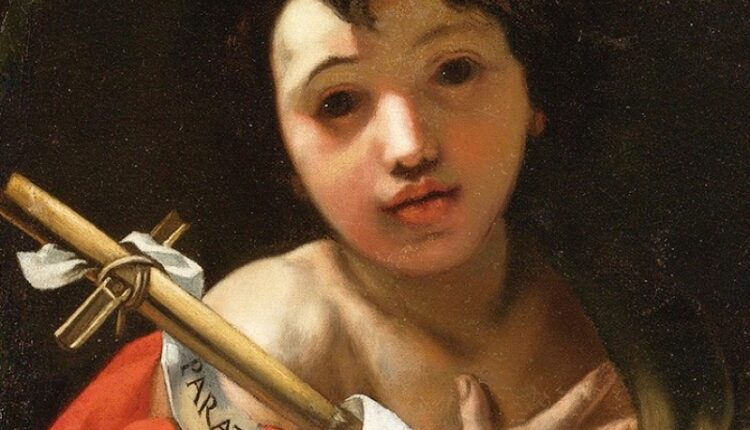
on the Feast of the Nativity of Saint John the Baptist


In the Tucson area the feast day of Saint John the Baptist is the beginning of the summer monsoon season. The National Weather Service would tell you differently, and so sometimes would the sky. Traditionally however this is the day to celebrate the relief from the dry days that came before. And as we might note, it is six months before Christmas. The Nativity of John the Baptist comes six months before the Nativity of Jesus. And so we have a little time to prepare. Half a year? Is that enough? Enough to have before you as your world threatens to come apart? We got a little more notice before climate change really struck us between the eyes. And this is monumental. Give ourselves a break: it doesn’t look like much does it? Two kids born far away and long ago, their births barely recorded except that their parents seemed to know what was going on. Listen to the song of Zechariah, as we do so often in morning prayer and in the Eucharistic celebration of John’s feast, and we begin to realize something big is happening. The song itself seems most happy about vindication and freedom from Israel’s earthly enemies. But there is more going on. This child, even this child that is not worthy to untie the shoestring of the next, is powerful. He dresses strangely, like a prophet come out of old, the pages worn and tattered in the holy books: here he is in the flesh. He proclaims the coming of the one that was to come, the one awaited, the one anticipated, the one feared. Herod the Great and his boys knew what was going on. A big threat to the way things were. The way we are now, he seemed to say, is the way things should stay. Are going to stay. If he has anything to say about it. But of course he does not. That privilege goes to an obscure priest, a father, who finds himself saying, “His name is John” - and his tongue is loosened and he is not afraid to give the news. A change is coming: be ready. And his son said it again. A change is coming: be ready. 


We get here through the words of the prophet Isaiah, best known on Christmas, in Handel’s Messiah: Comfort, comfort ye my people… It is a plea, a proclamation, a promise. The one to come is on his way. And we remember it, six months away, the other end of the year, here in the desert on a hot night. 


We remember also something from the Psalms, that the prophecy is real throughout Scripture. It is a plea for light in a time of darkness. I still remember vividly singing a setting of this Psalm (85:10) in choir at my home church: Mercy and truth have met together; righteousness and peace have kissed each other. The composer Armand Russell wrote it in anticipation of the beginning of a conflict, as the US troops began to move into Iraq. I know those tanks rolled more than once. And I know the mourning in the voice of the psalm, that even now and always, there was a better way than armies moving into position. 


We need to celebrate, we need to remember, that with the voice of John in the wilderness the good news, the hard news, the true story, is coming into the light. 


In the tender compassion of our God *

    the dawn from on high shall break upon us,

To shine on those who dwell in darkness and the

                             shadow of death, *

    and to guide our feet into the way of peace.


(Luke 1:78-79)


A version of this meditation was printed in the Keeping the Faith feature in the Home + Section of the Arizona Daily Star, Sunday June 25th 2023, page E3, under the title “Beyond Saint John the Baptist.” and online on the same day under the headline “The feast day of Saint John the Baptist and what's to come” at https://tucson.com/lifestyles/faith-and-values/the-feast-day-of-saint-john-the-baptist-and-whats-to-come/article_7a109462-0ec1-11ee-82be-0b5d309a997c.html


Monday, June 12, 2023

visitors


In this photo released by Russian Orthodox Church Press Service, the Trinity icon by Andrei Rublev is displayed as Russian Orthodox Church Patriarch Kirill conducts an Orthodox service celebrating Trinity Sunday with Russia’s most famous icon transferred from a museum to Moscow’s main cathedral despite the keepers’ vociferous protests in the Christ the Savior Cathedral in Moscow, Russia, Sunday, June 4, 2023. The Trinity icon by Andrei Rublev that was kept in Moscow’s Tretyakov Gallery since the 1920s was moved to Christ the Savior Cathedral for the holiday on President Vladimir Putin’s order. Putin’s sudden order to hand over the 15th century icon to the church came despite protests from the Tretyakov keepers that the icon was too fragile to move. (Oleg Varov/Russian Orthodox Church Press Service via AP)

https://apnews.com/article/russia-trinity-icon-rublev-moscow-cathedral-c78adcee0c929208013c9936f9969291

Russia's most famous icon handed over from museum to church despite protests (Associated Press, June 4, 2023 at 9:27 a.m. EDT)

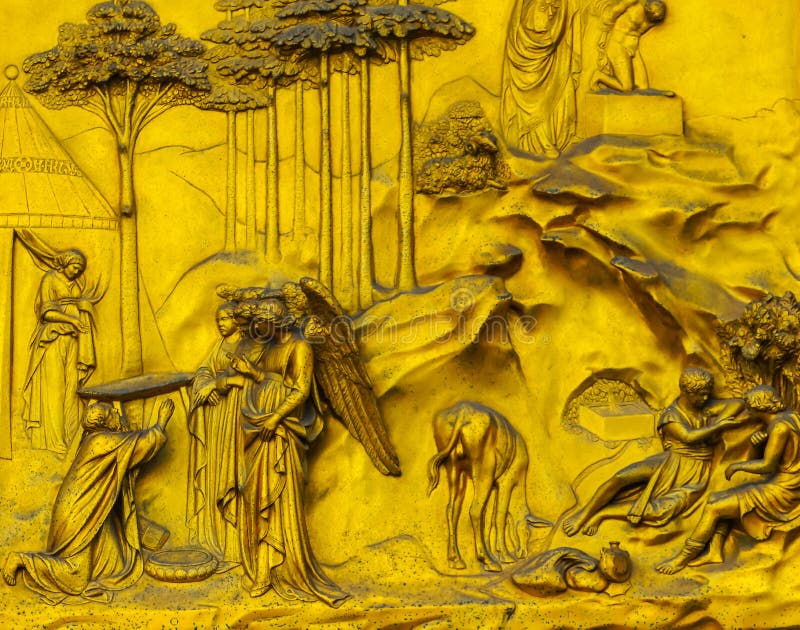
On Trinity Sunday on my way to church I heard on the radio that Russia’s most famous icon, by Andrei Rublev, was on its way from a museum in Moscow to a nearby church. This icon is frequently cited as an image of the Trinity, a showing in the persons of three mysterious angelic visitors to the tent of Abraham and Sarah at the Oaks of Mamre. It is a close-up, in effect, of the larger scene, one you can see depicted by Ghiberti on the doors of the baptistry of St John  in Florence, Italy (and replicated on the front doors of Grace Cathedral in San Francisco). 


Looking at the bigger picture you can see Abraham in front of the tent offering hospitality to the strangers, while Sarah peeks from behind the flap of the tent. They are receiving strange news from strange guests. The icon that focuses in on the three visitors shows them in harmonious relation to each other, a dancing image of God, (perichoresis, reciprocal coinherence) since as they are three, or two, or one, they are a “God sighting” as Reverend Billy calls it (theophany), a miraculous appearance or vision of the presence of God.  


The image is from the story in the book of Genesis (18:1-15, 21:1-7) of three strangers that come to the tent of Abraham and Sarah at the Oaks of Mamre, where their flocks and herds are pastured by the trees, and they greet the old man and his old wife, and receive hospitality. And then give her a blessing. There was to be a child, and a great promise.  


For God had said to Abraham, ‘As for your wife— I will bless her, and moreover I will give you a son by her. I will bless her, and she shall give rise to nations; kings of peoples shall come from her.’ ‘And by your offspring shall all the nations of the earth gain blessing for themselves.’


There are elements in this story that probably came across with particular power over the many centuries of the Jewish people. Three strangers arrive, receive hospitality, give a blessing, and tell of a child of great promise. Hard to forget, wonderfully told, a story for the ages.


On Trinity Sunday I wondered if Mary heard it, if it came to mind as she sheltered near Bethlehem with her newborn son. (Matthew 2:1-12) Because here again, there were, so many centuries later, a mother and a child of great promise, and three strangers who said, as those earlier visitors had said, “through this child a great blessing will come to his people, and to all the world.” 


The new mother: did she smile at this? Did she laugh? Did she laugh to hear the news or did she gently accept it or did she do both? What child was this? What parents? Now this one was already born, when the strangers, this time astrologers, Wise Men, Magi from the east, said to its mother, that this child would be a blessing to his people, and to all the world. Again three strangers, again a mother and a child. Again, a great promise, and in both cases that one promise has become fulfilled.


​​http://www.lectionarypage.net/YearA_RCL/Pentecost/AProp6_RCL.html#ot1

http://www.lectionarypage.net/YearABC_RCL/Epiphany/Epiph_RCL.html


Genesis 18:1-15, (21:1-7)
Matthew 2:1-12


A version of this meditation was printed in the Arizona Daily Star, Keeping the Faith feature of the Home + Life section, pg. E3, on Sunday, July 16, 2023, under the heading, "3 visitors and a blessing."


Saturday, June 10, 2023

Bell


Once you give it away, it’s not yours anymore: a harsh lesson often learned under duress. My congregation, through its governing board, gave away an old bell to a neighboring new congregation. The bell was not made as a church bell. It was made as a bell for a locomotive, and when you rang it, it sounded like the train was on its way. We hadn’t used it for years. It had hung in a decrepit and long demolished structure that people who had not been to church for 20 or 30 years remembered but many of the current congregation had never seen, and they had never heard the bell ring. It languished outside the Sunday school rooms in a utility closet for some time. When the neighboring congregation with its new house church building was looking for a bell, we gave it to them. So that pastor and I lifted it, put it in the truck and moved it to its new home, where it was rung, especially to the delight of children. Several years later that congregation folded, its property was dispersed, and I do not know what happened to the bell. But I do know that some long, long, long time parishioners of my own church still resented its loss. They had lost something they had given away. When you give something away, it’s not yours anymore: a painful lesson whether it’s an old dresser, an old book, a car or a bell. I suppose there’s a sermon in here somewhere about what has been given away for us, what has been given away by us, in a spirit of love, or of housecleaning, and what has been given away to us. Given away, largely by one we have never seen in the flesh. As I say this, I can see from my porch the vultures circling over something that has lost any chance of being given away or received as a gift, but only taken. Jesus wasn’t in the tomb long enough to do more than begin to stink, as Martha and Mary had said of his friend Lazarus. He had been alive long enough for the vultures to have been circling in anticipation for years, and then he went ahead with it. He went ahead with giving away his love, his life and the gifts of love and life that he gave to others; gifts that we never recovered, but only passed on. Perhaps we should do as well to let go of the things that we have given away, and not attempt to recover them, or to resent their departure.


 Bell : an essay for the Buechner writing project of the Christian Century.

Sunday, June 4, 2023

Oaks

 It’s amazing! It’s as if you’ve been running around a foreign country and you’ve finally bumped into people who are speaking your language. 

On the day of Pentecost the Spirit reversed the confusion of the Tower of Babel into coherent speech for a diverse multitude.


The Spirit gives us utterance in different ways, expressions in different gifts. The Spirit gives us understanding and inspiration in different ways and by different means. 


How is the experience of the gathered disciples and their hearers on the day of Pentecost, two thousand years ago, to make a difference to us now? 


Will we, gathered or scattered, hear, each in our own heart language, the word of God? Will we be inspired? Will we act - apparently crazy -dancing and singing and praising God? Will we - apparently sober - go out and do the things Jesus commanded us to do?


Will we visit the sick, pray with the despairing, speak out for justice, reach out to the lonely? Will we listen to each other in solemn assembly, seeking the guidance of the Spirit in our decisions? 


Will we have reason to? And how will we encounter the Spirit in our own life and times?


On the border now they talk of encounters with migrants, asylum seekers, refugees, and the desperate wanderers who lose their way. Encounters. Better perhaps than simply saying arrests, as many have entertained angels unawares. This week I encountered a man who asked directions to the bus station. I gave them to him. Then I thought, too late, that I could have given him a ride in the heat of the day. 

There is a story in the book of Genesis. In the heat of the day, while he was sitting in the door of his tent, Abraham encountered three men, strangers to him, who came to him at the Oaks of Mamre, and he offered them hospitality. The hospitality of his tent, his household, his family. 

Sometimes all someone asks of us is directions. Sometimes we are offered the chance to do much more. If we have eyes to see. The three strangers were indeed grateful for the hospitality they received and in turn gave a blessing only they could give. Your wife, they said, will at last bear to you the child you both have sought. And that child - through its descendants - will become the host of the world.

We do not meet God in the person of angels, dressed as strangers who wander through the desert. (Do we?) We do not meet Jesus in the flesh. (Though sometimes we wonder.)

The Holy Spirit is the God we encounter. We have not seen the Father, and Jesus, since his Ascension, has left us in the care of the Comforter, the Advocate, the Teacher; the one who comes alongside us, and yet remains unseen. Unseen, that is, except through permeance. 

Permeating through all of our encounters with each other, and, all unawares, with angels. Pervading too all our days, ordinary and especially significant. 

Look through the prayer book and you will see the Spirit landing upon the baptized, inhabiting the confirmed, blessing the married, consoling the bereaved and accompanying the sick even unto the death bed. Look again and you will see the Spirit invoked upon the ordained, and called upon to bless new ministries and sacred places.

Listen as we celebrate Eucharist, or say our daily prayers. You will hear the Spirit speaking. For the Spirit is here present among us, and through that invisible permeating influence God is here.

Hear the Word. Touch the cup. Taste the bread. Say “peace” to your neighbor. Come Holy Spirit. Come to us. Amen.


This meditation, based on a sermon given on the Day of Pentecost, appeared on the Arizona Daily Star website June 4th 2023 under the title "Encounters with the Spirit are all around us"  (https://tucson.com/lifestyles/faith-and-values/encounters-with-the-spirit-are-all-around-us/article_a00ae510-ff02-11ed-a83c-2788b4905516.html) 

Genesis 18:1-15, (21:1-7)

Acts 2:1-21